


The sulfur baths of Tbilisi, fed by natural hot springs, are one of the most popular sights of the Georgian capital – its symbol and its heart. Locals like to quote the poet Ioseb Grishashvili: visiting Tbilisi without going to the sulfur baths is like visiting Paris without seeing the Eiffel Tower.
I won’t argue with tradition. I went to explore the Tbilisi baths myself to share my impressions and the most up-to-date information.
Tbilisi sulfur baths: in short (2026)
- Where: the Abanotubani district in the Old Town, at the foot of Narikala fortress. Almost all the baths are in one block – you can walk around them in 5 minutes.
- Public hall: the cheapest option is Bath No. 5 – 10 GEL for men and 6 GEL for women.
- Private room: from 70 GEL per hour at Bohema to 130–200 GEL at the Orbeliani bath, VIP suites 400–600 GEL. The price is per room, not per person.
- Opening hours: each bath has its own. Orbeliani and King Erekle – 9:00 to 23:00, Bath No. 5 – 8:00 to 21:00, Gulo – 7 am to 3 am.
- How long: one hour in a room is plenty – the water is hot and it’s hard to stay longer.
- Booking: in summer and at weekends rooms get booked up in advance. Orbeliani and King Erekle have online booking, but not for the same day.
- Kisi (scrub with a mitt): from 10 GEL in a public hall to 30 GEL at the Orbeliani bath.
History of the Tbilisi sulfur baths
According to legend, Tbilisi owes its very existence to the sulfur springs. The name of the city comes from the Georgian word “tbili” (in old pronunciation “tpili”), which means “warm”.
The springs are believed to have been discovered in the second half of the 5th century by King Vakhtang Gorgasali while hunting near the Tsavkisistskali river. Today it flows through the Botanical Garden and then under Aliyev Square. The legend of the king and the falcon is the most popular story of how the city was founded.
The pheasant shot by the king fell into one of the springs and, depending on the version, either miraculously healed or got boiled. Either way, the place made such an impression on the king that he decided to move the capital of Georgia here. He left Mtskheta as the religious centre of the country and made Tbilisi the seat of state power.
The earliest bathing places found by archaeologists date back to the 1st–2nd centuries. Even then there was a ceramic pipeline filling pools cut into the rock, with changing rooms around them. In the 16th century covered baths were built and richly decorated with mosaics in the Persian fashion of the time. Over the centuries the buildings were destroyed, rebuilt and changed many times.
In the old days the sulfur baths of Tbilisi were the centre of the city’s social life. They were open around the clock: people didn’t just wash and relax here, they discussed the latest news, shared information and settled business and everyday matters.
Sulfur baths: benefits and contraindications
The Tbilisi sulfur baths are not as harmless as they may seem. The water is very hot – over 40°C where it comes out of the spring – and its chemical composition is extremely rich. The hydrogen sulfide content ranges from 50 to 150 mg/l.
It is a fairly powerful remedy: it helps with skin problems, supports detox, stimulates the vascular system, improves blood circulation and is good for joints and cartilage. Hot water calms the nervous system, strengthens immunity, tones the body and restores strength.
But so that the medicine doesn’t turn into poison, keep it in moderation. Stay in the bath for about 15 minutes, then take a 5–10 minute break. No more than four rounds per session.
If you have heart or blood vessel problems, be very careful in the bath. Don’t exceed the recommended time in the bath and pools to avoid overheating. Sulfur baths are not recommended for asthma, stomach ulcers, liver and kidney diseases, tuberculosis and cancer. They are also not recommended for pregnant women – the baths say so themselves.
Which sulfur bath in Tbilisi is the best: my experience and reviews
According to some sources, at different times the city had up to 60 sulfur baths. About 10 have survived to this day, most of them built between the 17th and 19th centuries.
The district where the best sulfur baths in Tbilisi are located is called Abanotubani. It’s a very unusual, atmospheric place with a landscape like nothing else. Most of the baths are underground, in semi-basements. Only their roofs are above ground – round brick domes with small turrets on top.
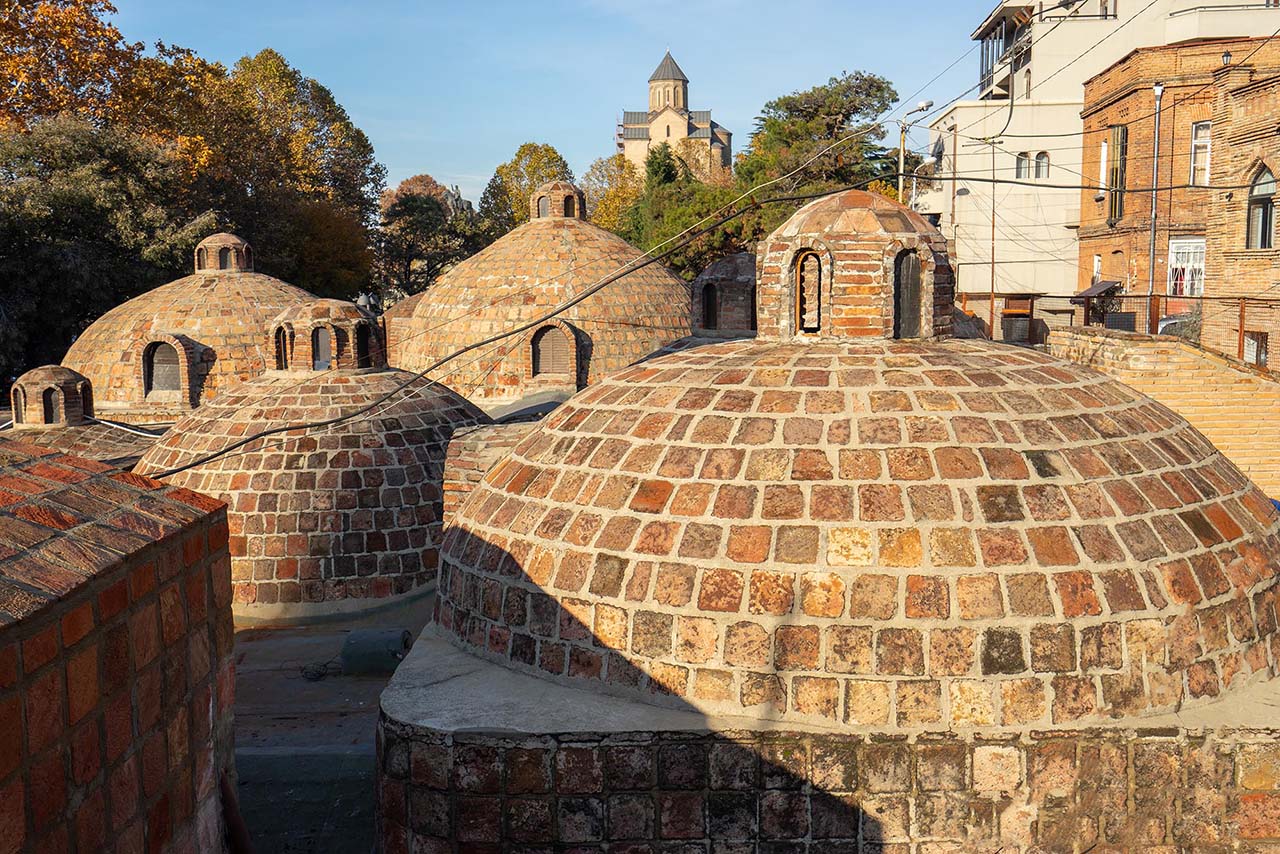
Daylight gets in through small arched windows. In the past that was the only lighting in the baths; today they have proper electric light.
- The baths have public halls, divided into men’s and women’s, and private rooms. Public baths have sections with and without a steam room, a pool and showers with hot sulfur water, and a rest room. Private rooms can be rented for a group of 2 to 15 people. Each bath has its own set of options – I describe each of them below.
- Extra services include a rejuvenating scrub with a special mitt called “kisi”, massage; at the entrance you can rent bath accessories, buy shampoo and soap in single-use packs, as well as hot tea and other drinks. Almost all the baths have shared rubber slippers.
- As a rule, in public halls you pay per hour, and in private rooms – per room per hour. Opening hours differ: some open at 7–9 am and close at 21:00–23:00, while Gulo works until 3 am. It’s better to book private rooms in advance to be sure you get in.
- All the baths smell strongly of hydrogen sulfide. At first it literally knocks you off your feet, but after 5–10 minutes you get used to it and stop noticing it. After the visit the smell stays on your hair and skin for a while, then fades.
- The hotter the water, the more healing it is. In hot water hydrogen sulfide is most active: it enters the body through the skin and lungs. Wash well before the bath – clean skin absorbs the useful substances much better.
- Hydrogen sulfide neutralises most harmful microorganisms. But if you’re particular about hygiene, keep in mind that the water in the pools isn’t changed often – usually on the night from Sunday to Monday. So the best time to visit is Monday morning. Also, in the morning the water is usually hotter than in the evening. And if you order a bath attendant, make sure he takes a fresh mitt.
- Important tip: take off all your jewellery before the bath, especially silver. Hydrogen sulfide oxidises silver, it turns black instantly and is almost impossible to clean afterwards.
Before my first trip to the Tbilisi baths I asked my friends from Tbilisi which one they thought was the best. Almost all of them named the Orbeliani bath.
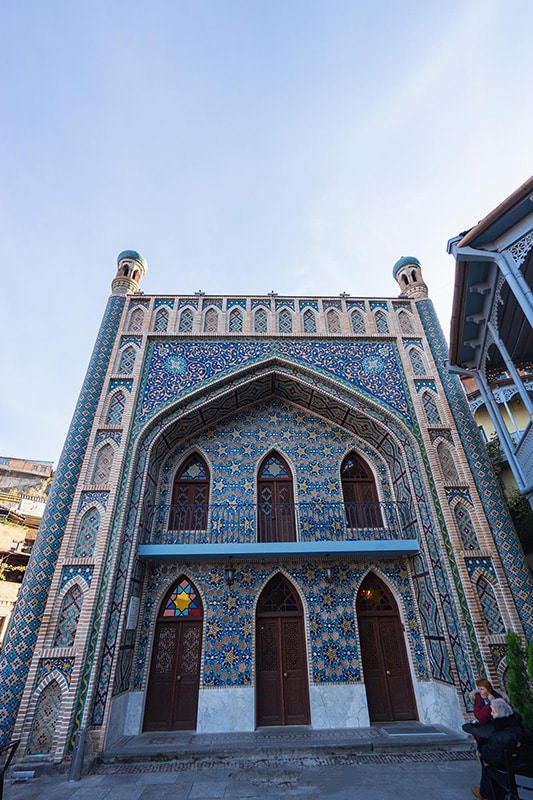
Opinions on second place were divided. Some named King Erekle’s bath, others preferred Gulo, and a few recommended Bath No. 5. Gulo got the most votes, so I decided to visit it and Orbeliani. Since the public halls don’t differ much in price and atmosphere, I was interested in comparing the private rooms.
Orbeliani (Colourful) Bath – Chreli Abano
It’s also called the “colourful” or “blue” bath. As soon as you get to Abanotubani, it’s the one that catches your eye – it stands out from all the others both outside and inside. It’s the only bath above ground and looks like an oriental building covered with beautiful bluish tiles. Traditionally the baths were run by Azerbaijanis, so the design is no surprise.
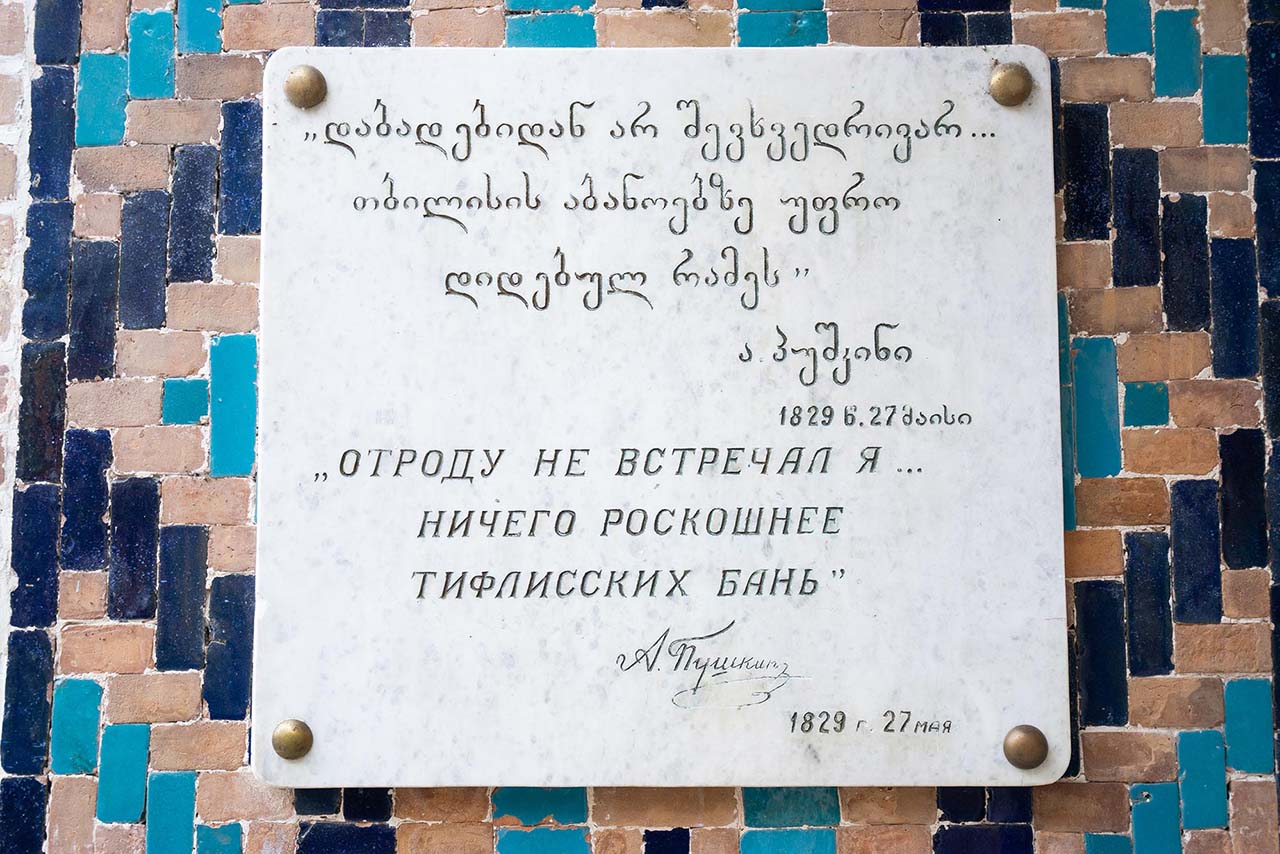
At the entrance hangs a plaque with the words of Alexander Pushkin, who said after visiting the baths: “Never in my life have I come across anything more luxurious than the Tiflis baths.” Alexandre Dumas also visited this bath, and today two private rooms are named after these famous guests.
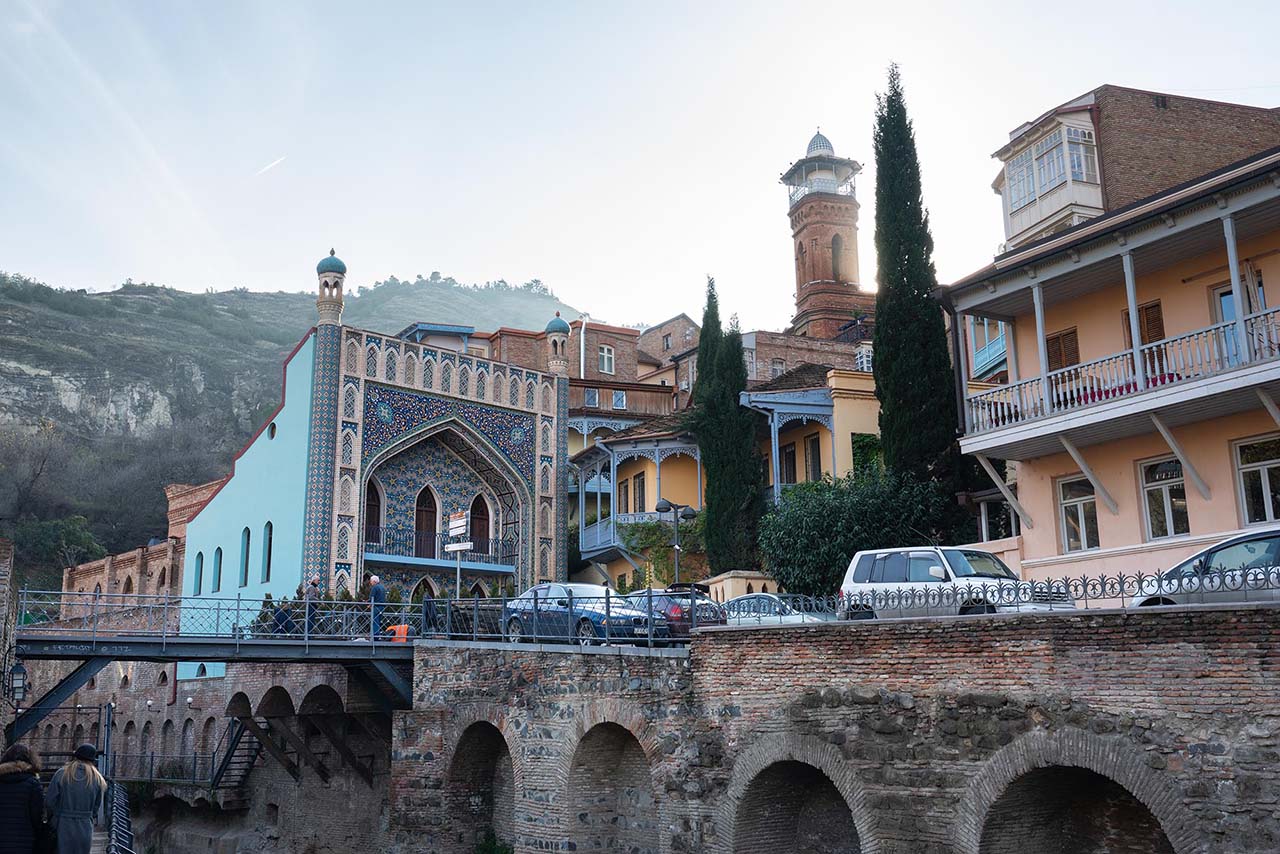
This bath really is the best in terms of service, rooms, staff and everything else. If you want to relax in comfort and a pleasant setting, this is the place. But it isn’t cheap: in 2019 I paid 120 GEL for an hour here. Today the smallest room for 1–2 people costs 130 GEL per hour, a room for 1–3 people – 160 GEL, the large rooms for 4–6 people (including “Pushkin” and “Dumas”) – 200 GEL, the VIP apartment – 500 GEL, and the “Royal” apartment for 12 people – 600 GEL. For one person it’s quite expensive, but with a group the price looks much nicer and becomes affordable for almost anyone.


The rooms are beautifully finished with oriental motifs. The changing room is separate and closes tightly, which keeps your things dry – other baths don’t have that. There’s a spacious, comfortable lounge with soft furniture where you can rest between dips in the pool.
Unlike other baths, there are no rubber slippers here, but you can buy disposable ones at reception. They’re quite slippery on the wet floor, so it’s better to bring your own. At reception you can also get towels and sheets and buy soap. A kisi scrub here costs 30 GEL; it’s best to pay for it in cash.
It’s very warm inside, it gets hot quickly and you want to cool down. The water in the pool is hot – not everyone can sit in it for 15 minutes; I lasted about 12–13 minutes. Still, I found it easier to get into this pool than the one at Gulo – maybe because the difference between air and water temperature is smaller here.
There’s a large menu of drinks and snacks, and you can order by phone. Drink prices are a bit above the city average. I can’t say anything about the food – I didn’t order any. It’s handy that they call you 15 minutes before your time is up.
Gulo Bath (Gulo’s Thermal Spa)
The entrance to this bath is a little to the side and easy to miss, so fewer tourists come here. That’s why in high season it’s usually easier to get in. The bath is famous because the British singer Sting visited it during his trip to Georgia. Ask the staff which room he was in – if you’re lucky, you can book exactly that one.
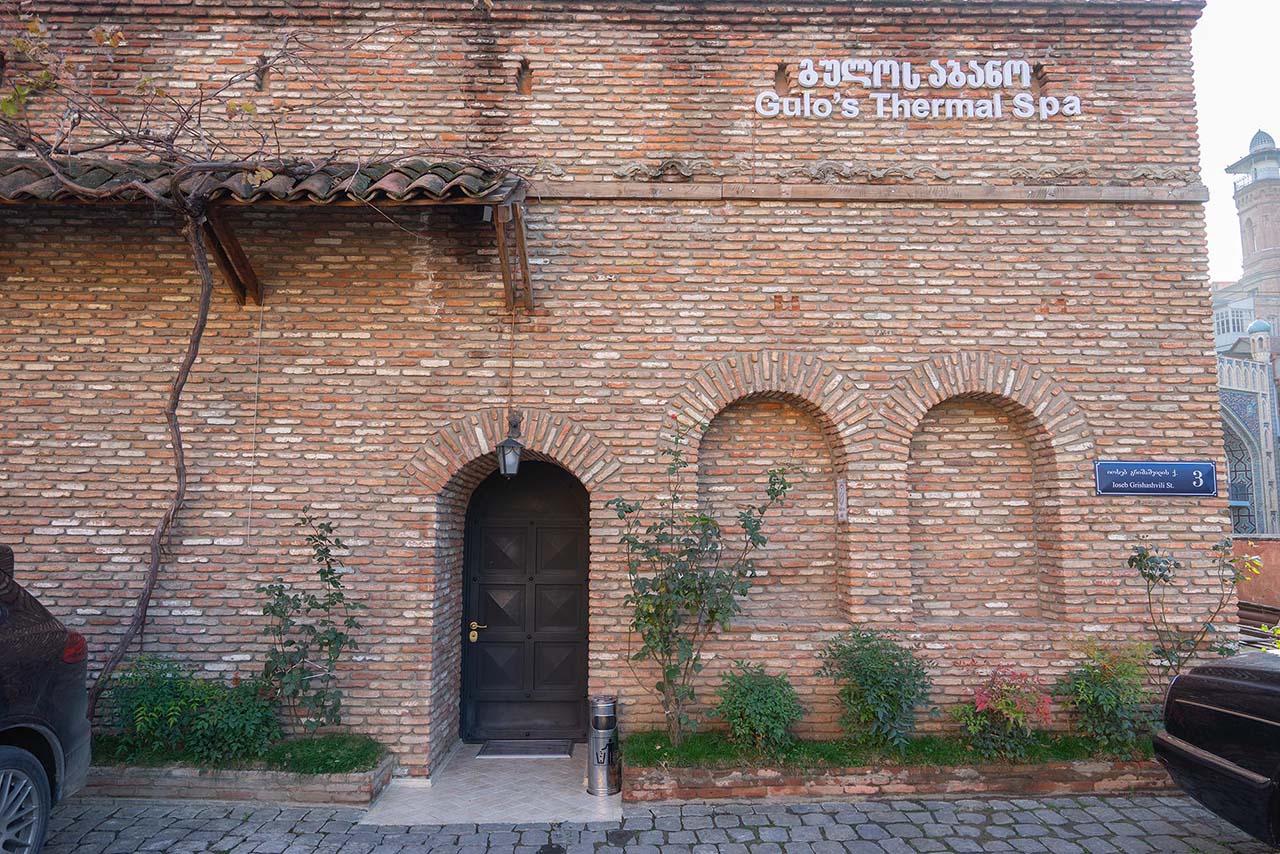
If Sting came today, he probably wouldn’t be taken to this bath. But back then the Orbeliani bath was being renovated, and Gulo was one of the best. Its quiet location and easy access probably also played a part.
Back then prices at Gulo were much more democratic than at the Colourful bath, and to make the comparison fair I chose one of the best and most expensive rooms at Gulo. A room with two pools, hot and cold, cost me 70 GEL in 2019. Today rooms at Gulo cost from 150 to 300 GEL per hour. The bath is open from 7 am to 3 am; rooms are booked via WhatsApp or Facebook.
Right at the entrance it became clear that this bath is noticeably worse than a mid-range room at the Colourful (Orbeliani) bath. The room itself is quite spacious, but the decor is modest, despite a beautiful mosaic panel on the wall behind the pool.


The changing room and the lounge are one space. If you come with friends of both sexes, changing won’t be very convenient. The only separate room is the toilet, but it’s at the far end, next to the pools, and you have to walk there in your street shoes.
If you visit in the cold season, the room can be quite chilly. When I was there it was early December, around zero outside, and the windows in the domes were broken. Cold air came in, so the water in the pool felt very hot. It took me at least 3 minutes to get in fully – quite a sensation, as if an electric current ran through my body. Getting in the second time is much easier.
On the other hand, it was much easier to stay in the pool for the full 15 minutes than at Orbeliani. After the hot water it was great to move straight into the neighbouring pool with cold, refreshing water. In summer the hot pool must be easier, and the cold one even more pleasant.
Bath accessories can be bought as a set: towel, sheet and shampoo. There are shared rubber slippers inside. A kisi scrub here costs about 20 GEL.
After the room you can relax in the common lounge on soft sofas, cool down, dry your hair, have tea or water. In the cold season this is very convenient – going straight out into the street after the bath isn’t the best idea.
King Erekle’s Bath
This bath is opposite the Orbeliani bath, across the little bridge. When I first visited, the rooms didn’t impress me – there was something elusively Soviet about the decor, but the prices were the most democratic.
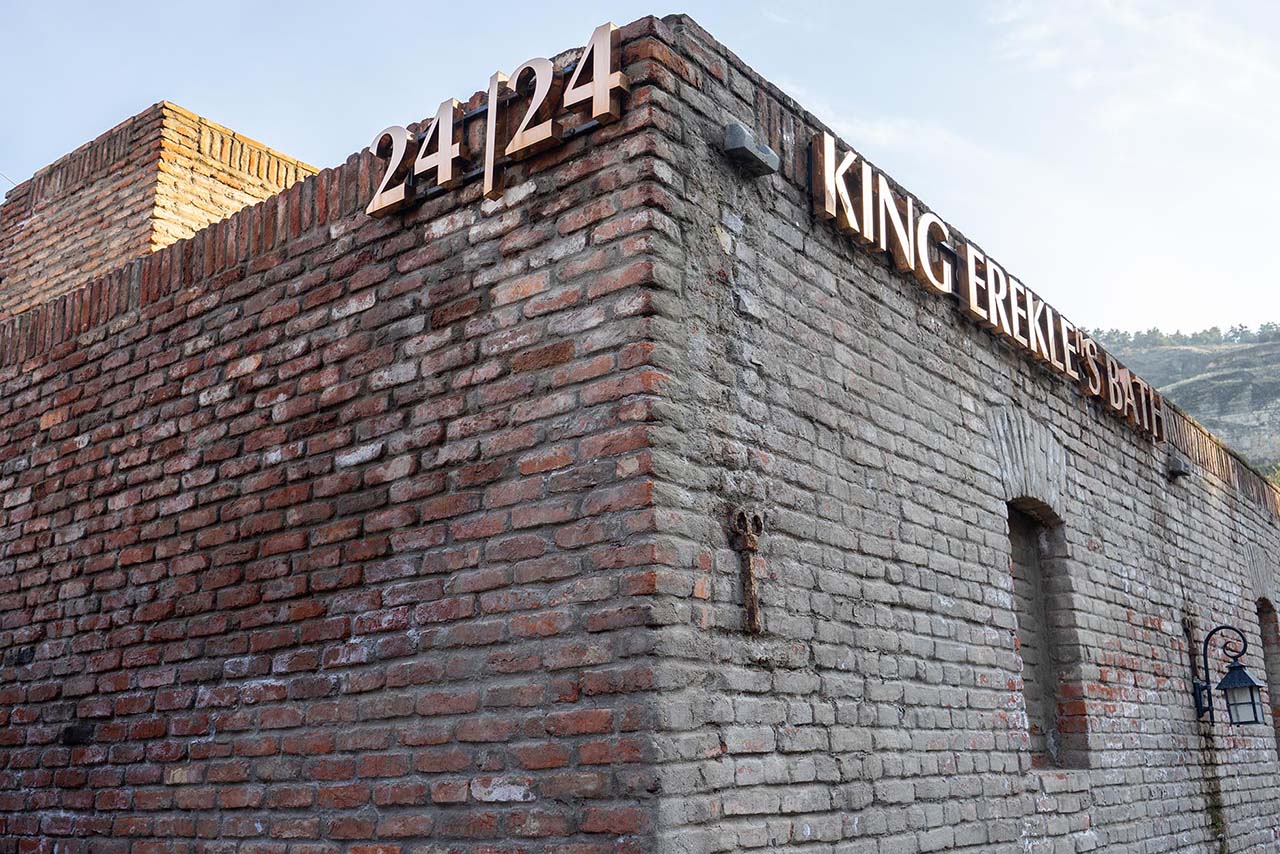
Since then the bath has been renovated and is now a completely different place, run by the same company as the Colourful bath. There’s no public hall, only private rooms: Junior for 1–3 people – 200 GEL per hour, three Premium rooms for 1–5 people – 250 GEL each, and the “King Erekle’s Apartment” suite for 7 people – 400 GEL. Bath accessories are not included. Open 9:00–23:00, you can book on the website ereklesabano.ge.


Bath No. 5 – the cheapest
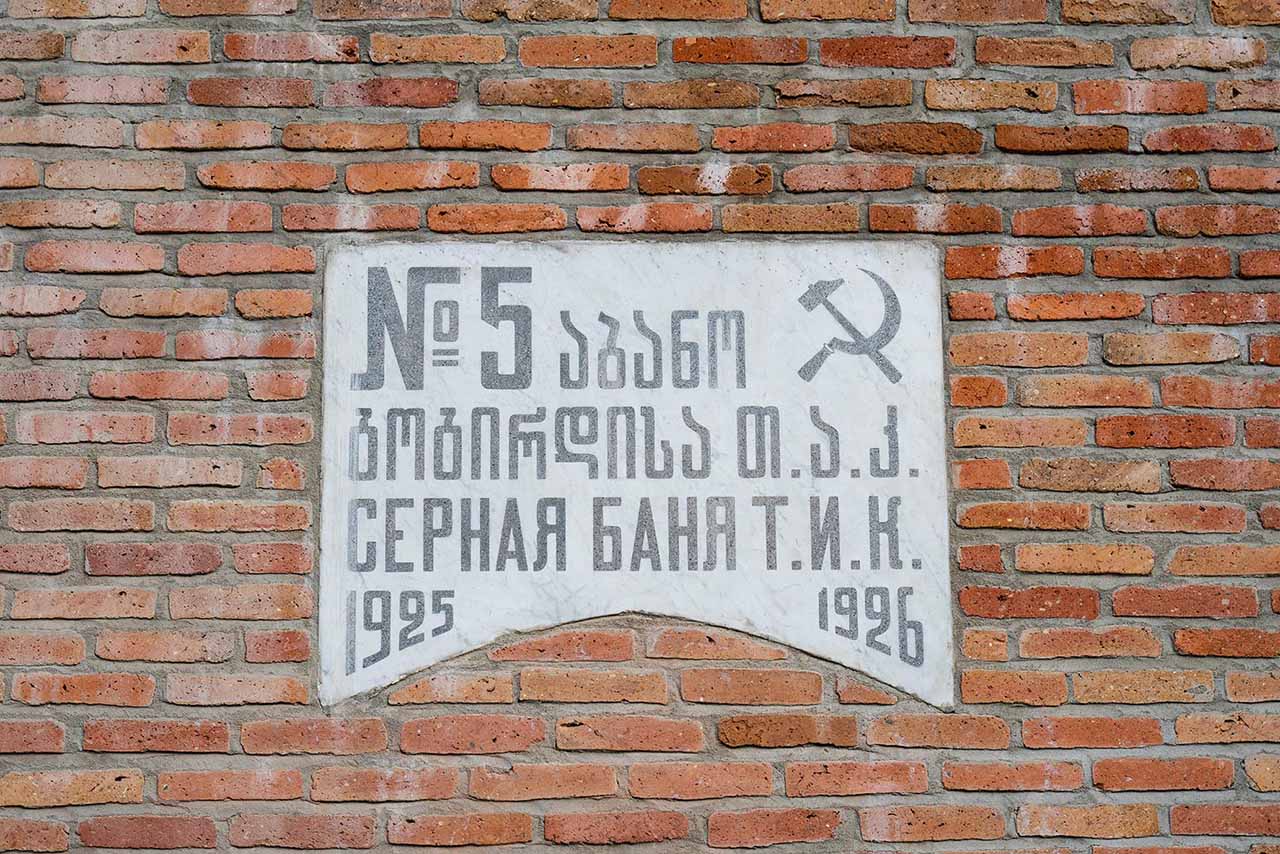
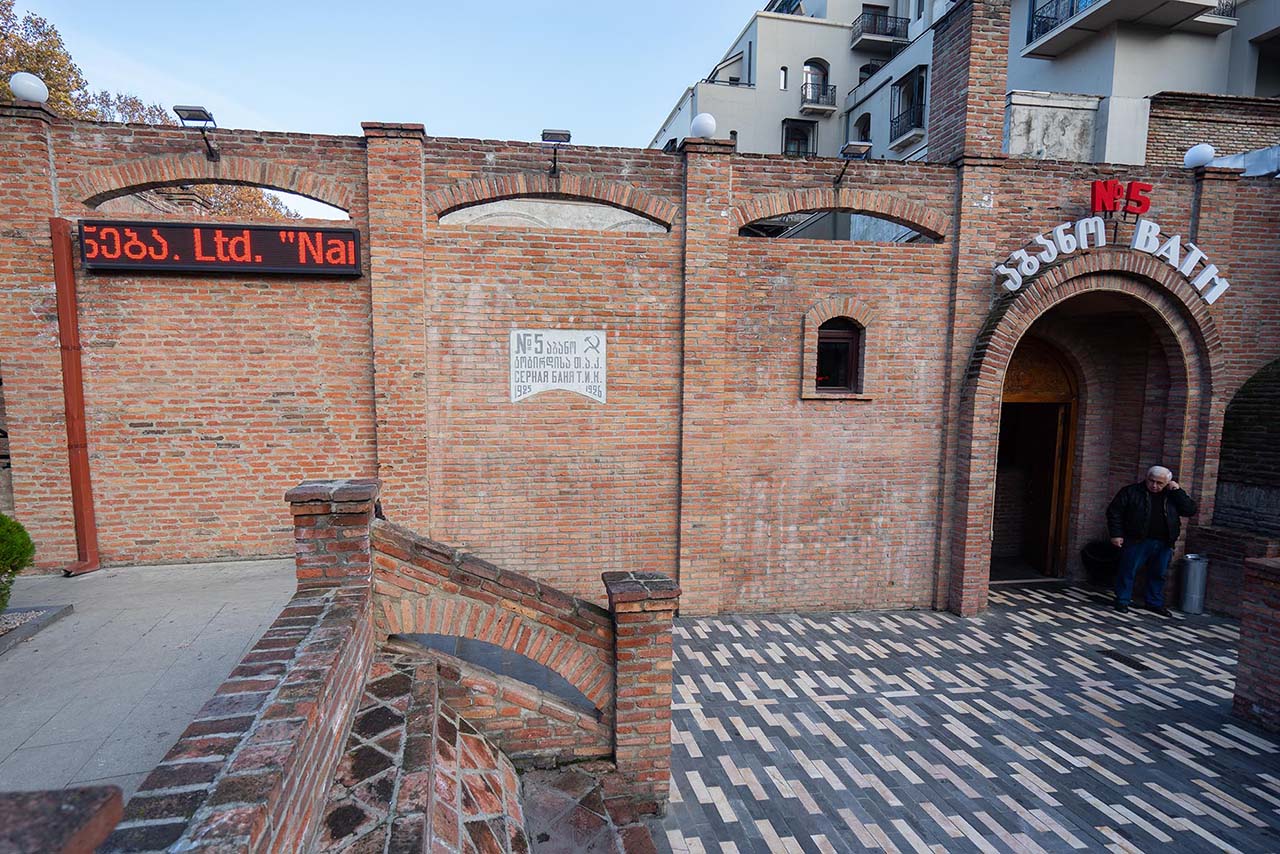
One of the best known, mainly because it’s cheap and convenient. It has a large public hall, 2 suites and 5 private rooms with pools. The bath is divided into the sulfur bath No. 5 itself and a “VIP bath”. There’s also an ordinary sauna and a massage table; a kisi scrub costs about 10 GEL. The bath attendants here are called mekise. Agree on the price of the scrub and massage in advance: tourists are often quoted 2–3 times more, and people still write about it in reviews.
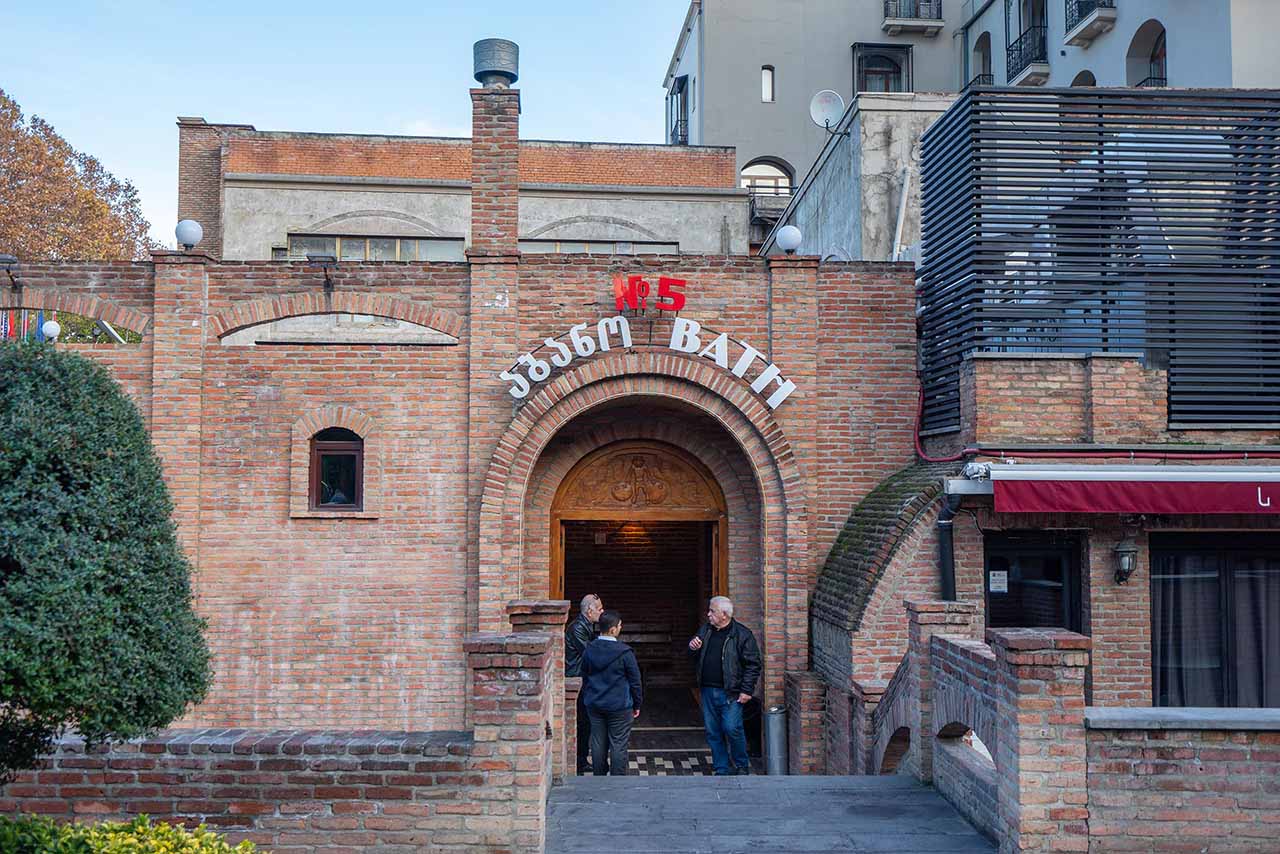
The men’s public hall costs 10 GEL per hour and includes showers, a small pool and a sauna. The women’s hall costs 6 GEL, but it only has showers with sulfur water and no pool, so the experience isn’t complete. You can rent a towel; better bring your own slippers. Private rooms start at 120 GEL per hour. The rooms are small and plainly decorated, and the public hall is full of Soviet-era flavour. Open 8:00–21:00.
Royal Bath
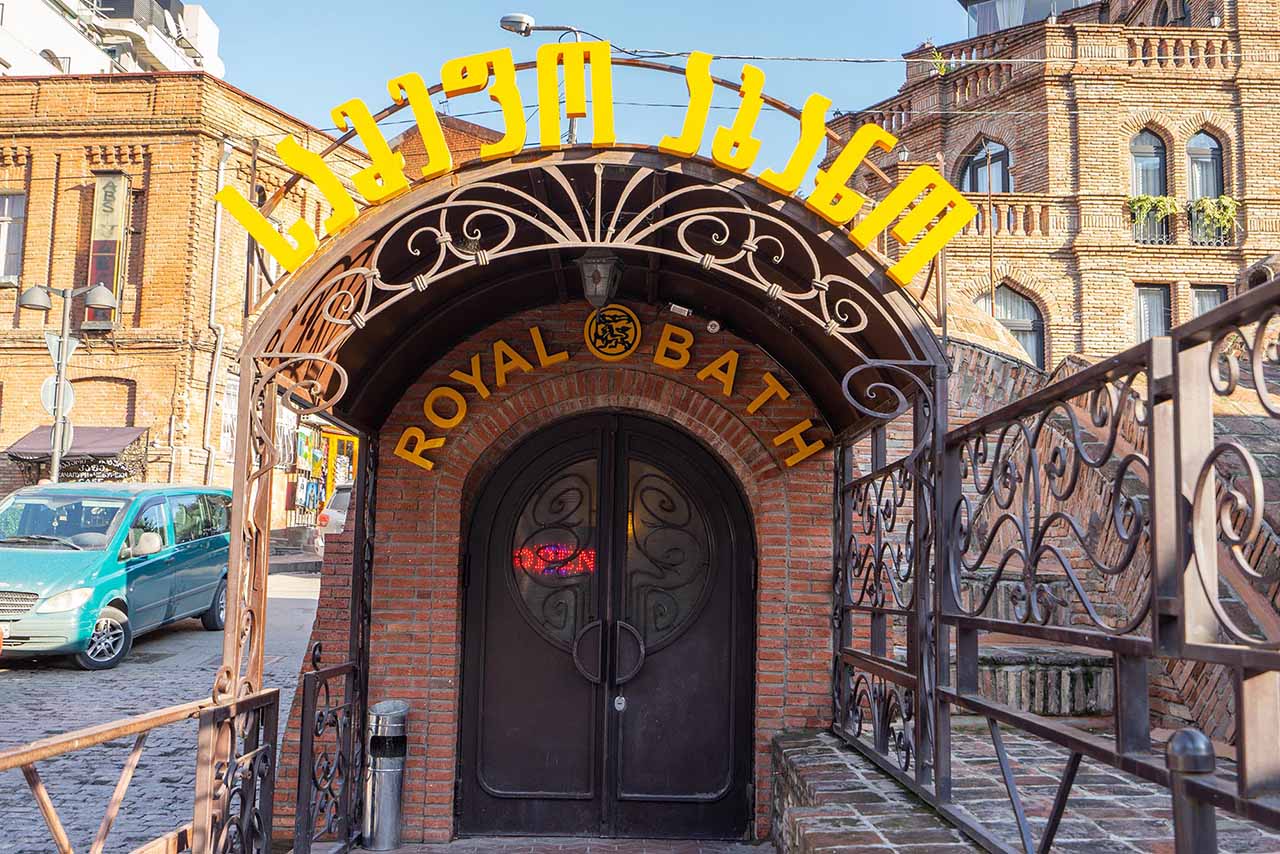
The Royal Bath (Tsariteli) is at the very start of Grishashvili Street. Private rooms start at 150 GEL per hour, some have their own sauna. Open 8:00–23:00. Without booking you can sometimes get in if you wait a bit, but it’s safer to arrange the day before.
Bohema and Queen’s Bath
Both baths are next to each other at 11 Grishashvili Street. Bohema has the most affordable private rooms in Abanotubani – from 70 GEL per hour, open 8:00–23:00. Reviews about cleanliness are mixed, so have a look at the room first. Queen’s Bath is a simple public bath for 5 GEL, but in 2026 it was closed for renovation – check whether it has reopened before you go.
There are a few more baths – Sumbatov, Bebutov, the State bath, Mirzoev bath. They’re less popular, but each has its regulars. You can walk into any bath, look around and check the price list before deciding where to stay.
Kyiv Sulfur Spa
If everything in Abanotubani is booked or you want something cheaper, there’s the Kyiv Sulfur Spa at 4 Kiev Street – it’s not the Old Town, but there are fewer tourists. Rooms with a sulfur bath and sauna start at 90 GEL per hour, open from 8 am to 2 am. Book via WhatsApp.
Sulfur bath at Lake Lisi
Another sulfur bath is at Lake Lisi, outside the centre. The public hall costs about 20 GEL, open 7:30–21:00. It’s easy to combine with a walk around the lake, but you’ll need a taxi to get there.
In a private room there’s no particular procedure, but if you choose the public hall, here’s what to expect. Go inside, find the ticket desk and buy a ticket. Then go down the stairs to the right section, where an attendant checks your ticket and shows you a locker for your clothes. The locker is locked and the key stays with the attendant, so you don’t need to worry about your things. Then you go into the bath hall, take a shower first and only then get into the pool with hot sulfur water. If you like, you can order a scrub or massage.
Tbilisi sulfur baths: prices, addresses and opening hours
In summer, in high season, the baths are incredibly busy. I recommend booking a room at least a day in advance – otherwise all the private rooms will most likely be taken and you won’t be able to enjoy the sulfur baths of Tbilisi in comfort.
The Orbeliani bath (chreliabano.ge) and King Erekle’s bath (ereklesabano.ge) have websites with online booking, but you can’t book for the same day there. At Gulo, Kyiv Spa and most others it’s easier to write on WhatsApp or just come – that way you can see all the rooms and test the water temperature yourself.
Addresses, phones and prices of the most popular baths:
- Orbeliani bath (Chreli Abano) – 2 Abano St. Phone: +995 322 93 00 93. Hours: 9:00–23:00. Rooms from 130 to 200 GEL per hour, VIP 500 and 600 GEL.
- Gulo – Grishashvili St. Phone/WhatsApp: +995 599 58 81 22. Hours: 7:00–3:00. Rooms from 150 to 300 GEL per hour.
- Bohema and Queen’s Bath – 11 Grishashvili St. Phone: +995 322 14 15 00. Bohema: 8:00–23:00, rooms from 70 GEL. Queen’s Bath – public hall 5 GEL.
- Royal Bath – 1 Grishashvili St. Phone: +995 555 50 22 00. Hours: 8:00–23:00. Rooms from 150 GEL per hour.
- King Erekle’s bath – 2 Abano St. Phone: +995 322 93 00 93. Hours: 9:00–23:00. No public hall, rooms from 200 to 400 GEL per hour.
- Bath No. 5 – 3 Vakhtang Gorgasali St. Phone: +995 322 72 20 90. Hours: 8:00–21:00. Public hall 10 GEL (men) and 6 GEL (women), rooms from 120 GEL.
- Kyiv Sulfur Spa – 4 Kiev St. Phone/WhatsApp: +995 577 38 29 29. Hours: 8:00–2:00. Rooms from 90 GEL per hour.
- Lisi Bath – at Lake Lisi. Phone: +995 598 31 33 11. Hours: 7:30–21:00. Public hall about 20 GEL.
Besides these, there are a few more old baths in Abanotubani – Sumbatov, Bebutov, Mirzoev. They’re all within one block.
How to get to the sulfur baths
You can get to Abanotubani by taxi, public transport or on foot. It’s in the very heart of Tbilisi, opposite the Gorgasali monument, near Narikala fortress, Meidan Square and the Bridge of Peace. You’ll easily recognise the place by the stone domes of the baths sticking out of the ground.
The nearest metro station is Avlabari: walk down to Metekhi bridge and cross the Mtkvari river – it takes about 15 minutes. From Liberty Square station the walk is a bit longer, but it takes you through the whole Old Town. A taxi is easiest to order via an app (Bolt, Yandex Go) – it’s cheaper than hailing one on the street. And if you come down from Narikala by the cable car, you can simply walk down to the baths.
What to see near the baths
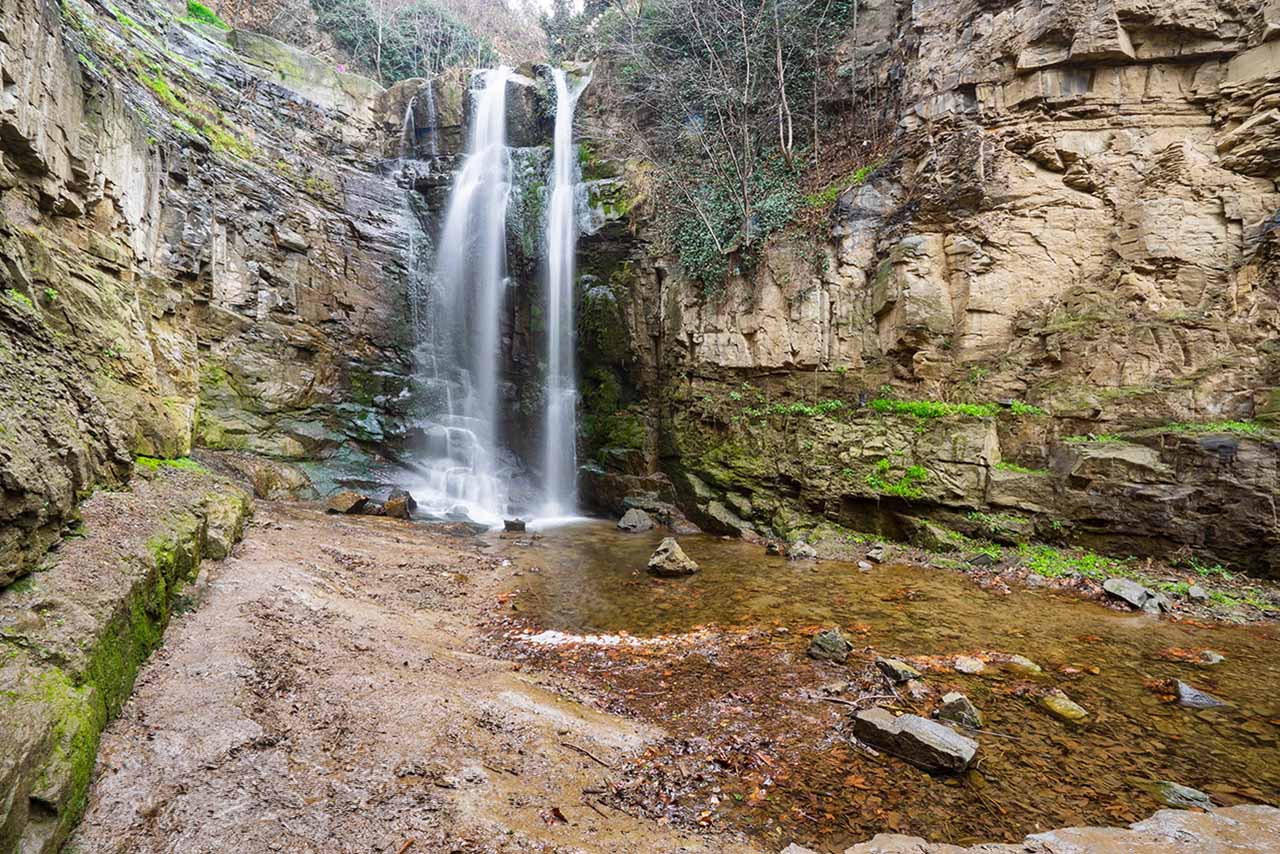
A visit to the bath is easy to combine with a walk around the nearby sights: the monument to Vakhtang Gorgasali’s falcon, with which he hunted at the warm springs, Aliyev monument and square, the Niko Pirosmani sculpture, the monument to the “kochi” knucklebone used in backgammon, and a picturesque waterfall in the Leghvtakhevi (Fig) gorge.
Abanotubani is part of the old historic quarter with beautiful old houses. Nearby are the Tbilisi Botanical Garden, Metekhi church, Narikala fortress, Rike park, and the history and ethnography museum with 1st–2nd century baths.
After the bath you can have hearty khinkali at Pasanauri restaurant (1 Gorgasali St), enjoy live music and dancing at Gorgasali with a view of the bath domes, or try simple home cooking at Alani.
Read more about the best restaurants in Tbilisi with live music and dancing.
FAQ about the Tbilisi sulfur baths
How much does a sulfur bath in Tbilisi cost?
A public hall costs from 5–10 GEL, the most popular one is at Bath No. 5. A private room for an hour costs from 70 GEL at Bohema and 130–200 GEL at the Orbeliani bath up to 400–600 GEL for VIP suites. The price is per room, so with a group it’s much cheaper per person.
Which sulfur bath in Tbilisi is the best?
For service and atmosphere – the Orbeliani (Colourful) bath, where Pushkin bathed. Cheaper options are Bohema and Kyiv Sulfur Spa, and Gulo is good because it’s open until 3 am. If you just want a public hall for next to nothing – Bath No. 5.
Do I need to book a sulfur bath in advance?
In season and at weekends – yes, at least a day ahead. Orbeliani and King Erekle don’t take online bookings for the same day; the others take bookings via WhatsApp or on the spot.
How long should you stay in a sulfur bath?
About 15 minutes in the hot water, then a 5–10 minute break, and no more than four rounds. An hour is usually enough.
What should I bring to a sulfur bath?
Your own slippers and towel if you don’t want to rent them. Take off silver jewellery beforehand – hydrogen sulfide oxidises it and it turns black.
The sulfur baths aren’t only about health, rest and cleansing the body. They’re a great chance to soak up the real Tbilisi atmosphere and get to know ancient Georgian culture a little better.
Read more:
Best hotels in the centre of Tbilisi
Best hotels in the mountains of Georgia with stunning views

Hello!
I am Victor, the founder of this site and its main, but not the only author.
Traveler and photographer. Visited more than 60 countries.
Born and raised in Batumi. I love to travel in Georgia.
More about me here.