


Mtskheta lies 20 km north of Tbilisi. This picturesque museum town is usually the first place travellers visit when they start exploring Georgia.
The small town and its surroundings are a UNESCO World Heritage Site. With a unique history of more than 2,500 years, it is called the “Second Jerusalem” and the spiritual centre of Georgia.
Mtskheta is closely linked to one of Georgia’s most revered saints, St Nino of Cappadocia, and to the official adoption of Christianity by the Georgians.
Mtskheta: the trip in brief
Mtskheta is the ancient capital of Georgia, a town where the Aragvi and Kura rivers meet, 20 km from Tbilisi. In short, here is what you need to know:
- How far: about half an hour by car from central Tbilisi; the minibus from Didube metro station takes about 25 minutes.
- Entrance to churches: free; it is customary to leave a small donation.
- What to see first: Svetitskhoveli Cathedral, Samtavro Monastery, where King Mirian and Queen Nana are buried, and Jvari Monastery on the hill opposite.
- How much time you need: you can see the main sights in 1 day; to explore the surroundings calmly, stay 2–3 days.
What to wear
All the churches are active. Women need a skirt and a headscarf, which can be borrowed at the entrance to Svetitskhoveli. Men should wear trousers. Wear comfortable shoes: you will have to walk uphill to Jvari and Samtavro.
Is it worth going?
Yes, it is the easiest day trip from Tbilisi: it is close and there is plenty to see. Mtskheta is linked to St Nino, who brought Christianity to Georgia, and this is where the Georgians adopted Christianity. If you have time, stay the night: in the evening, when the tour groups leave, the old town has a completely different atmosphere.
Sights of Mtskheta
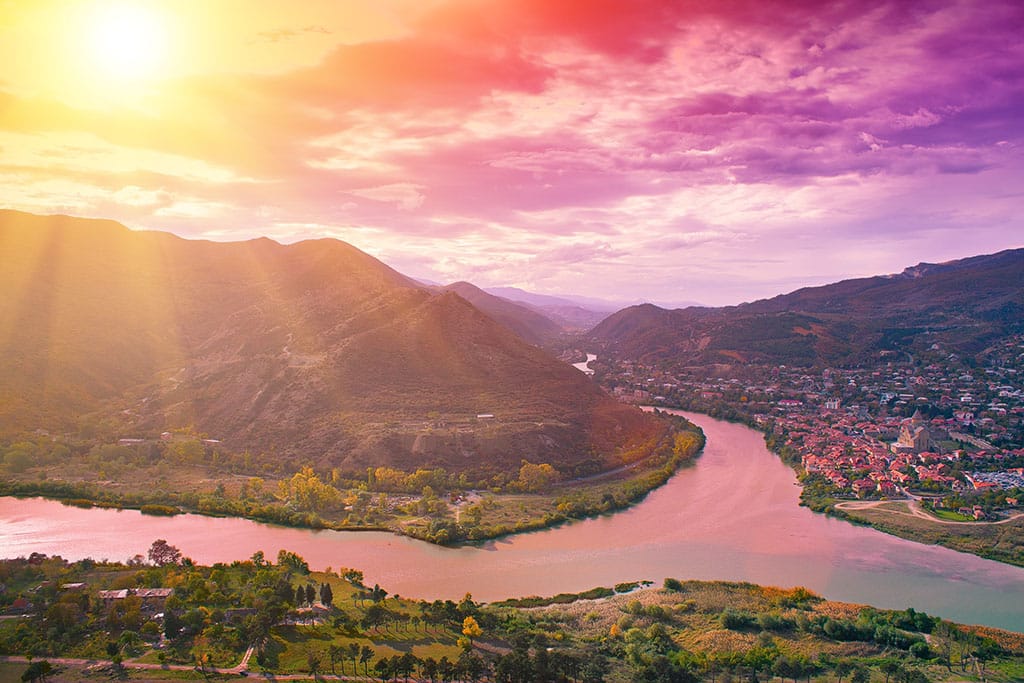
Its rich history, picturesque setting where the Kura (Mtkvari in Georgian) and Aragvi rivers meet, and a recent large-scale restoration have made Mtskheta a real place of pilgrimage for tourists and locals alike.
The main sights are Svetitskhoveli and Jvari. You can also see Samtavro church, the Antiochian church, the walls of Bebristsikhe fortress, the archaeological museum, the Samtavro burial ground and more.
Souvenir lovers can indulge their passion on the way from the car park to Svetitskhoveli, along a charming street styled as an old town, lined with souvenir shops. Here you can buy churchkhela, spices, souvenirs and local crafts, visit a jewellery workshop making Georgian cloisonné enamel, sit in a café and taste Georgian wine and chacha.
Svetitskhoveli Cathedral
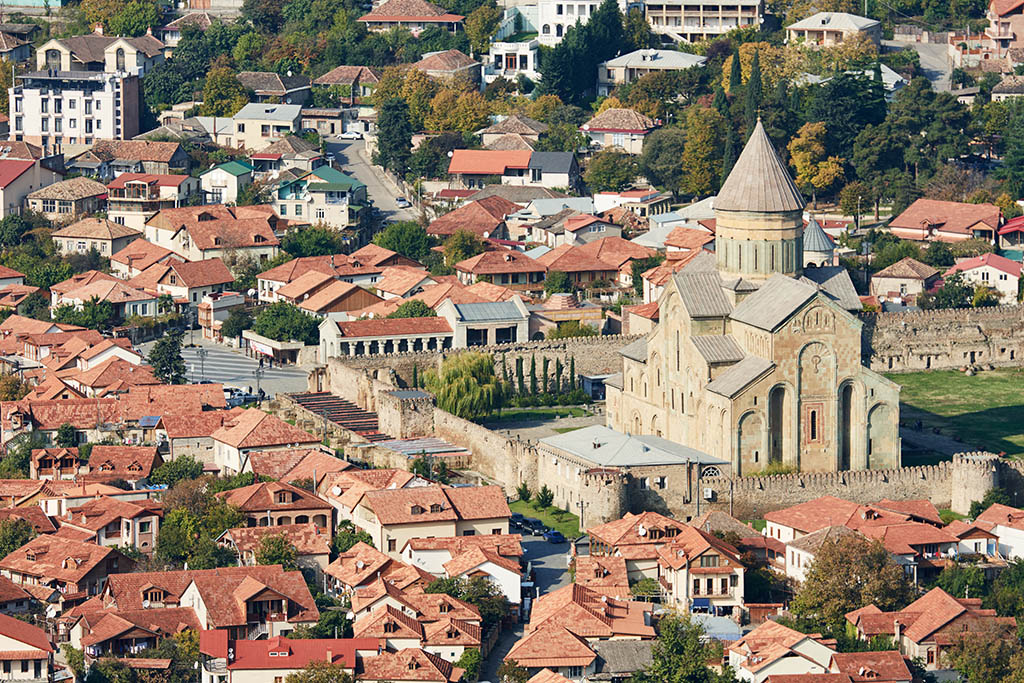
The main reason people come to Mtskheta is the patriarchal cathedral, Svetitskhoveli. Its name translates from Georgian as “the life-giving pillar”.
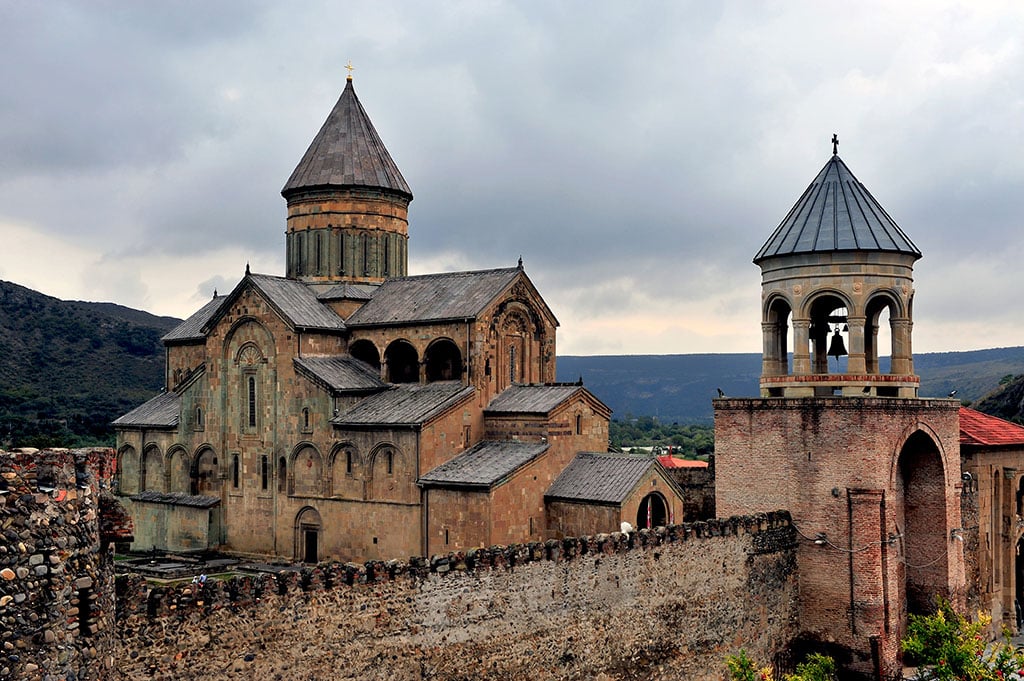
The name is linked to a legend about the robe of Christ, bought and brought to Mtskheta by the rabbi Elioz, who witnessed the crucifixion. According to the legend, he told a girl named Sidonia about the crucifixion and gave her the robe; she pressed it to her chest and died of grief. She was buried with the robe, and a cedar grew on the spot. When one of the Kartvelian kings decided to build a church on the grave, the cedar was cut down and seven columns were carved from it. One of the columns hung in the air, and the builders could not set it in place. Only thanks to the prayers of St Nino did they manage to install it, after which it began to exude myrrh.
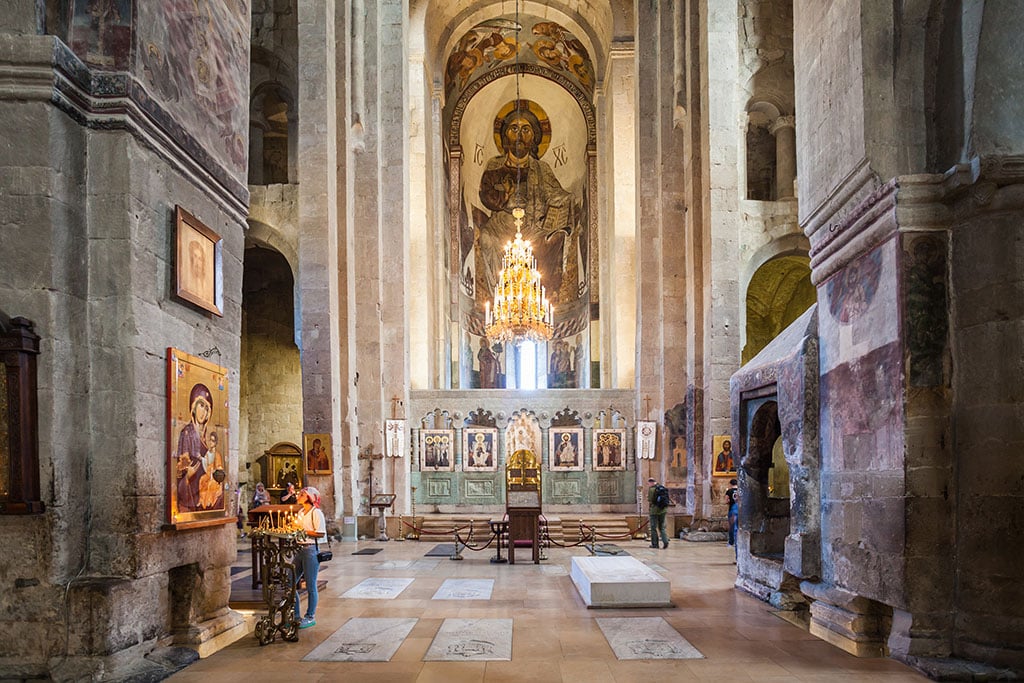
The present cathedral was built in the early 11th century on the remains of that ancient church of St Sidonia. The life-giving pillar (a new stone one, built in place of the old) stands in the centre of the cathedral.
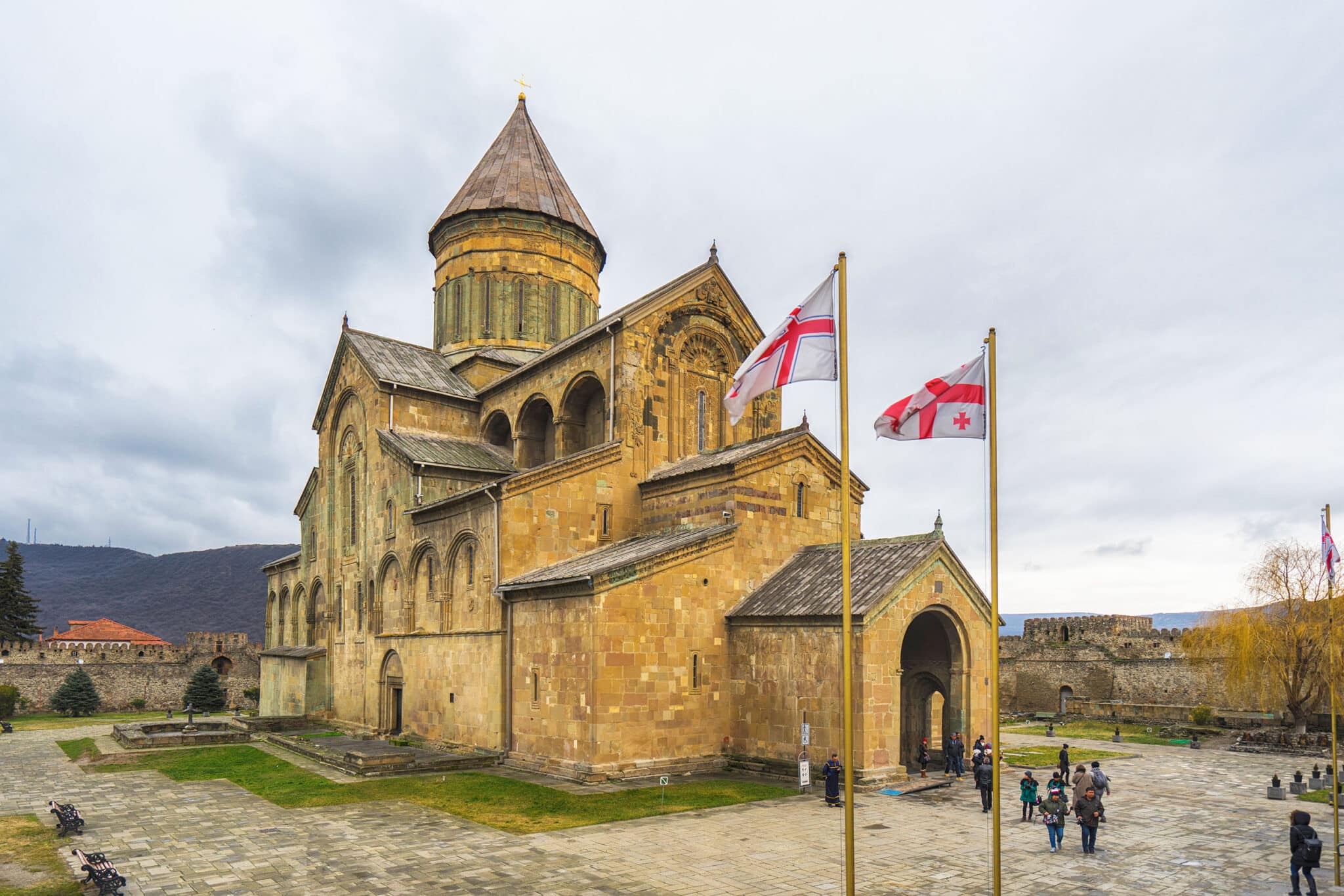
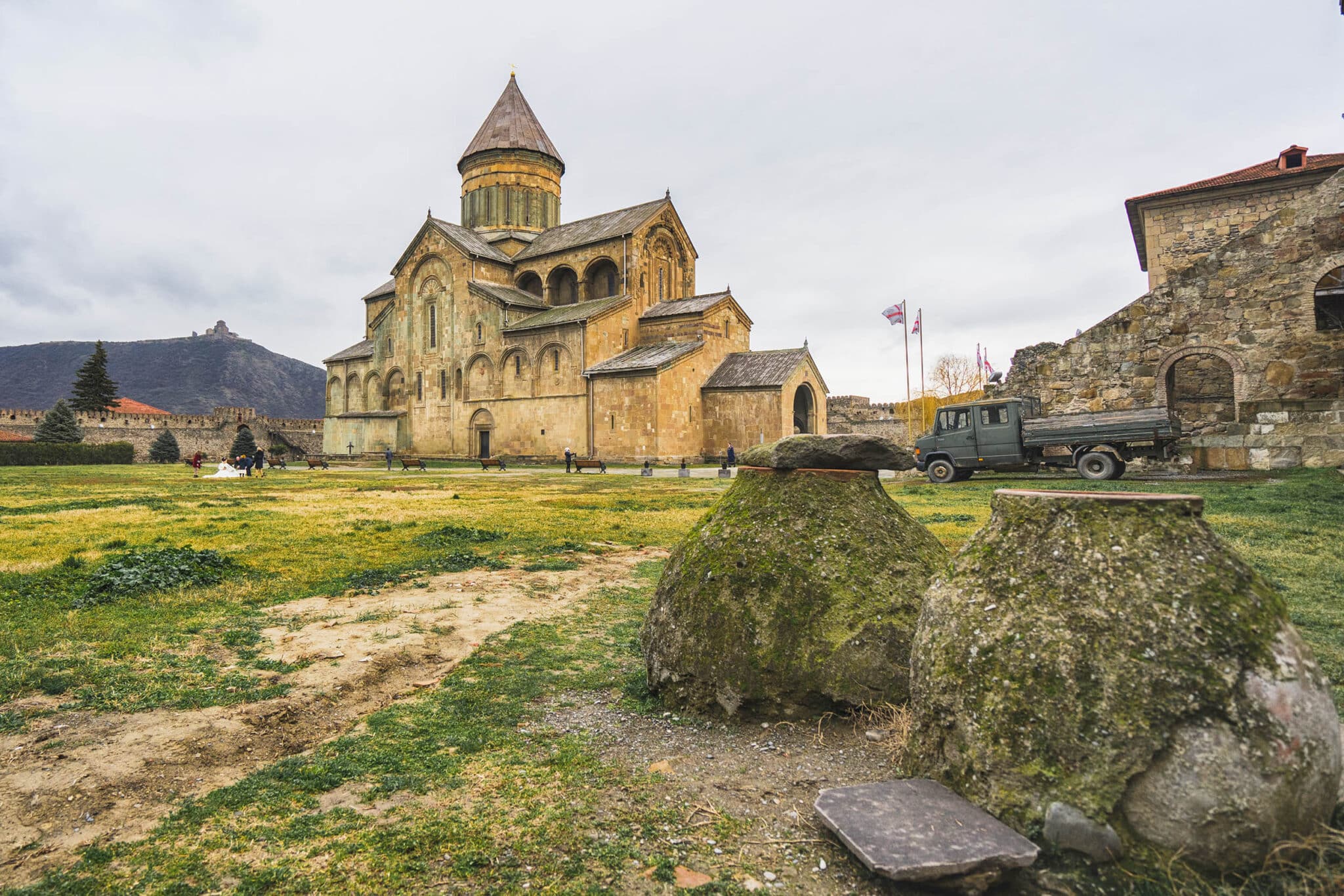
For a thousand years Svetitskhoveli was Georgia’s main cathedral, the place where kings were crowned and buried and where Georgian Catholicoses were enthroned.
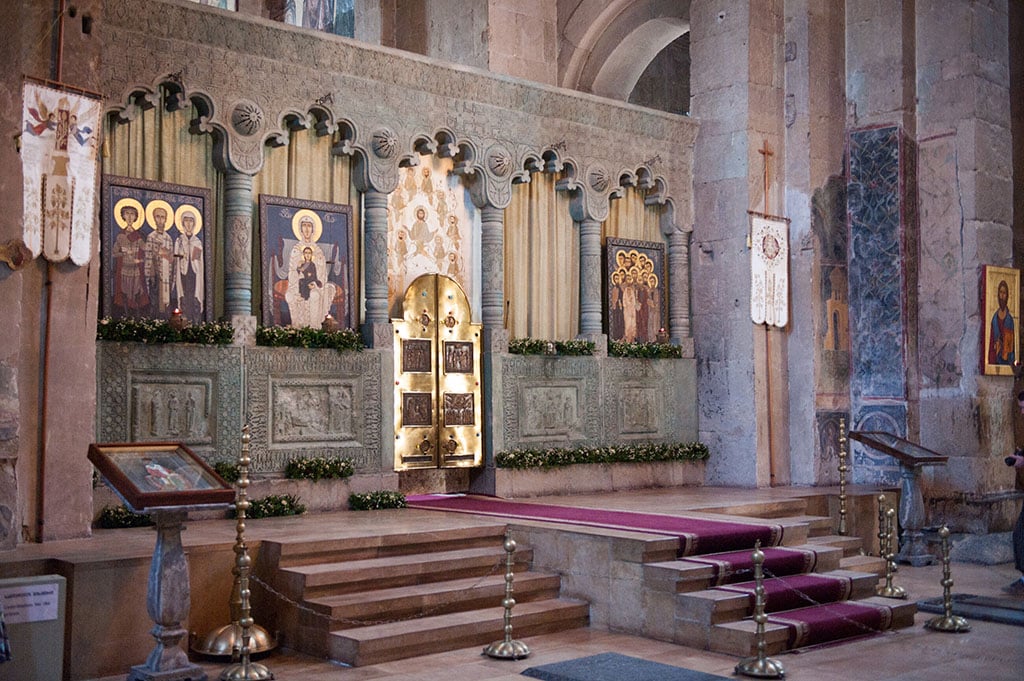
There is a dress code for visiting the cathedral, so women can borrow a skirt and headscarf near the entrance.
Svetitskhoveli is an active church with services at weekends: on Saturday from 17:00 to 20:00 and on Sunday from 9:00 to 13:00. During services you should not talk or take photos, but you can hear unique Georgian polyphonic church singing. At weekends you will often see newlyweds here, either getting married in the cathedral or stopping by after registering their marriage.
Samtavro Monastery
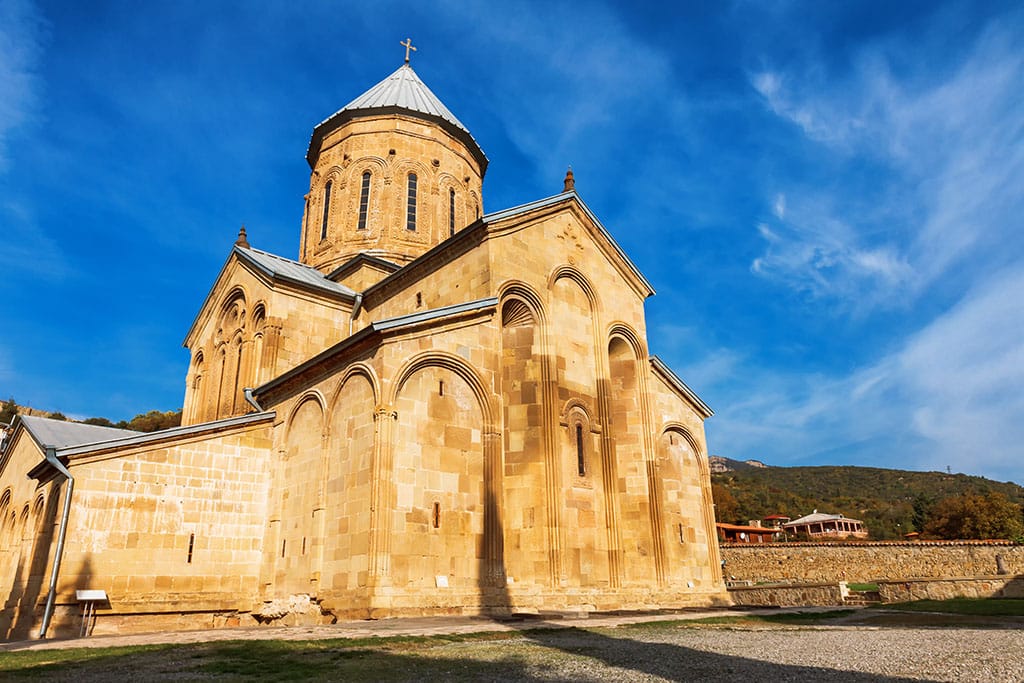
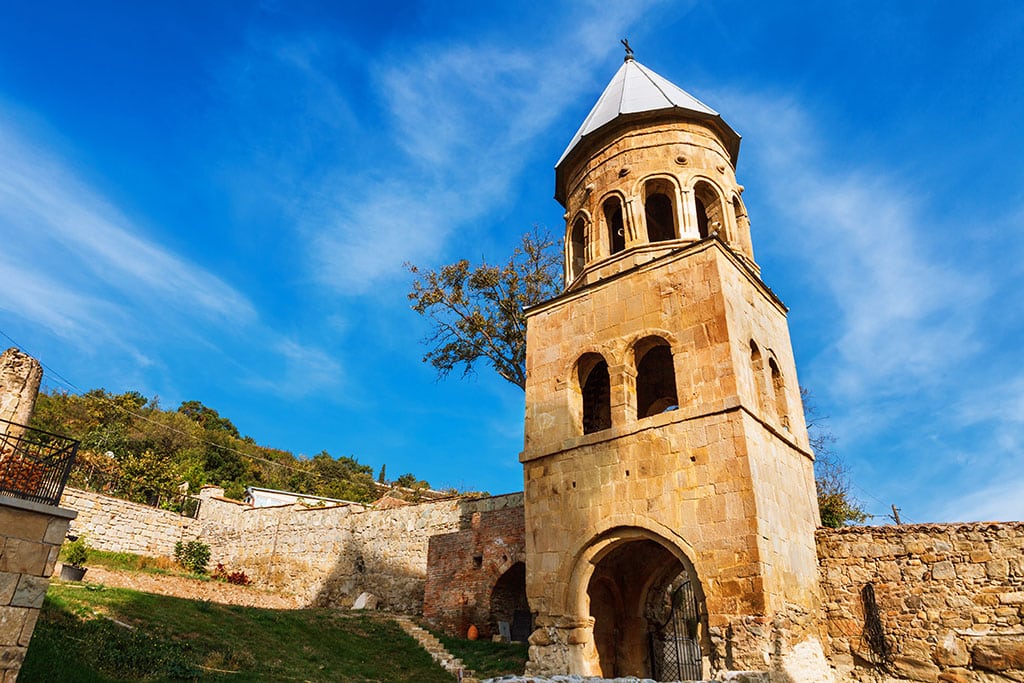
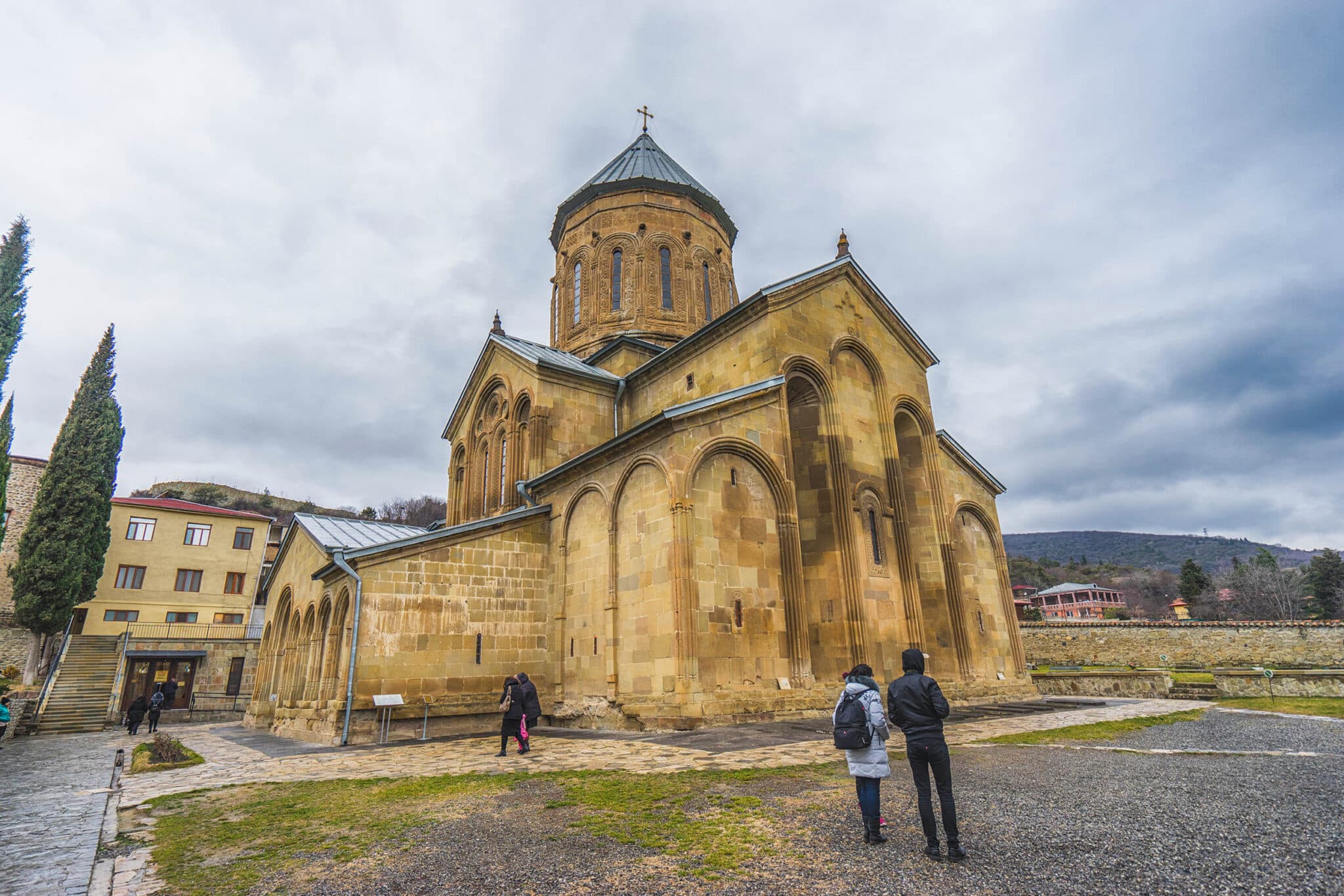
Samtavro church, built in the 11th century, is a 5–10 minute walk from Svetitskhoveli, in the grounds of St Nino’s convent.
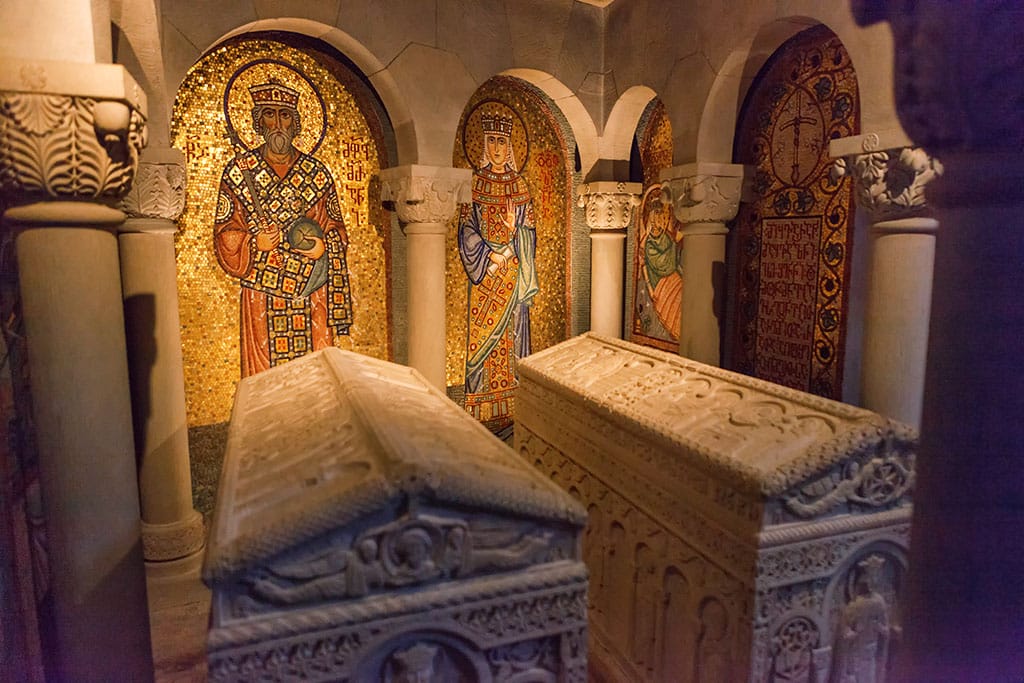
The church keeps the miracle-working Iveron icon of the Mother of God, part of the life-giving pillar and the relics of St Shio of Mgvime and St Abibos of Nekresi, the founders of monasticism in Georgia. It also holds the graves of King Mirian and Queen Nana, who converted Georgia to Christianity, and the relics of St Gabriel, a recently canonised saint whom people come from all over Georgia to venerate.
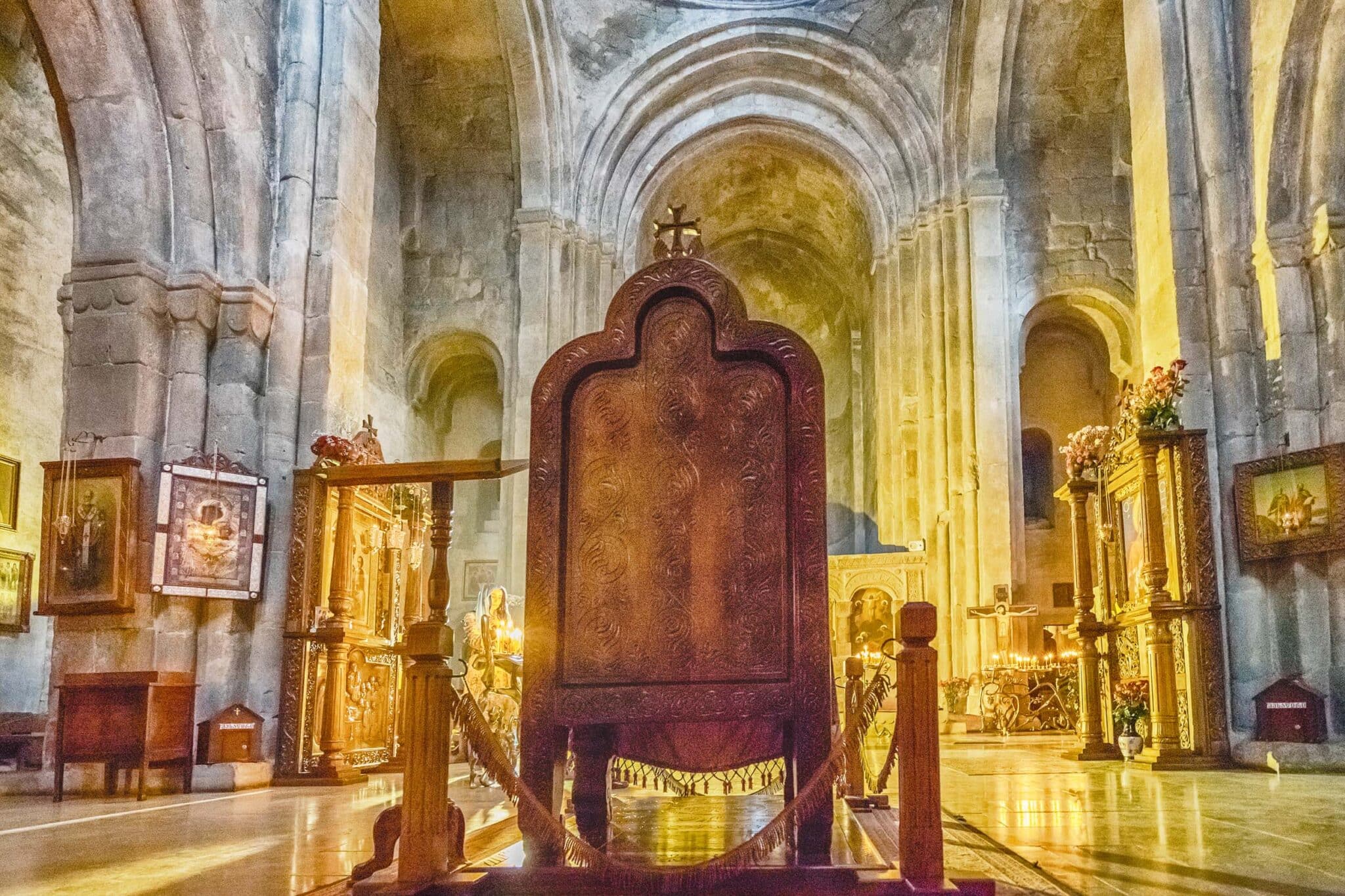
Next to Samtavro, on the spot where St Nino lived under a blackberry bush in the 4th century, stands the small Makvlovani church.
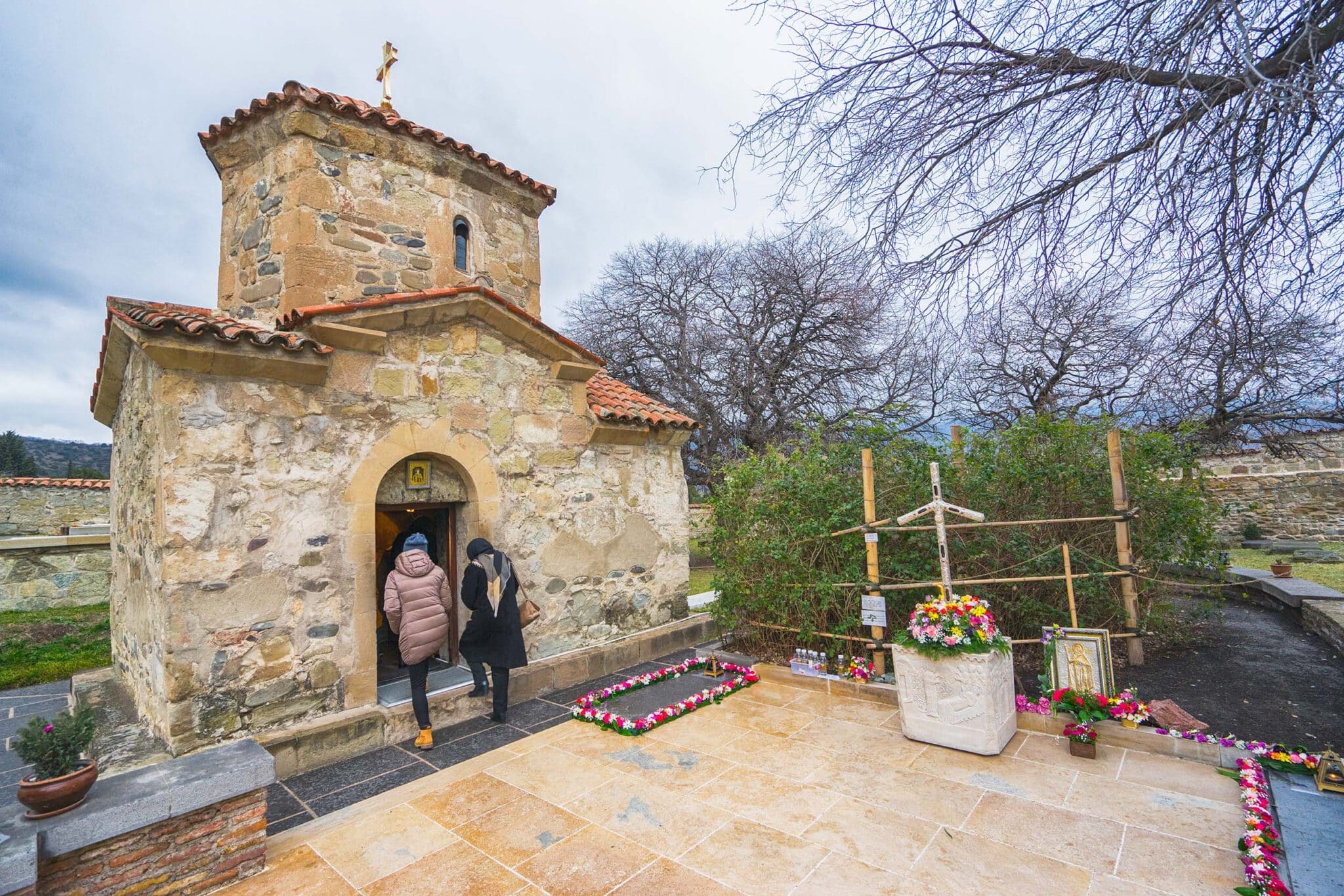
The convent itself is the oldest active convent in Georgia.
Bebristsikhe fortress, Armazi and other sights of Mtskheta
You can come to Mtskheta for a few hours to see the key places, or stay 2–3 days to see everything interesting connected with Georgian history.
On the northern edge of Mtskheta are the ruins of Bebristsikhe fortress, built in the 9th century.
Halfway between Bebristsikhe and Samtavro lies the Samtavro burial ground, one of the oldest cemeteries found in Georgia, discovered at the end of the 19th century. It includes burials from the Neolithic almost to the beginning of the Middle Ages. A recently discovered Bronze Age settlement can also be seen there.
Lovers of antiquity can also visit the archaeological museum and see the ancient city gates, displayed on the ground floor of the former Karibche cinema next to the museum.
Another rarely visited but very interesting place is the botanical garden of Mikheil Mamulashvili (1873–1973). It was a must-see in Mtskheta in Soviet times, and his garden and floral art were celebrated by the poet Yevgeny Yevtushenko. Today it looks rather neglected, but that makes it no less interesting. Address: 7 M. Mamulashvili Street.
Another interesting sight is the Zemo-Avchala hydroelectric power station, one of Georgia’s first, built in the 1920s.
Near Mtskheta there was also Pompey’s Bridge, built by the ancient Romans in 65 BC. It was used until the first third of the 20th century but went under water when the power station started working. Its remains can be seen when the water level in the Kura drops.
The area around Mtskheta is rich in historical monuments. One of them is Armazi, the remains of the residence of the Iberian kings, destroyed by the Arabs in the first half of the 8th century. Excavations are still going on. Here you can see the remains of an ancient palace, a marani (wine cellar) with jars buried in the ground, the bath complexes of the king and queen, and a sarcophagus. All exhibits have information boards in Georgian and English. There is also a great viewpoint with a panorama of Mtskheta.
You can walk to Armazi: cross the Kura by the bridge near the railway station, walk along the highway towards Tbilisi for about 1 km to the sign, then take the path uphill.
In the northern part of Mtskheta there is a small private airfield where you can take a plane ride and admire the area from above.
By taxi or your own car you can also visit the ancient fortresses of Nichbisi and Ksani, the Chavchavadze house museum and the Château Mukhrani winery in the village of Mukhrani.
What to see around Mtskheta
Jvari Monastery
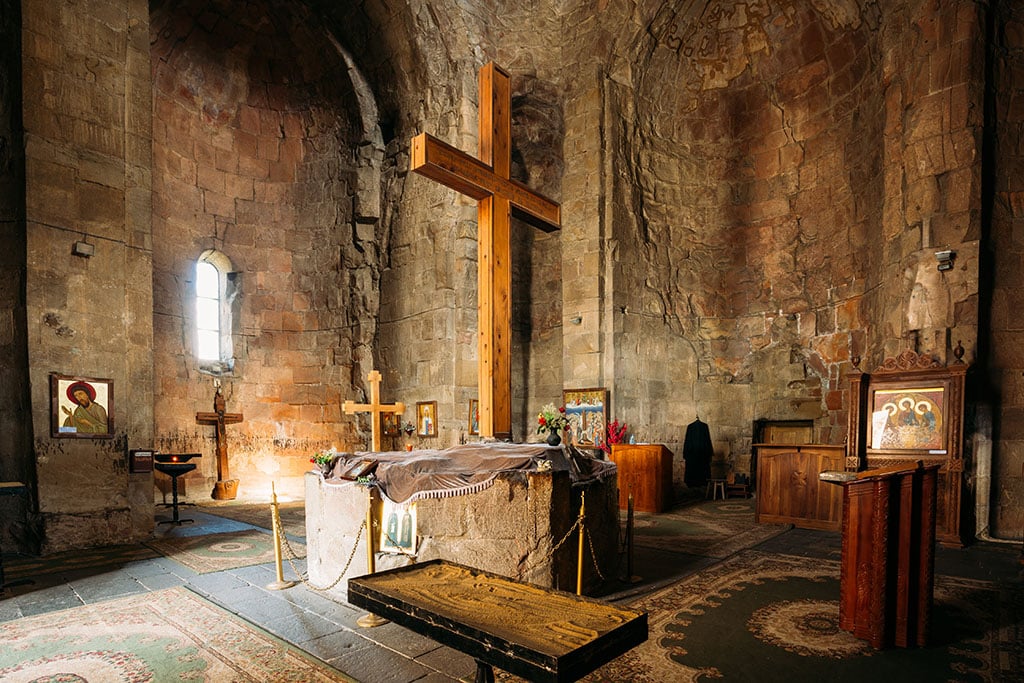
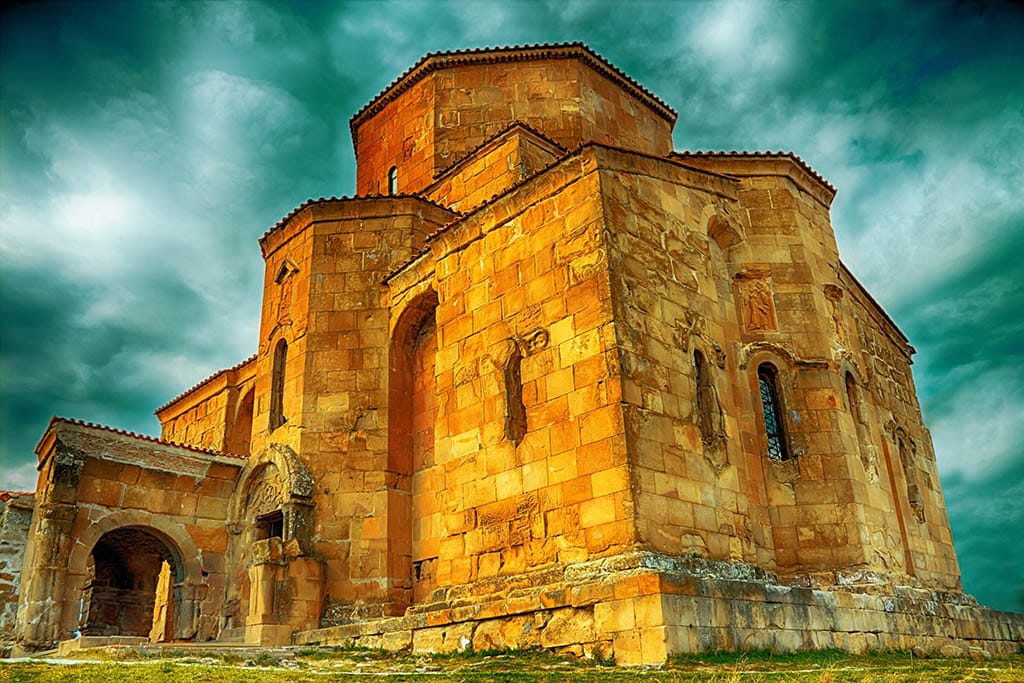
On the mountain on the opposite bank, facing Mtskheta, stands the famous Jvari Monastery (the Church of the Holy Cross). It was built in the first half of the 7th century on the spot of a cross set up by St Nino. Lermontov’s poem “Mtsyri” is associated with Jvari.
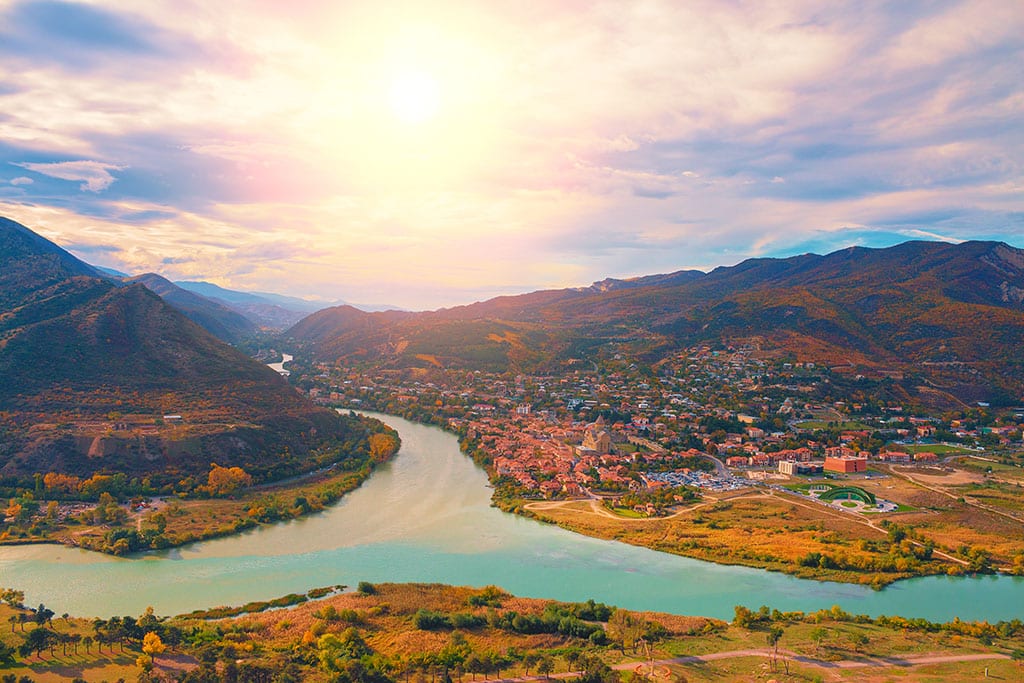
Jvari seems to crown the mountain, blending harmoniously into the landscape, and the terrace in front of it offers a wonderful view of the confluence of the two rivers, Mtskheta and the Georgian Military Road. In good weather you can even see Mount Kazbek in the distance.
On the outside, the church walls are decorated with reliefs and inscriptions in ancient Georgian. Inside, the church is interesting for its use of a rare architectural element, the squinch, and for remnants of carvings and decoration.
Monastery of St Stephen (Stepantsminda)
One of the least visited but unique sights of Mtskheta is the Antiochian church, or Church of St Stephen, built in the 4th–5th centuries in the grounds of the Stepantsminda convent. It shows what early Christian churches looked like. The small ancient church preserves remnants of frescoes.
Shio-Mgvime Monastery
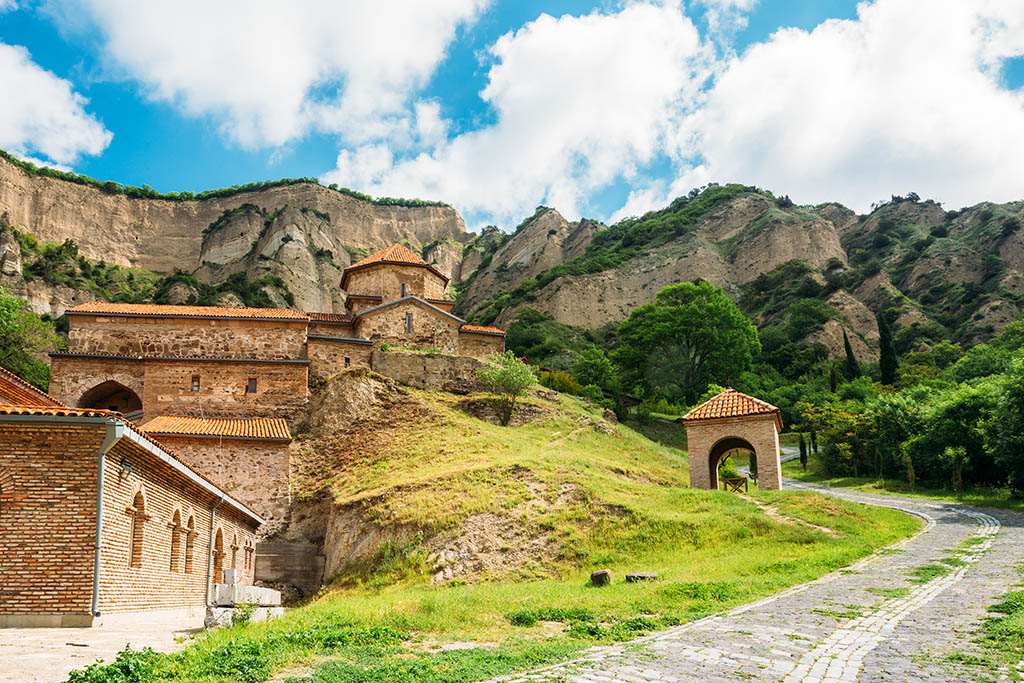
The picturesque mountain monastery of Shio-Mgvime, about 9 km from Mtskheta, is famous for its cave cells dug by the monks. It was founded in the 6th century and bears the name of its founder, the Assyrian monk Shio, who spent his years in one of the underground caves and was buried there.
After a rockfall, the caves ended up in the middle of a sheer cliff, so access to them is now closed for safety reasons.
Several dozen monks live in the monastery today, and they are always happy to see guests.
The architecture is unusual: all the buildings are arranged in steps, and the oldest and most interesting is the Church of John the Baptist, built in Shio’s lifetime.
You can get to the monastery by taxi, on a tour or with your own transport.
Zedazeni Monastery
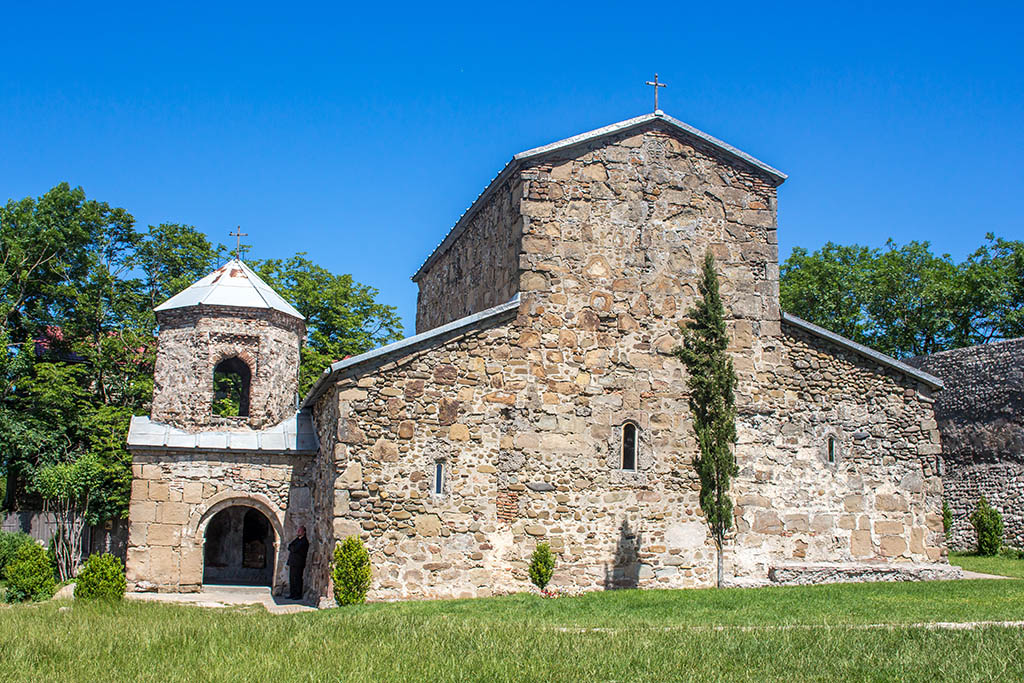
Founded in the 6th century, it is believed to have been established by John of Zedazeni, one of the 13 Assyrian Fathers who came to Georgia to preach monasticism.
Zedazeni 360° panorama:
In the monastery you can see a basilica, an 8th-century fresco of St George slaying the dragon and an 18th-century bell tower. For a long time it stood empty and reopened in the early 1990s. The monastery complex is 11 km from Mtskheta and can be reached on foot or by car.
Visiting the monasteries and churches in Mtskheta is free, but it is good manners to leave a small donation.
How to get to Mtskheta and Jvari
Mtskheta on the map of Georgia
Mtskheta is the nearest suburb of Tbilisi, half an hour by car from the city centre.
How to get from Tbilisi to Mtskheta
By taxi
A taxi to Mtskheta is easy to order through Bolt or Yandex Go. If you want the driver to wait and take you back to Tbilisi, agree on it right away.
By minibus
Minibuses to Mtskheta leave the bus station at Didube metro every 15–20 minutes. Buy your ticket at the station ticket office, as the driver does not sell tickets. The ride takes about 25 minutes. It is best to get off after the bridge or at the square with the fountain and walk to Mtskheta’s central square.
Transit minibuses do not enter Mtskheta. Route names are usually written in Georgian, so ask locals to help you find the right one.
The first minibus leaves Didube at 7:30 and the last at 20:30. The last minibus back from Mtskheta leaves at 20:00.
By train
A suburban train runs from Tbilisi railway station to Mtskheta three times a day. From Mtskheta station, walk about 1.5 km along the Kura to the town centre.
By car
You can rent a car at almost any travel agency in Tbilisi. The price depends on the car class, season, rental period and other conditions. For convenience and reliability, it is best to book online with trusted companies.
On a tour
This is the easiest and most convenient option. You will not only see all the sights of Mtskheta but also hear the history of this ancient capital and its magnificent churches. The most convenient choice is a group tour.
How to get to Jvari
Getting to Jvari is not very convenient, as there is no public transport. You can take a bus from the station at Didube metro in Tbilisi going towards Kutaisi, Gori or Stepantsminda (Kazbegi) and ask the driver to stop at the foot of the Cross Mountain. From the highway you face a tiring 40-minute climb up the slope.
Walking from Mtskheta to Jvari takes about 3 hours one way, so the most convenient option is a taxi or a tour.
By taxi
The easiest way from Mtskheta to Jvari is by taxi: order one through Bolt or Yandex Go and agree that the driver will wait. You can return straight to Tbilisi by catching a minibus at the foot of the hill.
It is most convenient to combine Mtskheta and Jvari in one taxi trip from Tbilisi with waiting time.
How to get there from Batumi
From Batumi you can only get to Mtskheta via Tbilisi.
Hotels in Mtskheta
If you want to stay in Mtskheta for a couple of days, you can choose between guesthouses and 3–4 star hotels.
Mtskheta FAQ
How do I get to Mtskheta from Tbilisi?
The easiest way is by minibus from Didube metro station, a ride of about 25 minutes. A taxi via Bolt or Yandex Go is even more convenient, especially if you also want to visit Jvari.
How much time do I need for Mtskheta?
One day is enough for Svetitskhoveli, Samtavro and Jvari. If you want to see Armazi, Shio-Mgvime and Zedazeni, plan 2–3 days.
Do I have to pay to enter the churches?
No, the churches and monasteries are free. It is customary to leave a small donation.
How far is Mtskheta from Tbilisi?
About 20 km, roughly half an hour by car.
Mtskheta tourist information centre
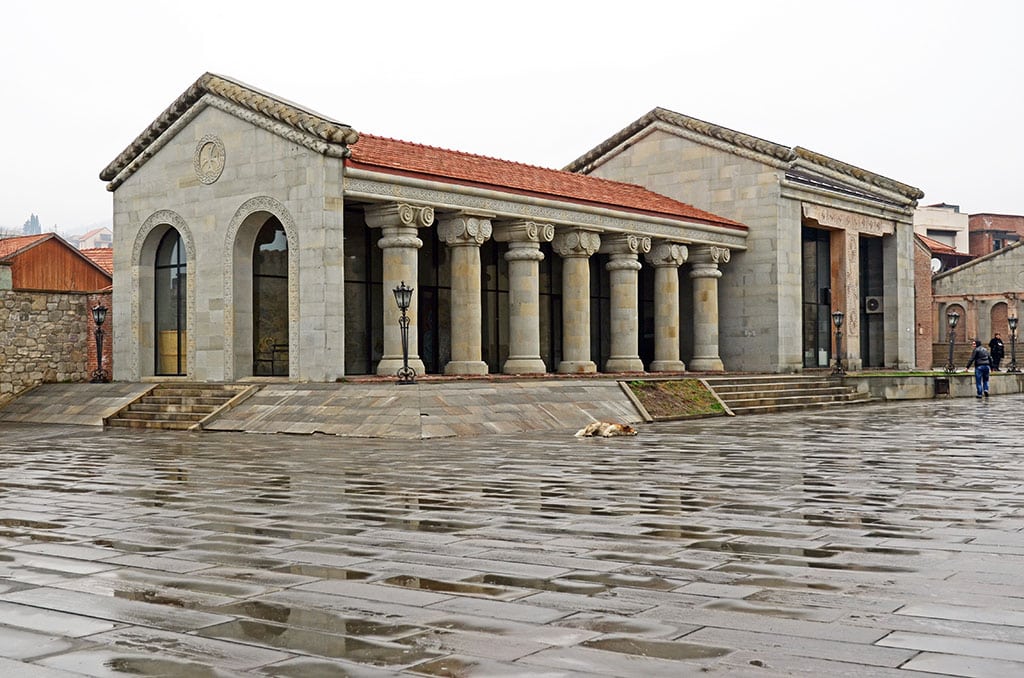
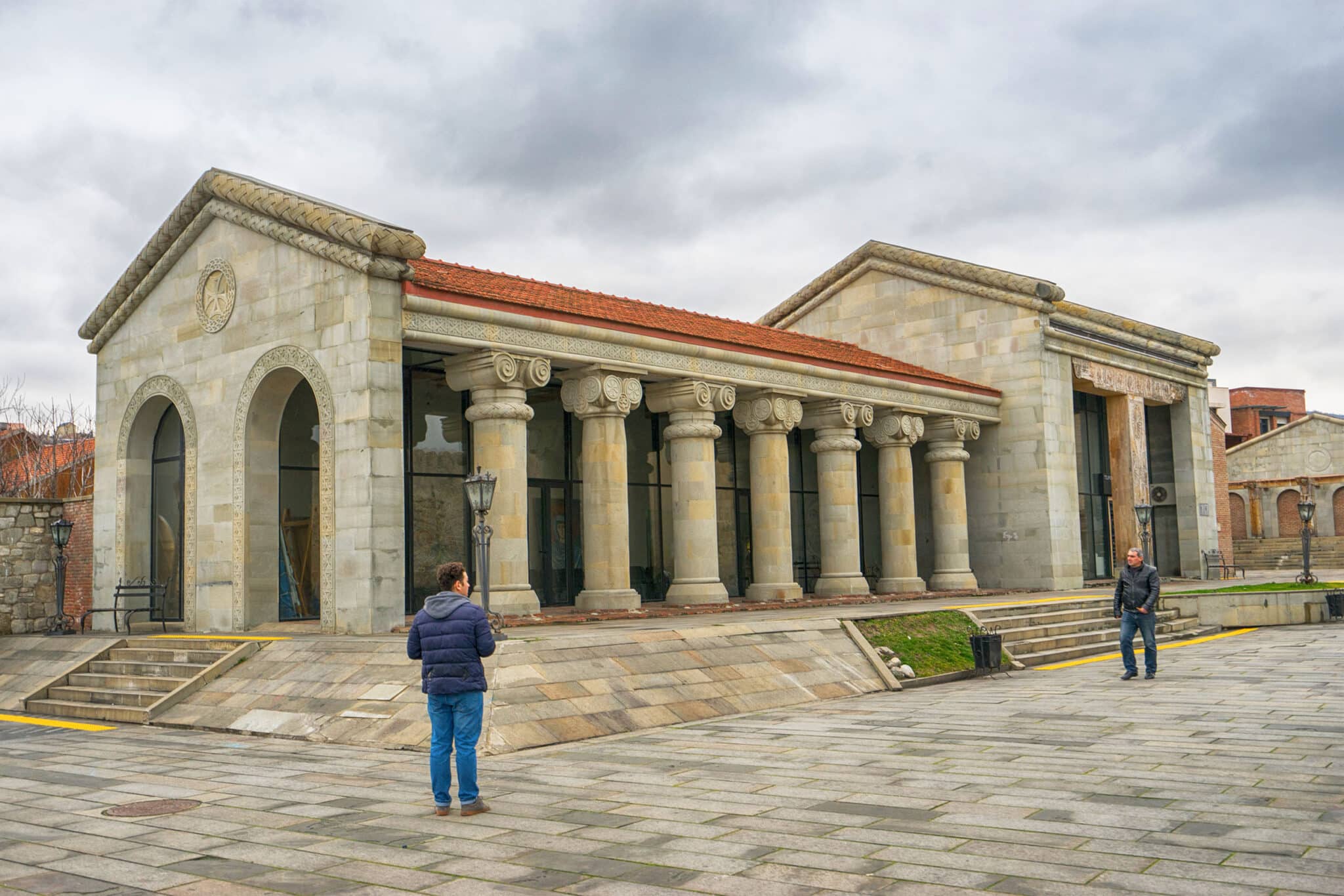
3 Arsukidze Street
Tel.: 032-251-21-28
Opening hours: 10:00–18:00 (daily)
As one of Georgia’s oldest towns, Mtskheta never stops being interesting for travellers. Everyone who visits will remember its beauty.
Read also: Jvari Monastery, Svetitskhoveli Cathedral, Top 15 attractions in Georgia.

Hello!
I am Victor, the founder of this site and its main, but not the only author.
Traveler and photographer. Visited more than 60 countries.
Born and raised in Batumi. I love to travel in Georgia.
More about me here.