


Georgia is a small and very old country in the western part of the South Caucasus, on the eastern coast of the Black Sea. It has long attracted travelers from all over the world, and every year there are more of them. That’s easy to understand. Georgia is stunningly beautiful, surprising, fairy-tale-like, many-sided and incredibly hospitable. Sakartvelo is what Georgians lovingly call their country. They pour that love into everything: fiery dances, soulful polyphonic songs, poems and paintings, their attitude to the wild nature and ancient monuments, traditions and national color.
No matter how many times you come to Georgia, there is always something new to discover. It amazes you again and again. Georgia has about 10,000 sights and monuments of ancient history, and many of them are on the UNESCO World Heritage List.
Seeing all of Georgia takes a lot of time. But if you’re wondering what to see in Georgia in a week on your own, you can build your trip from this list of the country’s top attractions with photos and descriptions.
Attractions of Georgia
Ancient cities and fortresses of Georgia
Tbilisi
Anyone who comes to Georgia should visit its heart at least once. Beautiful and unique Tbilisi is the capital of sunny Georgia, on the banks of the Kura River. Tbilisi plays a key role in the country’s history, culture and politics.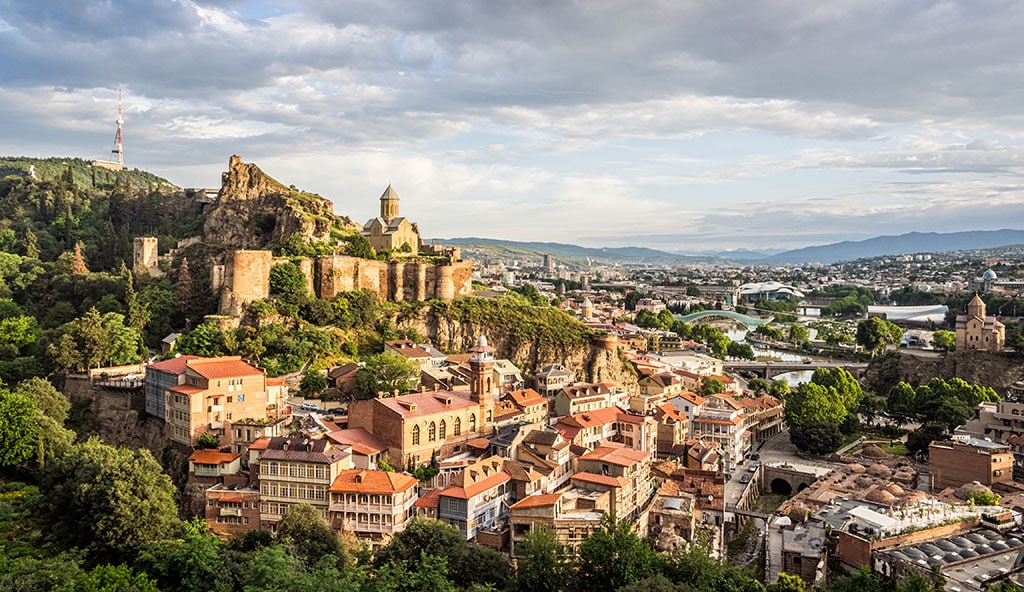
Tbilisi has kept many historical monuments, some of them very old: theaters, squares, parks, fountains, ancient churches, museums and bridges. The city is extraordinarily beautiful, but tourists love its Old Town most of all, and it will leave a mark on your heart. Here you’ll find the oldest surviving church – Anchiskhati (6th century), the famous sulfur baths, unusual sculptures, the Leghvtakhevi waterfall and the ancient Narikala fortress with a stunning view of the city, and next to it the Mother of Georgia monument. You’ll also walk along Rustaveli Avenue and Freedom Square.
The architecture is striking and unlike any other city, a mix of styles and eras. Walking along the narrow cobbled streets of the Old Town, you can spend hours admiring the carved colorful balconies, the calling card of Tbilisi, the beautifully restored buildings and the lovely squares and parks.
Another wonderful view opens from the observation deck of Mtatsminda Park: Sameba, the main cathedral, rises in the center of the city, the Georgian flag flies over the parliament, the round roofs of the sulfur baths are scattered below, and the famous Bridge of Peace curves like a blue arch over the Kura.
Be sure to visit this amazing, warm and welcoming city. Its magnetism is strong. Tbilisi has become noticeably more European in recent years, but it hasn’t lost its character. It’s a city with an incredible aura and energy, where you’ll definitely leave a piece of your heart. A city that is always happy to see you.
Mtskheta and Jvari
Mtskheta
Ancient and beautiful Mtskheta. The first capital of Georgia and for many centuries the stronghold of Orthodoxy in the country. A city whose land remembers Colchis, Iberia and the Lazic kingdom, just 20 km from Tbilisi.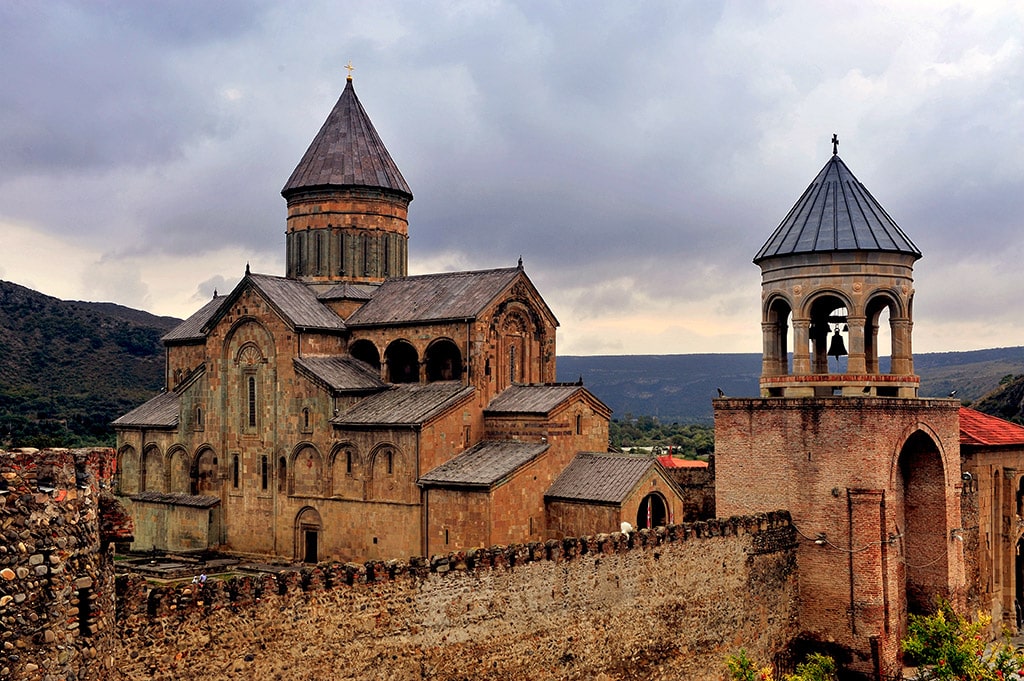
It’s old Mtskheta, not the newer Tbilisi, that is considered the heart and soul of Georgia. Visiting Georgia without seeing Mtskheta and Jvari means not understanding and not feeling Georgia. Mtskheta matters enormously to Orthodox Georgia, because faith has always been the country’s main value. It was in Mtskheta in 337 that Georgia adopted Christianity. And here, in the 11th century, the Svetitskhoveli Cathedral (the Life-Giving Pillar) was built as a cross-domed church with four pillars. Some of the frescoes have been lost over time, but the interior still makes a huge impression. The cathedral amazes with its grandeur and architecture, with carved stone ornaments and relief decoration. The masonry is polychrome: stones of different shades were used. Svetitskhoveli is beautiful outside and inside. Many ancient icons and frescoes, painted vaults and columns soaring up to the dome, brightly lit by 16 windows. And finally, the main relic of the cathedral, the Life-Giving Pillar itself, which is said to hold the robe of Jesus Christ.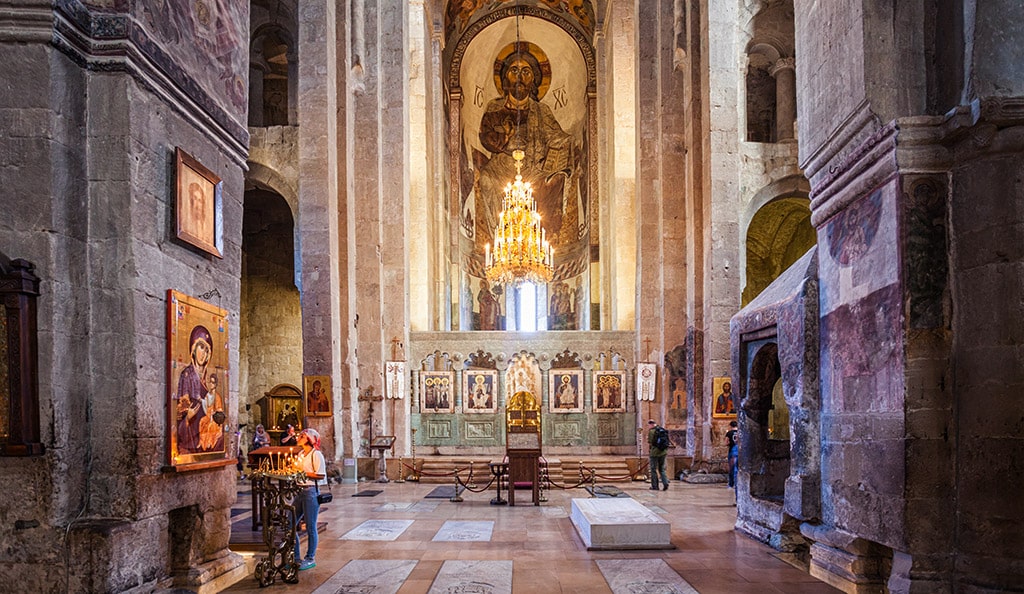
You can feel the powerful energy and spirituality of this place. No wonder Georgians revere Svetitskhoveli so much. For many centuries it has been an active church, attracting thousands of pilgrims and tourists. After visiting Svetitskhoveli, don’t rush off: take a walk along the narrow cobbled streets of Mtskheta. Besides the architecture and beautiful nature, you can grab a bite in one of the many cafés and buy souvenirs.
Jvari
From almost anywhere around Mtskheta you can see Jvari Monastery (the Cross), standing on a mountain. The famous Church of the Cross, built in the early 7th century on the site of the first Christian cross in Georgia, is a masterpiece of medieval Georgian architects. The four facades of the church symbolize the four cardinal directions. Jvari amazes with its perfection, monumentality and harmony. The wall ornament is simple and austere, dominated by relief compositions. No pomp, everything is very modest, but very spiritual.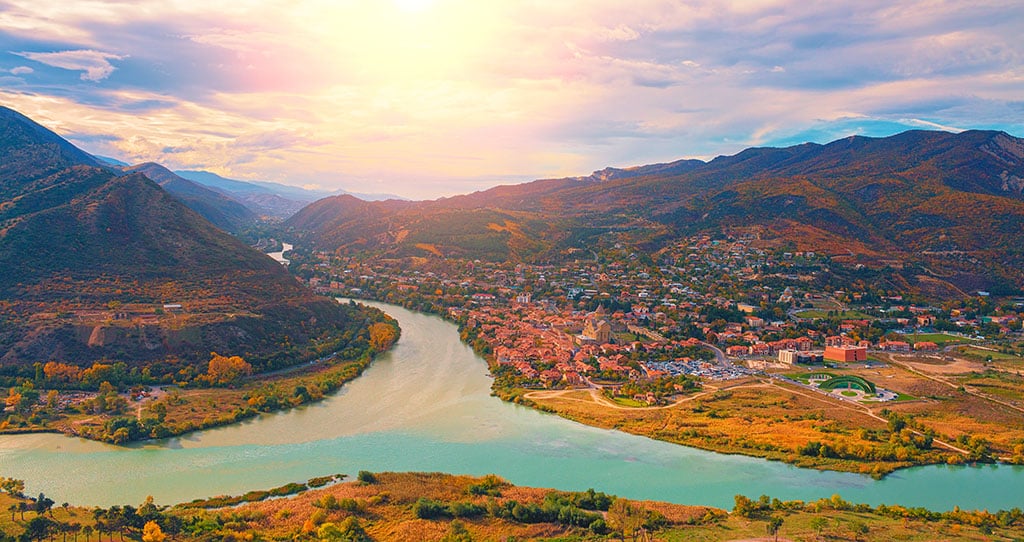
Its bright silhouette against the deep blue sky fits naturally into the landscape and can be seen for kilometers. To this day medieval Jvari is an active monastery where a few monks live. The view from Jvari is unforgettable: against endless open space, the Aragvi and Kura rivers merge into one, winding around the silent mountains and the small ancient town of Mtskheta, where Svetitskhoveli, the sacred heart of all Georgia, shines in the center.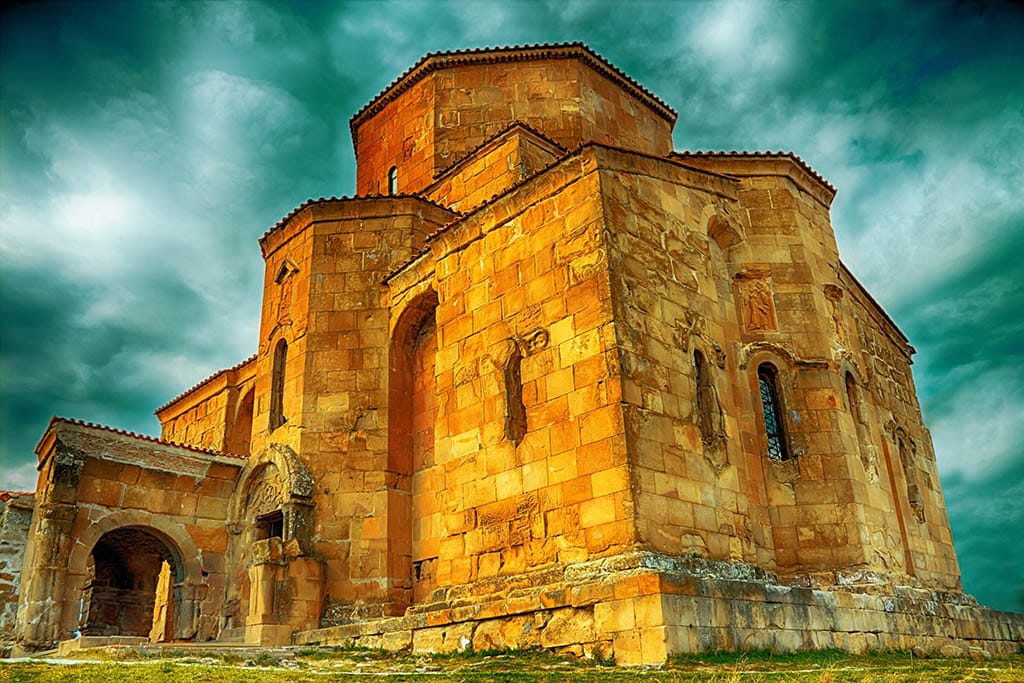
Visiting Jvari and Mtskheta takes only half a day and gives you memories for a lifetime. It’s a place in Georgia you can easily see on your own, without a tour group.
Ananuri Fortress
Thanks to its beauty and age, Ananuri Fortress has long been one of the most popular places with tourists. You’ll see it on souvenirs, brochures and postage stamps. Ananuri is 70 km from Tbilisi and 97 km from Upper Lars on the border with Russia.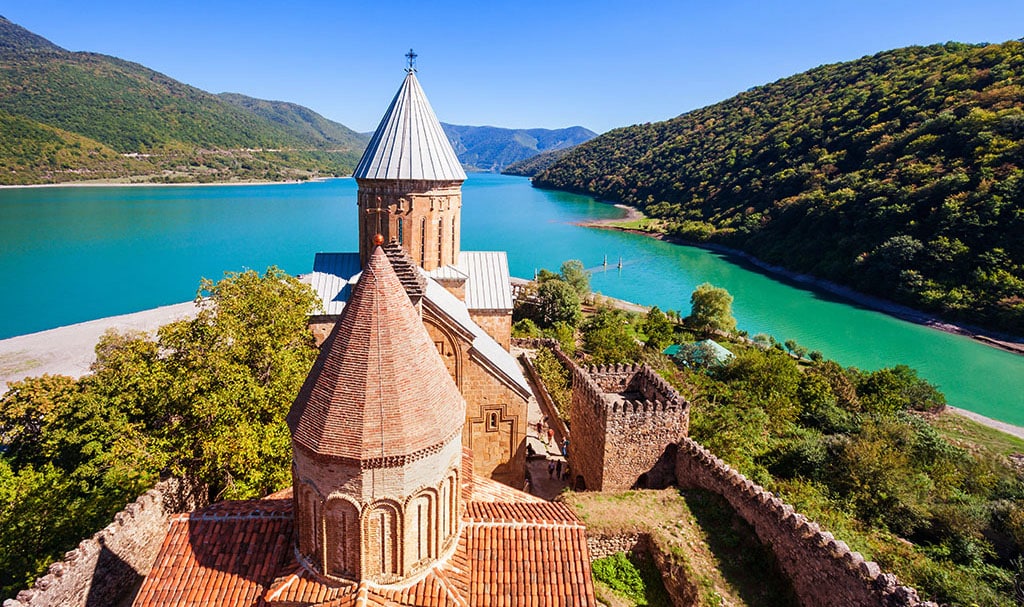
Ananuri looks like a big fairy-tale castle on the shore of the Zhinvali Reservoir with its clear, bright turquoise water. The reservoir lies like a giant saucer among picturesque rolling mountains covered with evergreen forest.
In the old days the fortress was an outpost against invaders and a reliable shelter for local people. The first buildings date back to the 13th century, and the churches were built in the 17th century. Today only the upper castle remains of the huge fortress: three churches, several watchtowers and the fortress wall. You can go into one of the towers and climb up for an amazing view. Wander around the castle grounds, step into the churches, breathe in the atmosphere of the Middle Ages and ancient Georgian culture, and enjoy the unforgettable views.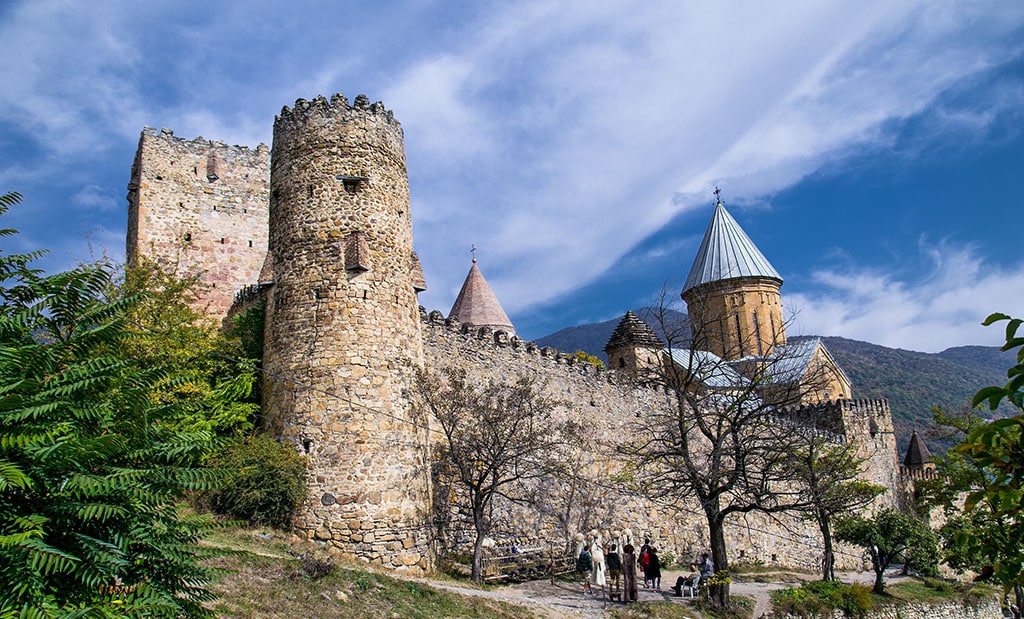
You can combine this trip with Kazbegi, since Ananuri is right on the way to Stepantsminda (Kazbegi).
The proud peaks of the Caucasus
Kazbegi
This area lies at 1,744 meters above sea level in the central part of the Greater Caucasus, at the foot of the proud and majestic Mount Kazbek. It’s 165 km from Tbilisi to Kazbegi and 43 km from Vladikavkaz.
The main goal of the trip is the viewpoint at Gergeti Trinity Church, at 2,170 meters above sea level. This active monastery was built in the 14th century. To this day it remains a stronghold of faith, high up and far from civilization and everyday bustle, among the silent Caucasus mountains under the endless blue sky. Looking at this beauty, you feel freedom, inner clarity and a connection with untouched nature. Words can’t describe the energy here, which fills you with delight, joy and awe for this small creation of human hands in the middle of a silent, proud mountain kingdom. The monastery is literally surrounded by mountains, so it feels like a 3D picture. Only the sky is higher, birds fly at eye level, and Kazbek is right in front of you.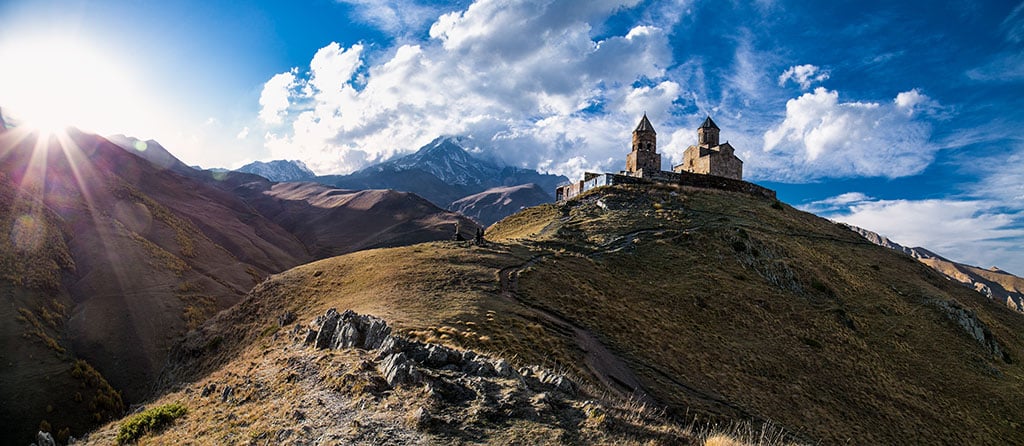
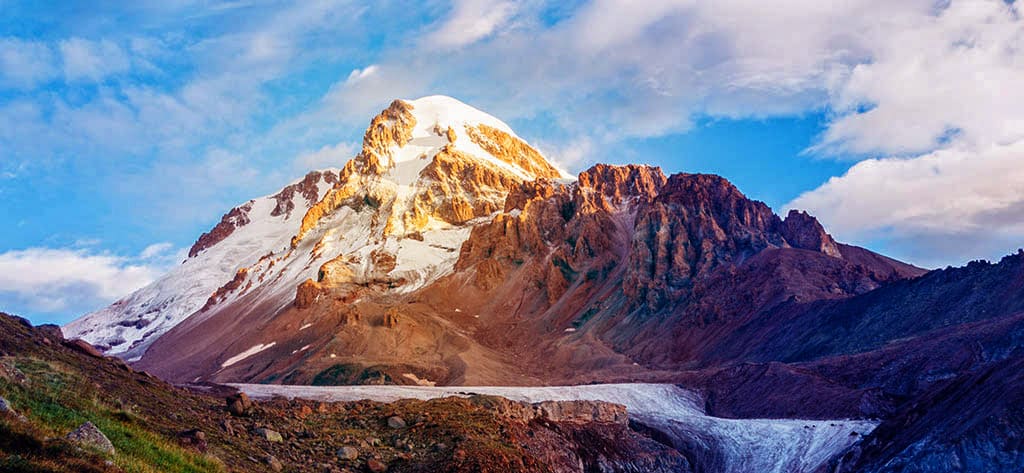
Like Ananuri, Kazbegi is easiest to reach from Tbilisi. You can also drive the scenic Georgian Military Road on your own.
Svaneti
Svaneti is a harsh and incredibly beautiful land. A mountain kingdom in the northwest of Georgia. The Svaneti Range divides it into Upper and Lower Svaneti. Upper Svaneti, with its center in the town of Mestia, is more popular with tourists. Majestic mountains with snowy peaks that have guarded this land for centuries, roaring waterfalls, blooming alpine meadows on high plateaus, mountain rivers with crystal-clear spring water, untouched forests, clean air you can’t get enough of, and hospitable, friendly people ready to share their home and bread with you. That’s what Svaneti is worth coming for. No words can capture the beauty of the landscapes and the special energy of the mountains. It’s enough to say that Upper Svaneti is on the UNESCO World Heritage List.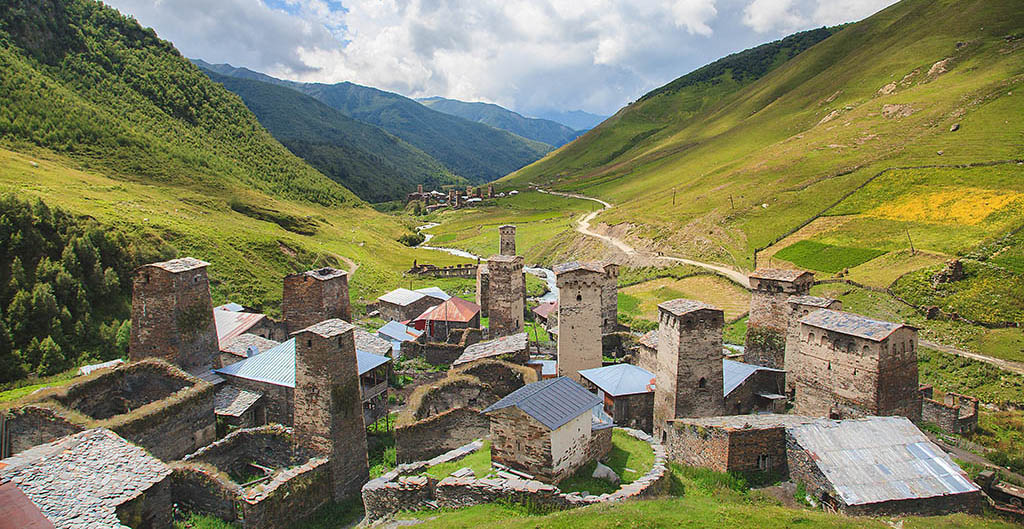
In Svaneti, your eye is drawn to the peaks of Shkhara (5,193.2 m), the highest point of Georgia, and Ushba (4,710 m). You can see them from almost everywhere. At the foot of Shkhara lies Ushguli (2,200 m above sea level), one of the highest villages in Europe.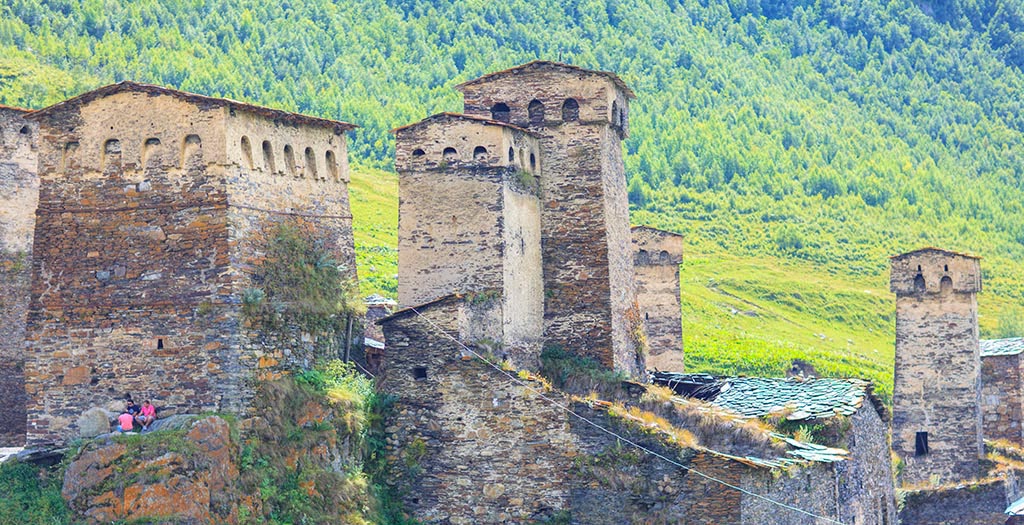
The tourist town of Mestia has kept its watchtowers from the 10th–14th centuries, and nearby there’s the Hatsvali ski resort with a cable car for skiers and winter sports fans.
Svaneti is one of a kind, special, unique. Every corner of it is open to tourists. Without a doubt, it will be a trip full of bright, unforgettable impressions.
It’s best to go to Svaneti for at least 5 days. It’s an ideal place for nature lovers and hikers. From Batumi it’s easier to get there by car than from Tbilisi. From Tbilisi it’s easier to fly.
I put together a short video about 5 “secret” places in Georgia that will take your breath away. If you want something unique, without crowds of tourists, have a look:
https://www.instagram.com/p/B7qd-AQqFkf/
By the way, you can follow my account @vic_tor_georgia. On Instagram I talk a lot not only about Georgia but about other countries too, and share tips on taking beautiful photos with your phone.
Southern legends of Georgia
Vardzia
About a hundred kilometers from Borjomi stretches the cave complex of Vardzia. It’s hard to believe it was built in the 12th–13th centuries, in the time of George III and Queen Tamar, whose images have survived here to this day on old frescoes. Back then it was also a fortress that reliably protected against invaders. It’s a whole city, 900 m long, carved into the rock of a mountain above the Kura.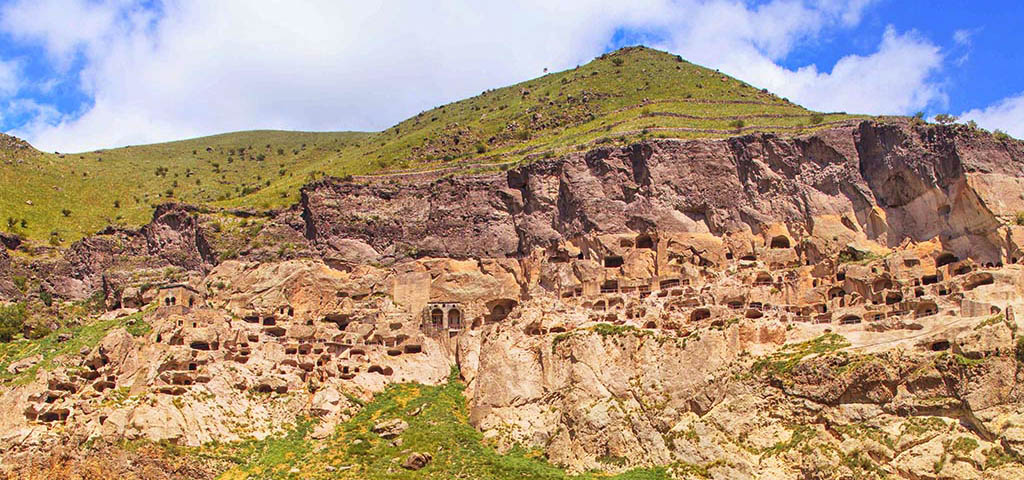
Vardzia has about 600 rooms and caves, carved 50 m deep into the rock and about 20 m high. There are churches, storerooms, libraries, stables, chapels, monks’ cells, refectories, countless steps, entrances and exits.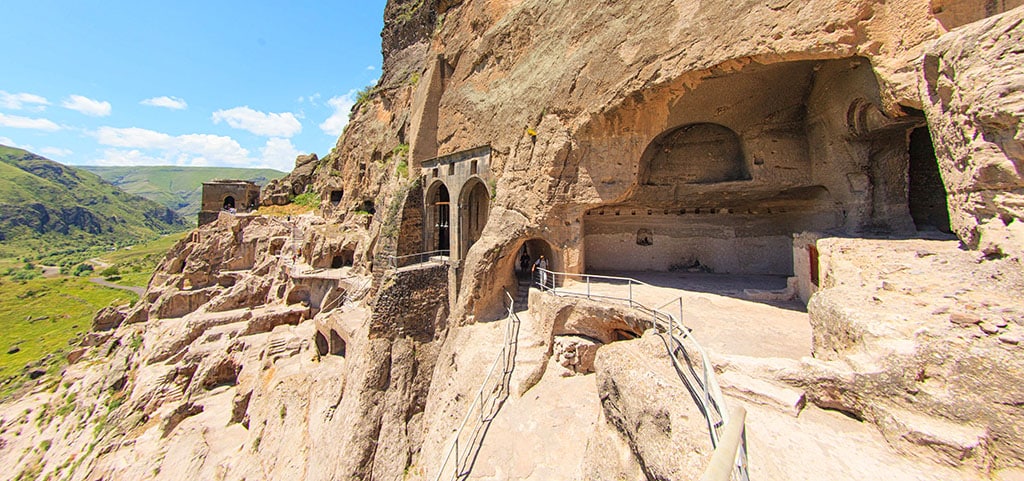
The main church of the complex, built under Queen Tamar, deserves a special mention. The Church of the Dormition is unique for its frescoes, which, given their age (1180), have enormous historical, cultural and spiritual value.
Rabat Fortress
Rabat Fortress is a medieval structure in the town of Akhaltsikhe in southern Georgia. It covers 7 hectares, which makes it the largest fortress in Georgia. It stands on a small hill, not far from Borjomi and Vardzia.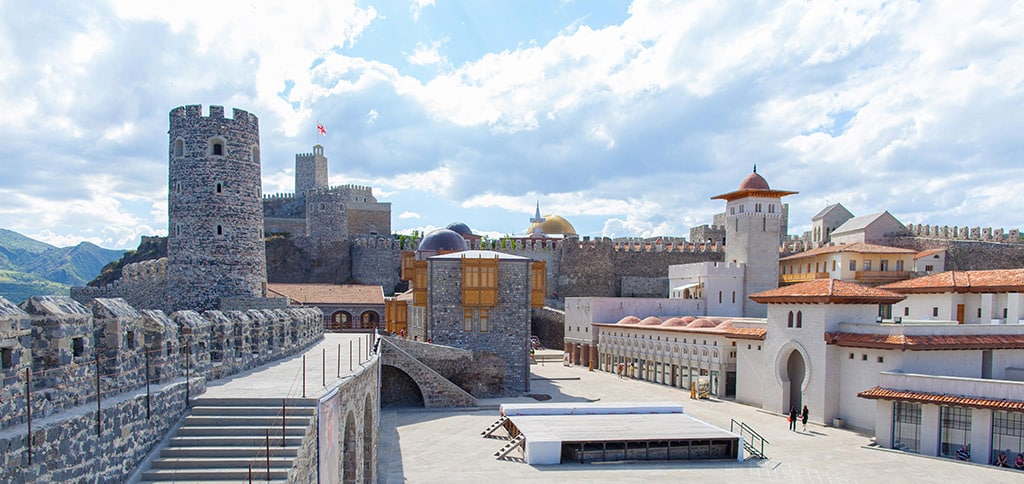
Akhaltsikhe, which translates as “new fortress”, was built in the 12th century as a fortification, a well-defended outpost against enemies. Time wasn’t kind to Rabat, and until recently it didn’t look like a tourist spot at all, so in 2011 this medieval monument was reconstructed and renovated. The fortress sits on two levels (upper and lower) and looks like a toy mini-city surrounded by high stone walls with battlements and beautiful towers.
In the upper part of Rabat stand the Ahmed Pasha Mosque, a history museum, a church and the castle of the Jakeli princes. In front of the mosque there’s a pool reminiscent of India’s Taj Mahal. The architecture, dominated by oriental ornaments, is completed by a beautiful carved gazebo with a fountain inside.
Be sure to go into the Jakeli castle and climb its winding stairs to the viewpoint, which gives a great view of the whole fortress, the town and the mountains. The fortress walls also have four towers you can climb for a better view.
Rabat is the most beautiful fortress in Georgia and one of the most visited places. Beautiful, harmonious restoration, great architecture with stone masonry, oriental ornaments, stone carving, colonnades and arcades – all of this is definitely worth seeing.
Borjomi
Borjomi is a small town in the south of Georgia and a unique spa resort. It’s known all over the world for its healing mineral water, which has long become a Georgian brand. There’s also a nature reserve of fairy-tale beauty here.
Borjomi lies in a picturesque gorge whose slopes are covered with pine and deciduous forests, surrounded by the mighty Caucasus mountains.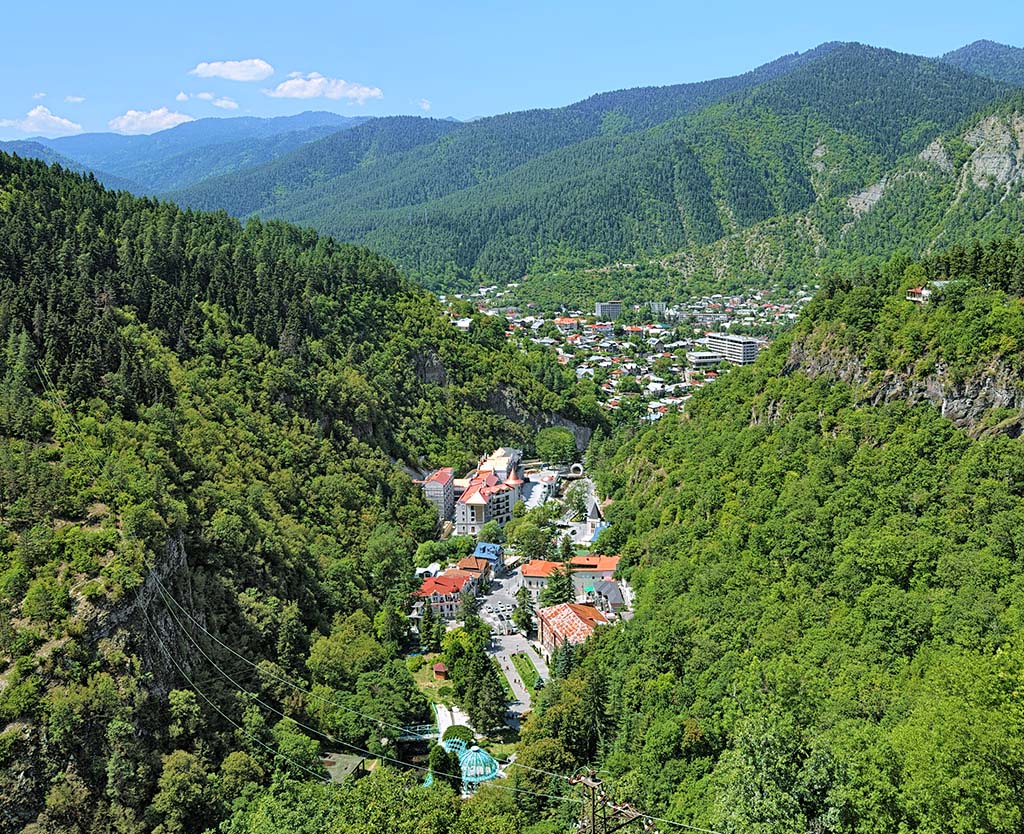
Borjomi mineral water is used for the prevention and treatment of diseases of the cardiovascular system, digestive tract, respiratory organs, nervous system and more.
Healing mineral springs, clean mountain air, a great climate and wonderful nature make this resort very popular. Thousands of tourists come here to rest and recover, and sanatoriums and hotels have everything for a comfortable stay.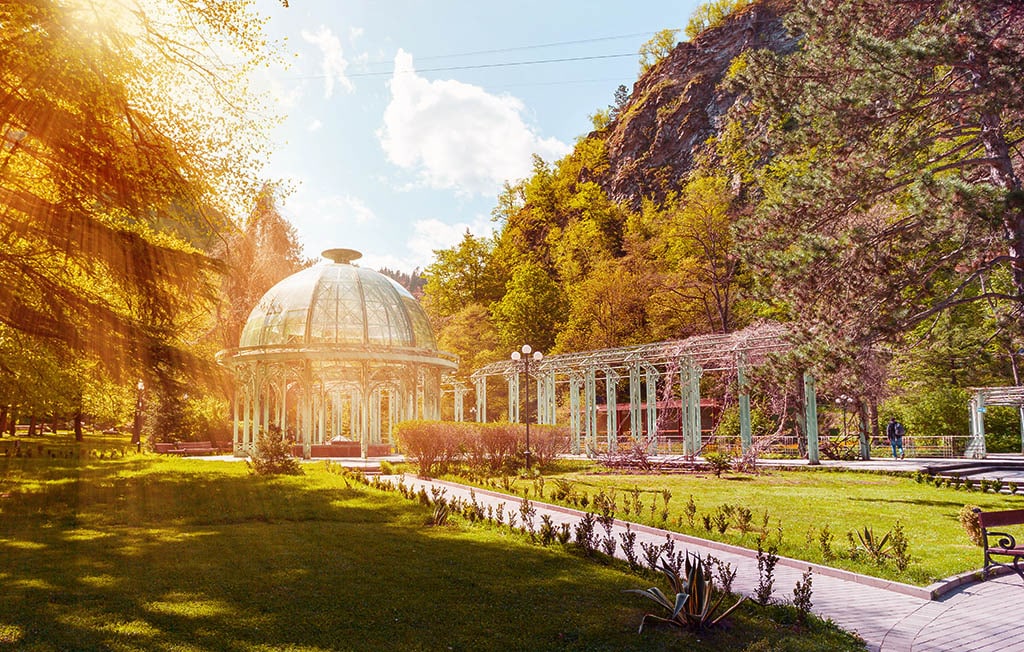
Borjomi, Rabat Fortress and Vardzia are close to each other, so it’s most convenient to combine them in one trip. They’re much closer to Tbilisi than to Batumi. If you take the old road via the Dashbashi Canyon and the village of Tsalka, past the largest lake in Georgia, you’ll have an unforgettably beautiful journey.
Wine valley – Kakheti
Kakheti is the land of wine and sun, fortresses and churches, monasteries and valleys. This region is the pride of Georgian winemaking. Wines known all over the world are made here (Alazani Valley, Kindzmarauli, Akhasheni, Mukuzani). Kakheti has many shrines and historical monuments worth seeing.
Sighnaghi
Georgia has done and keeps doing a lot to develop tourism and restore its many sights. Sighnaghi is a great example. It’s a small town in Kakheti on a mountain slope. At its foot the famous Alazani Valley spreads as far as the eye can see. The town itself is built on terraces connected by winding streets. Wherever you go here, it’s beautiful. Parks, monuments, squares, architecture, steep narrow cobbled streets, carved balconies and light houses with red tiled roofs buried in bright greenery. Everything here is cute, cozy and harmonious.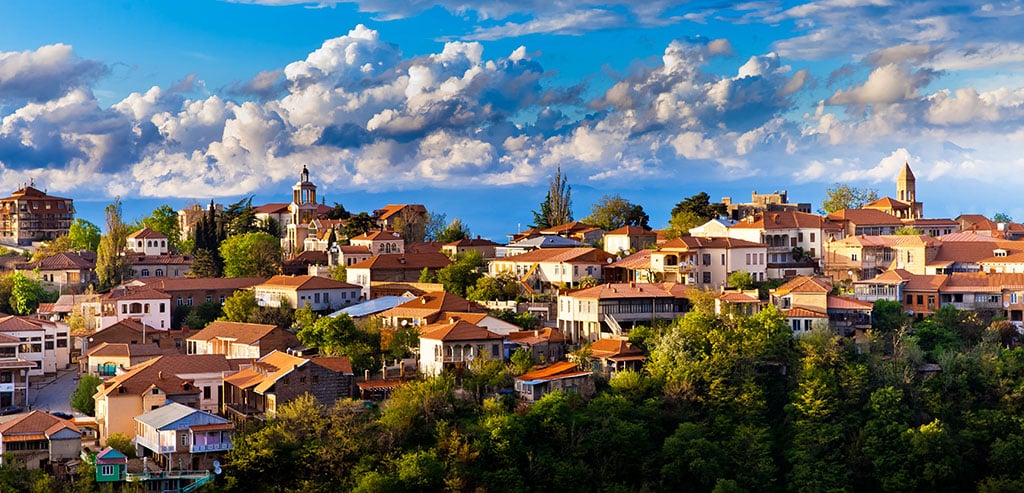
You fall in love with this town at first sight. No wonder it’s called the city of love. To prove it, the wedding house in this one-of-a-kind town works around the clock.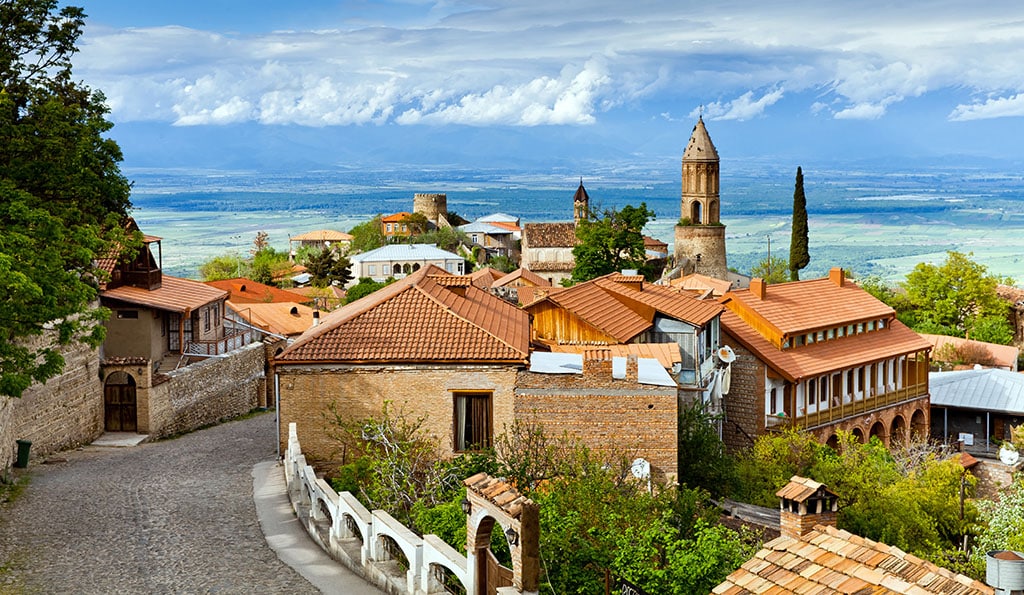
Sighnaghi was originally built on the mountain slope as a fortification, and only centuries later became a town. That’s why monuments of ancient culture and architecture have survived here. It’s definitely worth coming to Sighnaghi even for a day to soak up the atmosphere of a fairy tale, love and the special beauty of this romantic town.
Bodbe Monastery
Two kilometers from Sighnaghi there’s another sight: the Orthodox convent of Bodbe. It’s known as the resting place of Saint Nino, the great enlightener of Georgia, who lived and died here in 347. This ancient monastery stands in a picturesque spot at the foot of the Caucasus Range.
The main church is a three-nave basilica, typical of medieval Georgia. Inside it’s as beautiful as outside.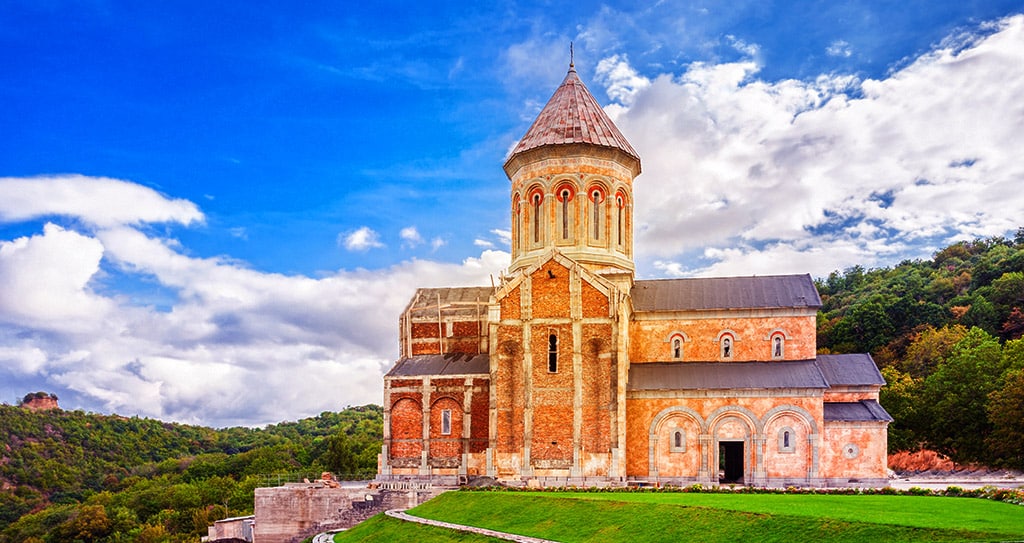
The viewpoint behind the church opens an extraordinarily beautiful view of the Alazani Valley and the mighty Caucasus mountains, their snowy peaks soaring into the endless blue sky.
Over the centuries the monastery witnessed many historical events and was even a place where Georgian kings were crowned. It was destroyed by invaders several times and rebuilt again, but one thing miraculously always remained untouched – the grave of Saint Nino.
The convent has another relic: the myrrh-streaming miraculous Iveron icon of the Mother of God.
Buried in greenery, the monastery is so beautiful and so well located that not only pilgrims and believers come here, but thousands of tourists too. It’s a great place to find peace of mind and harmony.
Getting to Kakheti from Batumi takes a very long time. But from Tbilisi you’re in this blessed land in about an hour.
The oldest religious centers
David Gareja Monastery
This large cave monastery complex from the early 6th century consists of 20 monasteries carved into the rocks and stretches for more than 20 kilometers along the Gareja ridge. The Lavra of David is the main part of the complex. It has kept ancient frescoes and mosaic fragments of saints and kings of ancient Georgia.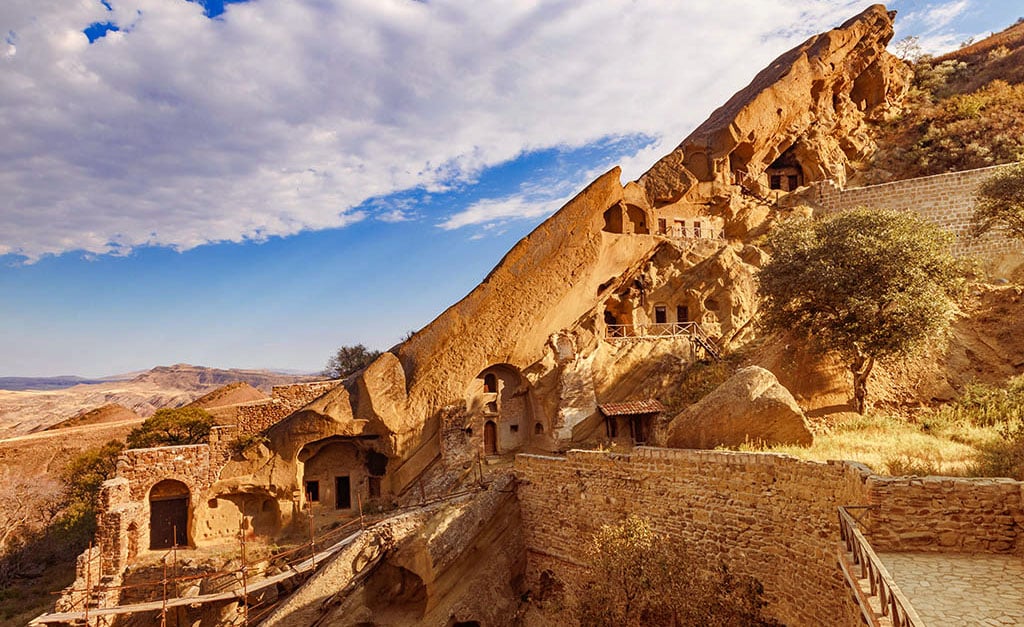
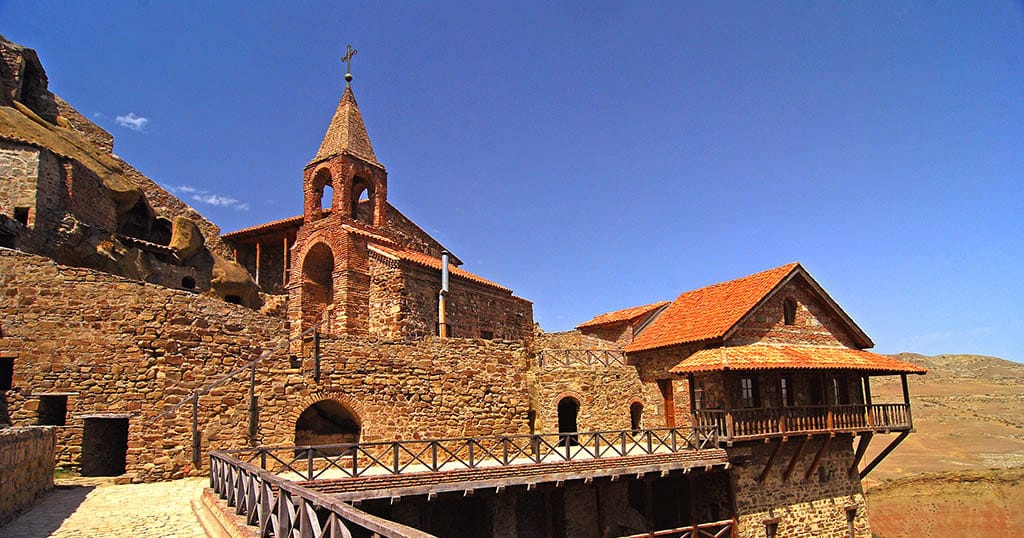
This fascinating trip lets you feel part of ancient history, breathe in the spiritual atmosphere and recharge with the powerful energy of the cave city. You’ll be impressed by the many caves, churches, cells, baths, passages and spacious terraces with a beautiful view of the endless plains.
Be careful though: there are a lot of snakes in this area in summer.
Churches of Kutaisi
Bagrati Cathedral
Bagrati Cathedral, built in 1003 as a symbol of the unification of Georgia, is one of the largest churches in the country. This strikingly beautiful building stands on a high hill with a wonderful view of Kutaisi, the scenery and the Rioni River.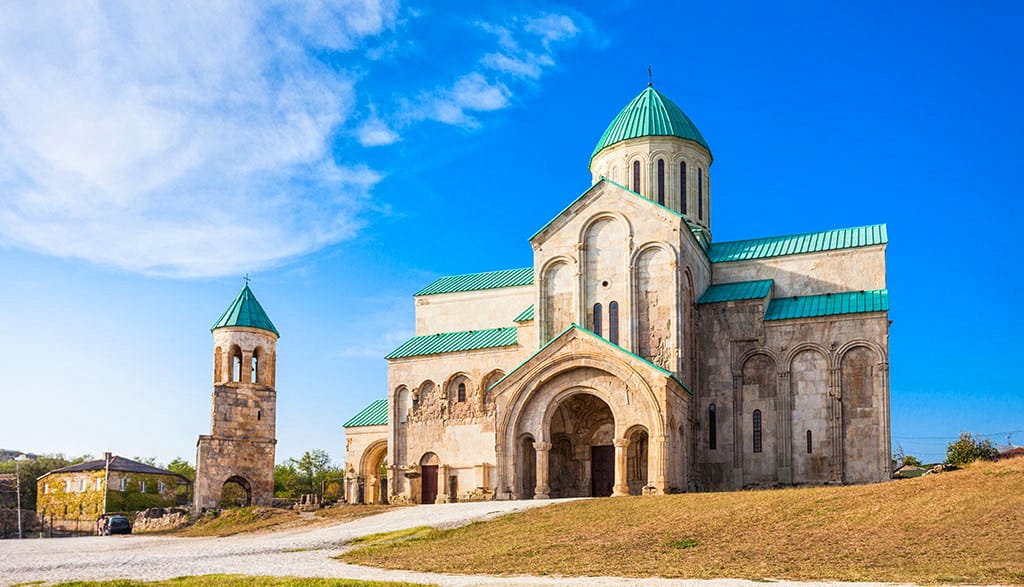
Bagrati is one of the best examples of medieval Georgian architecture, known for its harmonious proportions, beautiful and elegant details, austerity and lace-like stone carving.
Like Jvari in Mtskheta, Bagrati towers above everyday bustle, seems to float in the sky and can be seen for kilometers. Prometheus Cave is not far from Bagrati.
Gelati Monastery
Gelati Monastery is famous as the burial place of King David IV, who founded it in the early 12th century. Later Gelati became the final resting place of the kings of Imereti. According to historians, Queen Tamar was buried in the main cathedral, but her grave has not survived.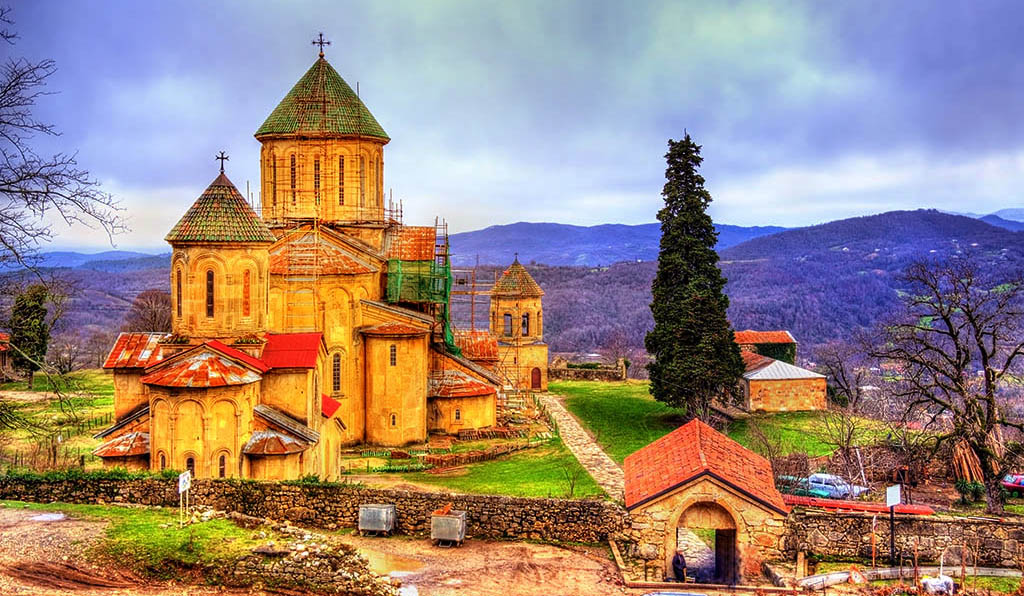
Today Gelati is a monastery for monks and is very important for Orthodox Georgia. It has 3 churches, a three-tier bell tower and the Gelati Academy, all of great cultural and historical value. The churches still have mosaics, icons and ancient frescoes.
Gelati stands on a hill with a clear view of the Racha mountains and endless rolling hills covered with evergreen forests.
Motsameta Monastery
Not far from Gelati, across a ridge and a deep canyon, surrounded by incredibly beautiful untouched nature, stands the lonely Motsameta Monastery. This monastery, still active today, was founded by King Bagrat IV and named after two brothers martyred by Arab invaders. Under the shrine with the relics of the brothers David and Constantine, kept in one of the churches, there’s a low passage a few meters long. They say that if you make a wish and crawl through it three times without touching the walls or ceiling, your wish will come true.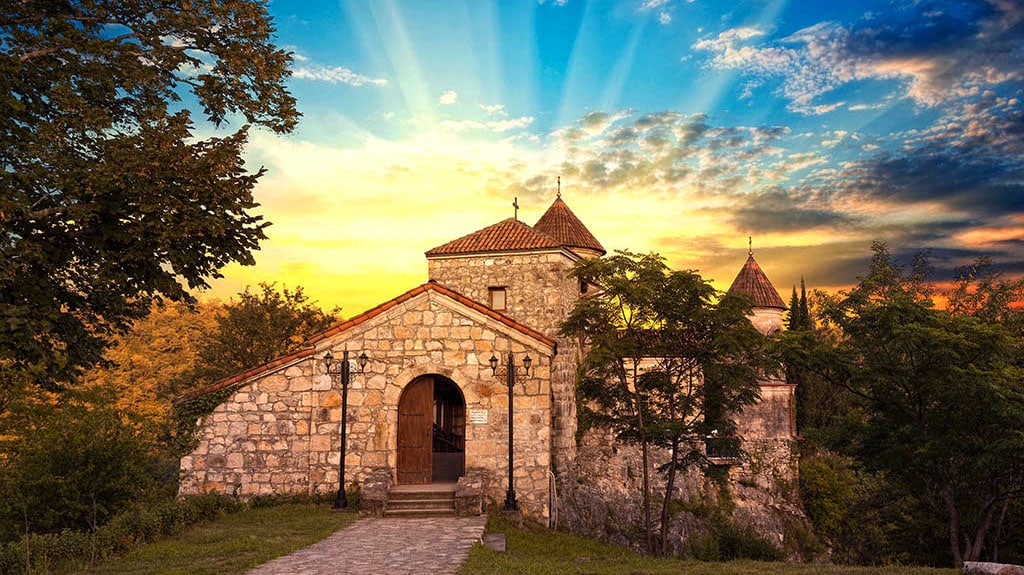
Motsameta stands on the slope of a canyon more than 100 meters deep. The views are stunning: mountains covered with bright green forests all around, eagles soaring in the sky, and hundreds of meters below the Rioni roars through the gorge around huge boulders.
You have two options here: stay in Kutaisi itself, or come from Batumi.
The modern corner of Georgia – Adjara and Batumi
Another unusually beautiful region of Georgia is Adjara. It’s worth a visit if only because it lies by the sea and stays green all year thanks to its subtropical climate. Adjara has great national parks: Mtirala, Machakhela, Kintrishi and the Batumi Botanical Garden. The region is also rich in waterfalls, ancient fortresses, lakes, beaches and health resorts.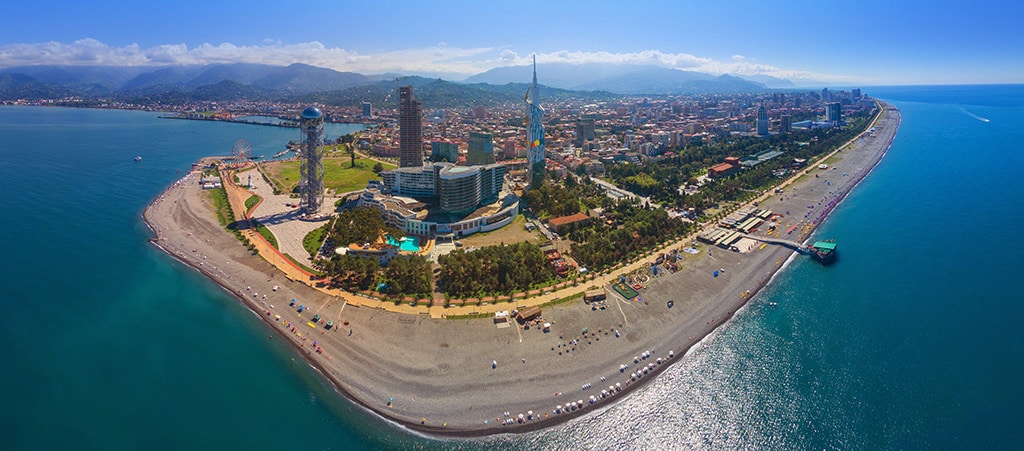
Its capital attracts more and more tourists from all over the world. Batumi will surprise you with its variety, originality and modern vibe. It’s a city of contrasts, where well-kept parks, the seaside boulevard, theaters, amusement rides, singing and dancing fountains, clubs, casinos, art statues, modern monuments and squares all live side by side. Batumi is a resort city with a friendly and warm atmosphere.
Batumi has always attracted people, including many famous writers: Yesenin, Chekhov, Bulgakov, Ilf and Petrov, Gorky and many others lived and worked here. Lots of well-known films were shot here too.
Mountainous Adjara was once part of the famous Colchis. It has kept a huge number of fortresses and ancient bridges. You’ll be amazed by the waterfalls and gorges, the huge variety of fruit and the snowy mountain peaks. Read more in my guide Adjara: Top 30 Attractions Near Batumi.
Canyons and natural attractions
Martvili Canyons
The Martvili Canyons are among the ten priority places in Georgia with the status of a natural monument. This trip is for those who want lots of emotions and impressions. The Martvili Canyons attract tourists with their unique natural beauty.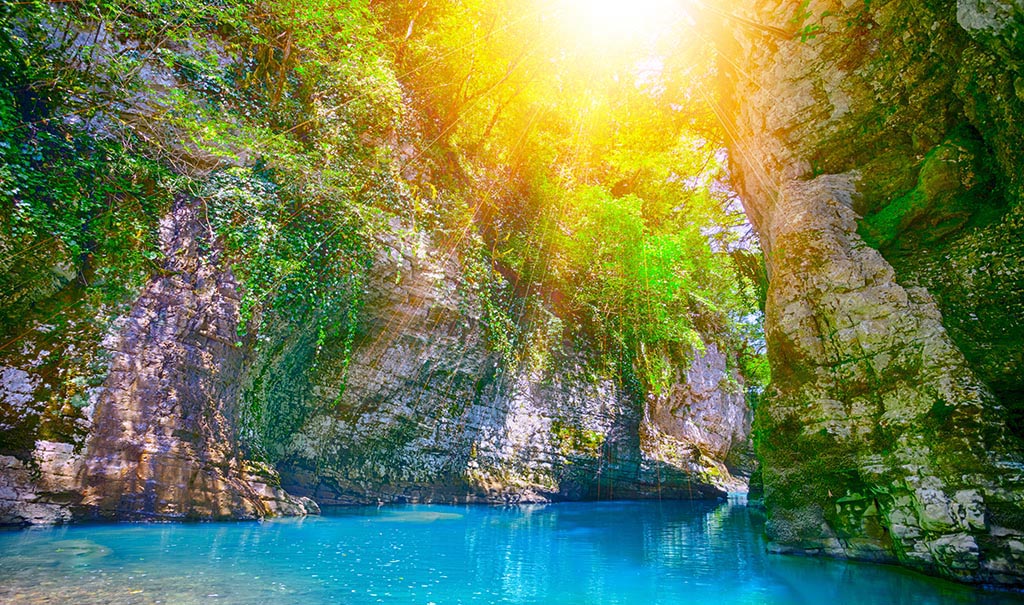
The canyon, made up of an upper and a lower part, lies between high cliffs and forms a gorge. The upper canyon is more popular with tourists because of a short boat trip on rubber boats. It’s fairly narrow, about 2.4 km long, and in places up to 50 m deep, but that’s just geography. When you see this water, crystal clear to the bottom, bright blue-green, it really doesn’t matter how long or deep it is. You just want to keep floating in the boat, looking at the pebbles on the bottom, at the high cliffs leaning toward each other, at the relict trees and vines growing on the rocks. Floating past moss-covered grottoes, you can watch little streams running down the cliffs.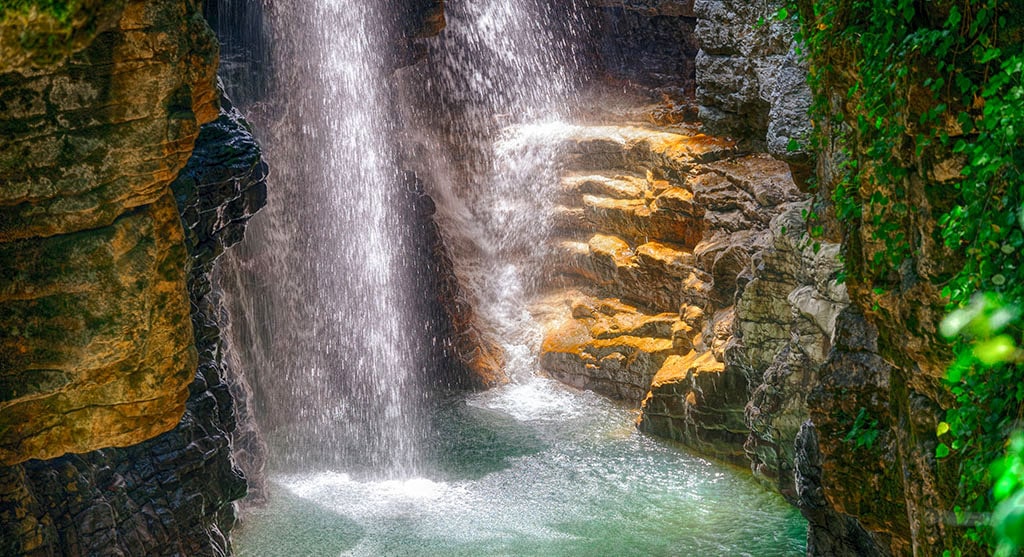
Once you’re back on shore after the boat ride, don’t miss the wooden bridge with a gorgeous view of the 12-meter waterfall, whose powerful streams crash right at your feet. Then steps lead down to the lower canyon. The way there goes through a beautiful park with fairy-tale bridges, paths, noisy waterfalls and viewpoints overlooking all this beauty. The park is buried in the greenery of old trees and laid out in terraces going down to the canyon. The walk is pleasant and fascinating. The lower canyon is very beautiful too. Historians believe that the Georgian princes Dadiani, who lived nearby in their family estate, bathed in its emerald waters. An unforgettable and very impressive natural oasis.
Okatse Canyon
This picturesque canyon, created by nature, is in Imereti, 50 km from Kutaisi. What makes it unique is its age: scientists believe it’s about a million years old.
To reach the canyon, you walk 2.2 km along a paved stone path through a beautiful park, past the half-ruined estate of the Dadiani princes. The way doesn’t feel long: there are benches to rest on, incredibly beautiful nature, lots of old trees, huge meadows of blooming clover, all kinds of shrubs with berries, all against the Caucasus mountains and clean mountain air.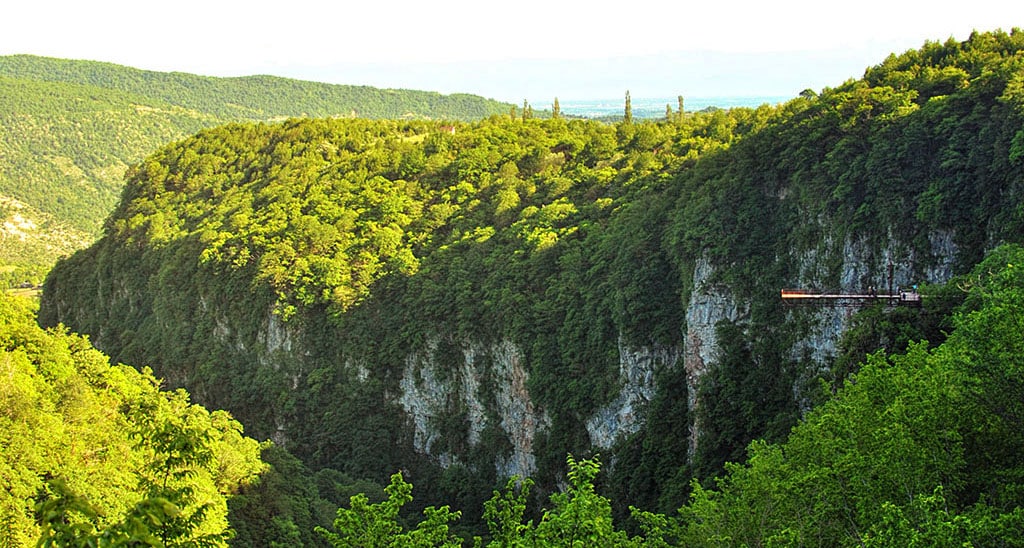
The path leads you to a metal hanging walkway, securely attached to the side of Okatse Canyon. The view is extraordinary: kilometer-long canyon walls covered with evergreen plants alternating with light patches of limestone, the mountain river Okatse roaring below, and a bright blue sky with birds soaring overhead. The way back follows a different, no less impressive route.
7 km from Okatse Canyon, at 800 m above sea level, lies the small village of Kinchkha, known for its waterfalls of the same name. The waterfalls are at 1,100 m above sea level. The upper waterfall is 100 m high. Hundreds of cubic meters of water crash down with a roar, breaking into millions of drops. The falling water forms a small lake with blue-green water so clear you can see the bottom. From the lake the water falls in a second cascade from a height of 20 m.
Prometheus Cave
Prometheus Cave, or Kumistavi, is one of the sights of Imereti. This natural karst cave is on the outskirts of Tskaltubo, 16 km from Kutaisi, and opened to tourists quite recently, in 2011. The walk along the one-kilometer route takes about 1.5 hours. That’s only a small part of the huge 11-kilometer cave that is open to visitors.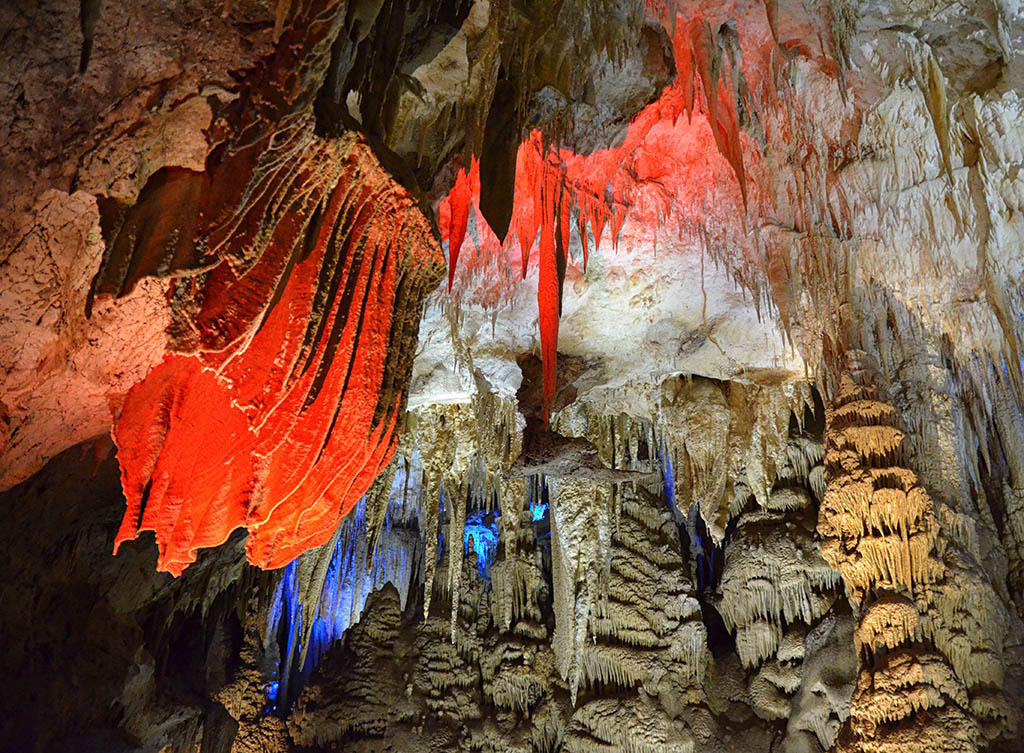
The cave consists of many tunnels, passages, underground halls, small caves and underground rivers, and is divided into 15 tour zones. These zones have dynamic and static lighting, music, steps and bridges, from which you can admire the bizarre stalactites and stalagmites, petrified waterfalls and limestone formations of every size and shape. They hang from the vaults and grow from the ground: needle-like, round, flat, winding, all kinds, sometimes dropping water. These karst masterpieces are lit so beautifully in different colors that they seem alive. The whole time you feel like you’ve entered a fairy-tale underground kingdom. The great lighting and quiet classical music make the visit unforgettable, and the laser show adds a bit of mystery and fantasy.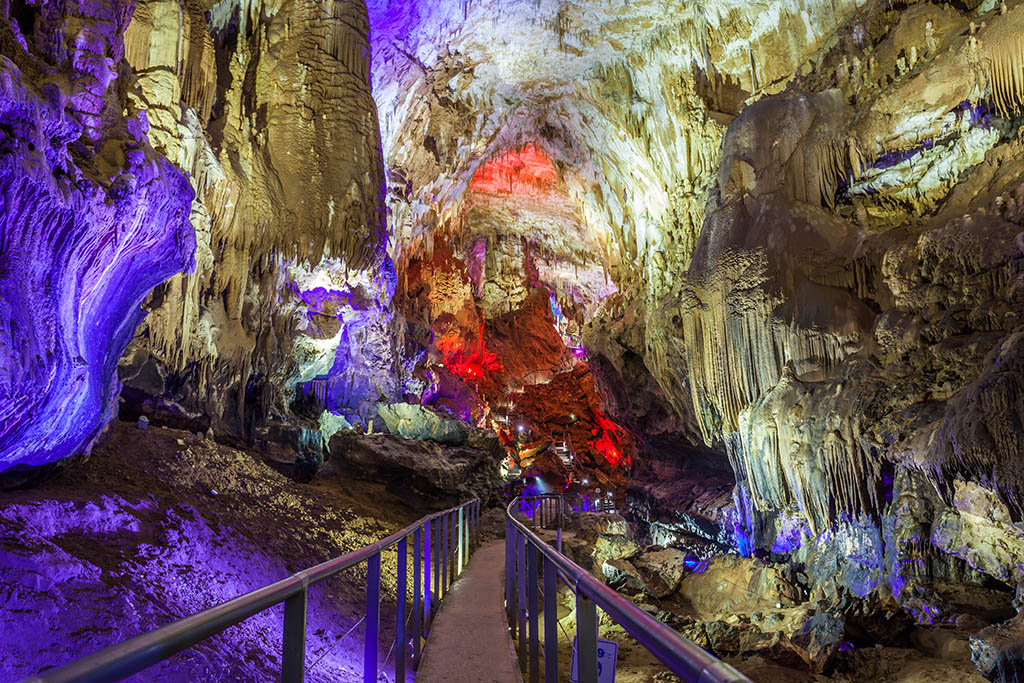
For even more impressions, you can take a rubber boat across the underground lake. This half-kilometer journey through a water tunnel is a real pleasure: the boat glides slowly among huge grottoes with formations hanging overhead, reflected in the mirror of the water. The boat ride ends at an open-air lake.
All the caves and canyons are close to Kutaisi, so it’s best to stay in this ancient capital to visit them. From Batumi it’s closer than from Tbilisi: about 2 hours one way. Day trips from Tbilisi are long and tiring.
Attractions of Georgia on the map
To make it easier to find your way and plan routes around Georgia, we’ve made a map of all the sights described on our site. At the moment there are more than 80 of them (it’s the biggest and most detailed tourist map with descriptions of interesting places). The map will keep being updated. I hope our many days of work on it will help you on your trip.
If you click on an attraction icon, you’ll see its name, a photo and a link to the article. You can open the map in Google Maps and build routes to the places you choose.
For convenience, the points are grouped by region, with different icons and colors.
Color key:
Green – natural attractions (mountains, canyons, parks, resorts)
Red – historical monuments (churches, fortresses, ancient cities)
Blue – modern buildings and cities (museums, fountains, observatories)
Note! The map doesn’t include the sights of Tbilisi, Batumi and Adjara. They have their own detailed maps.
Georgia is without a doubt a special country, and there’s always something to see. Wherever you go and whichever sight you choose, you’ll never be left without bright, unforgettable impressions and the wish to take home a piece of the love, warmth and beauty that Georgia gave you.
Tips for travelers:
Best hotels in the mountains of Georgia
What to see near Batumi: top 30 attractions of Adjara
How to get from Tbilisi to Batumi – all options
Hello!
I am Victor, the founder of this site and its main, but not the only author.
Traveler and photographer. Visited more than 60 countries.
Born and raised in Batumi. I love to travel in Georgia.
More about me here.