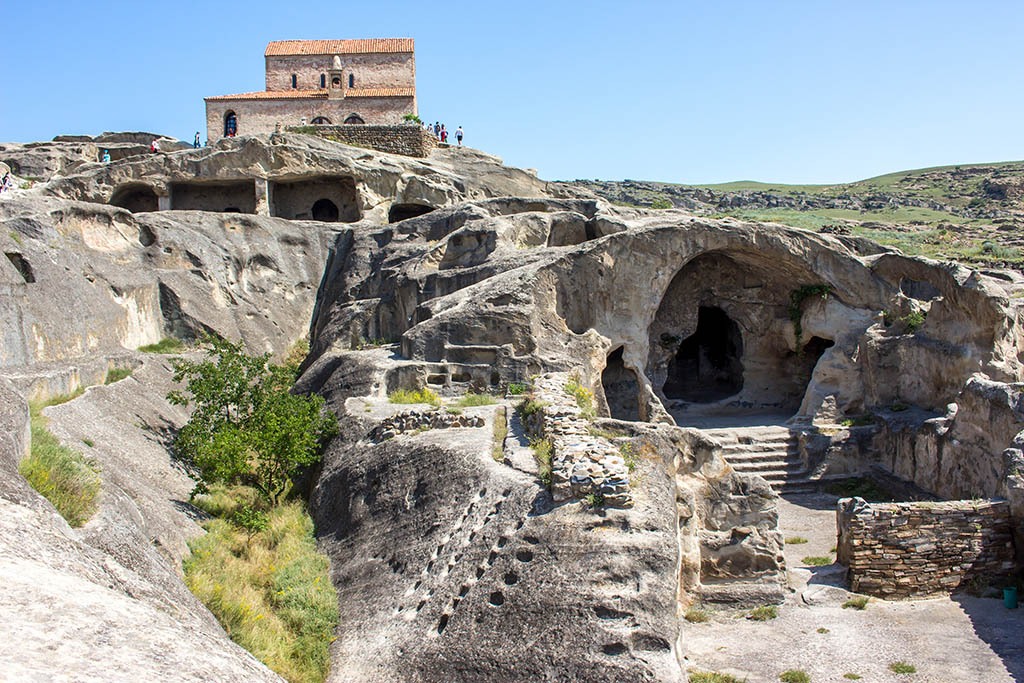
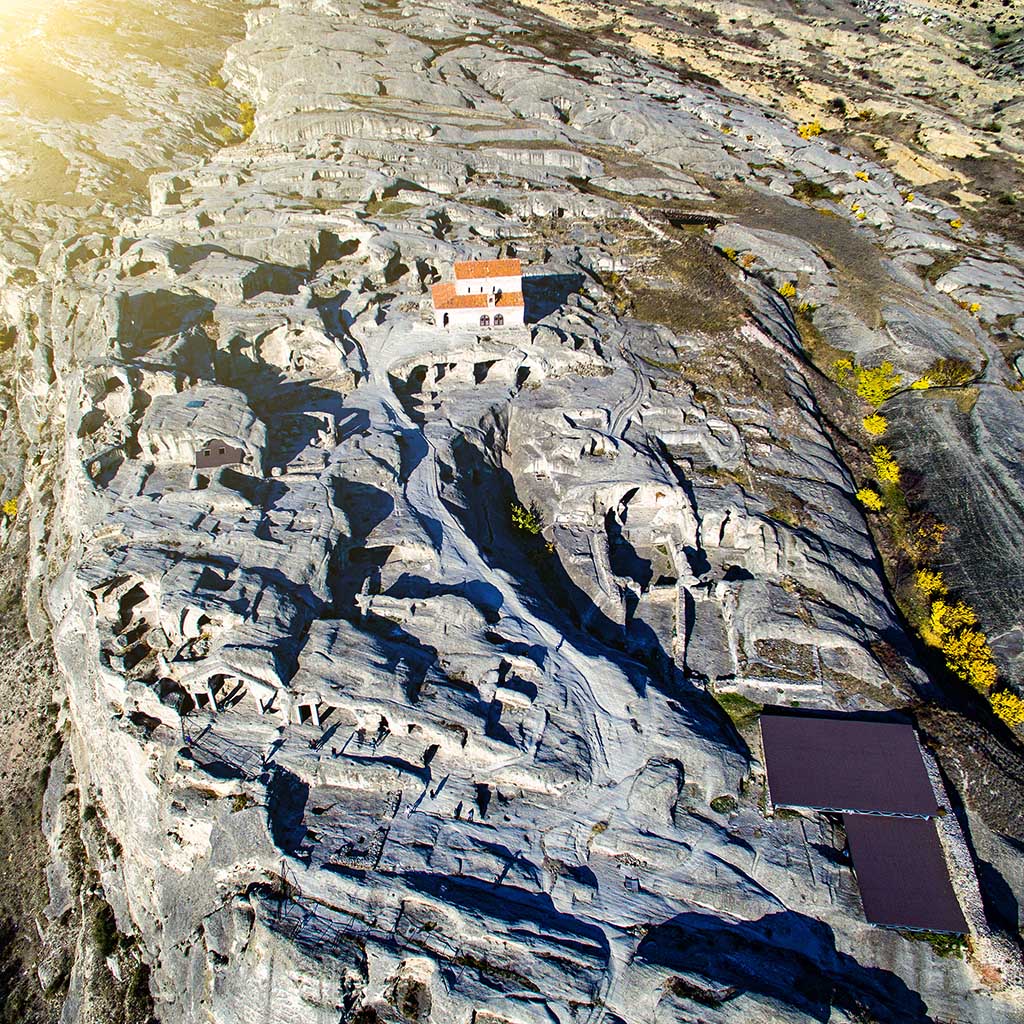
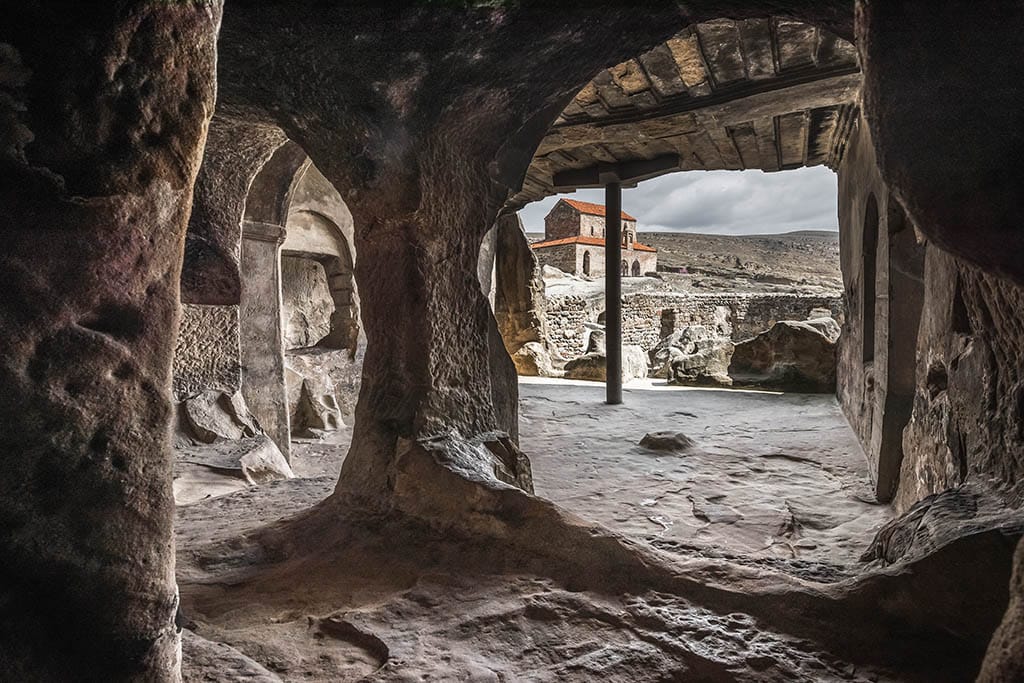
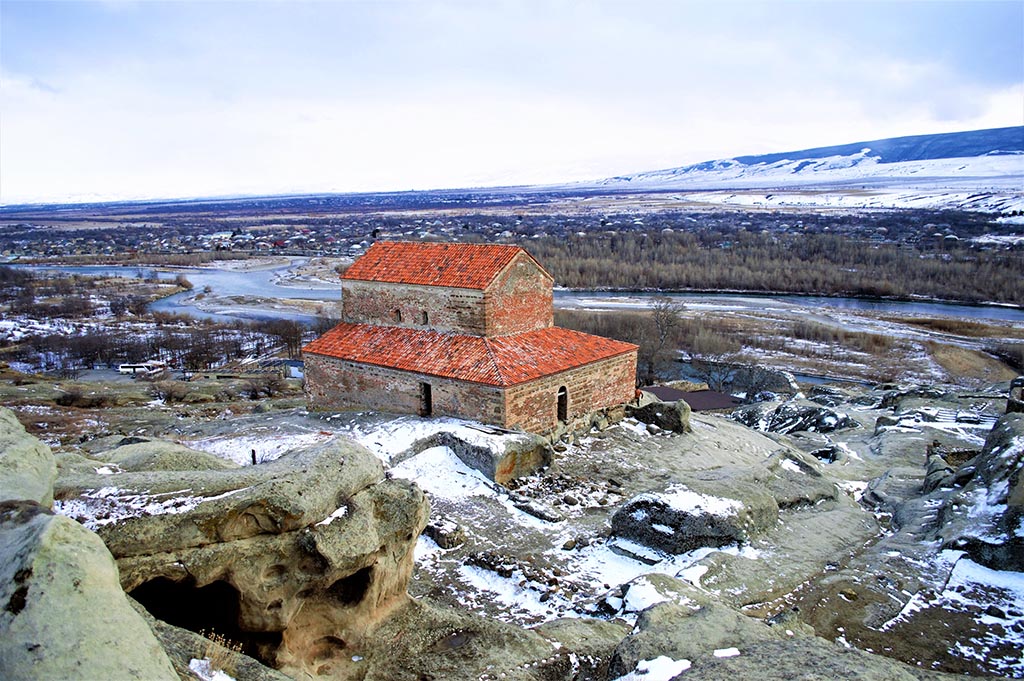
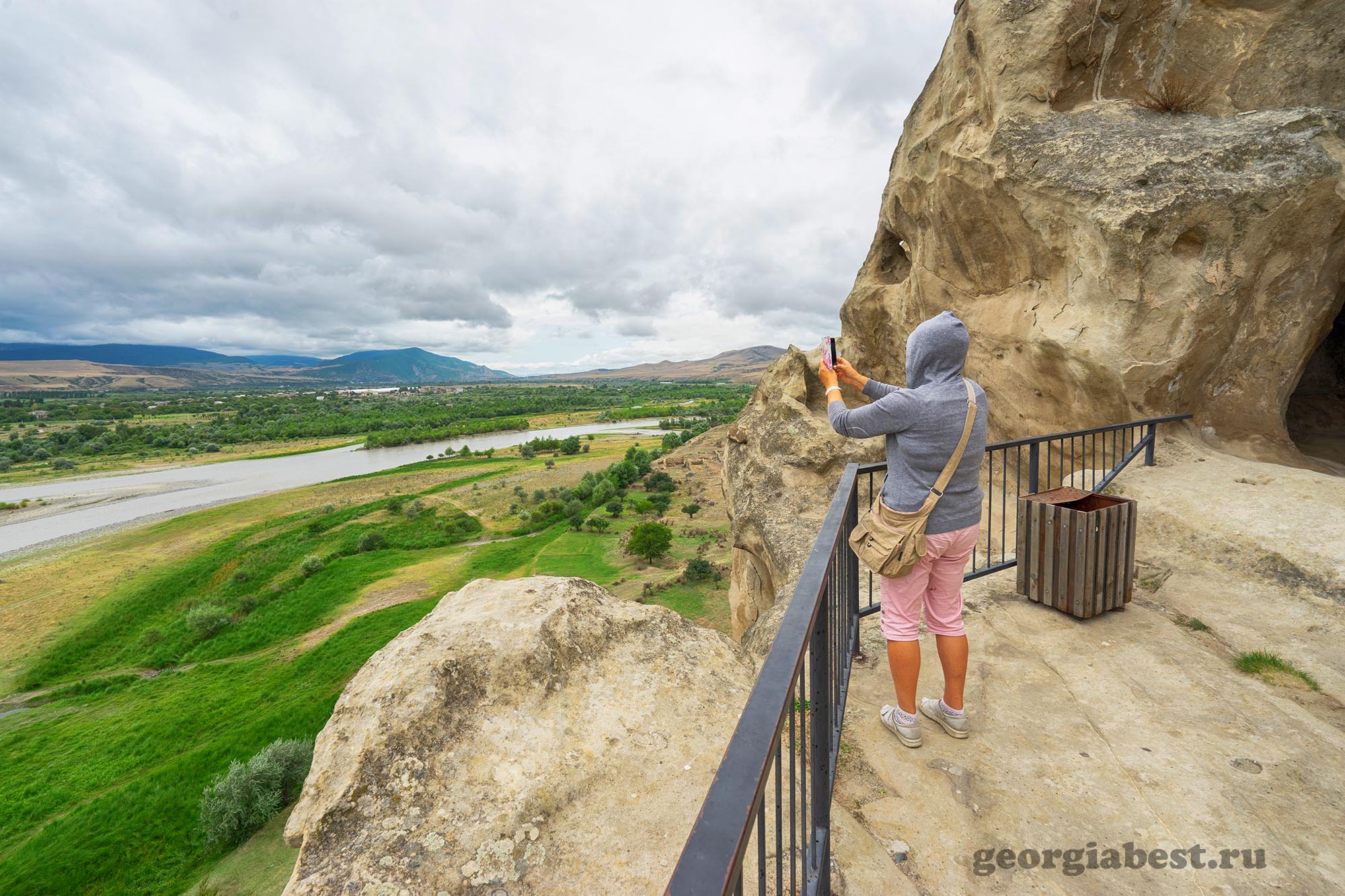
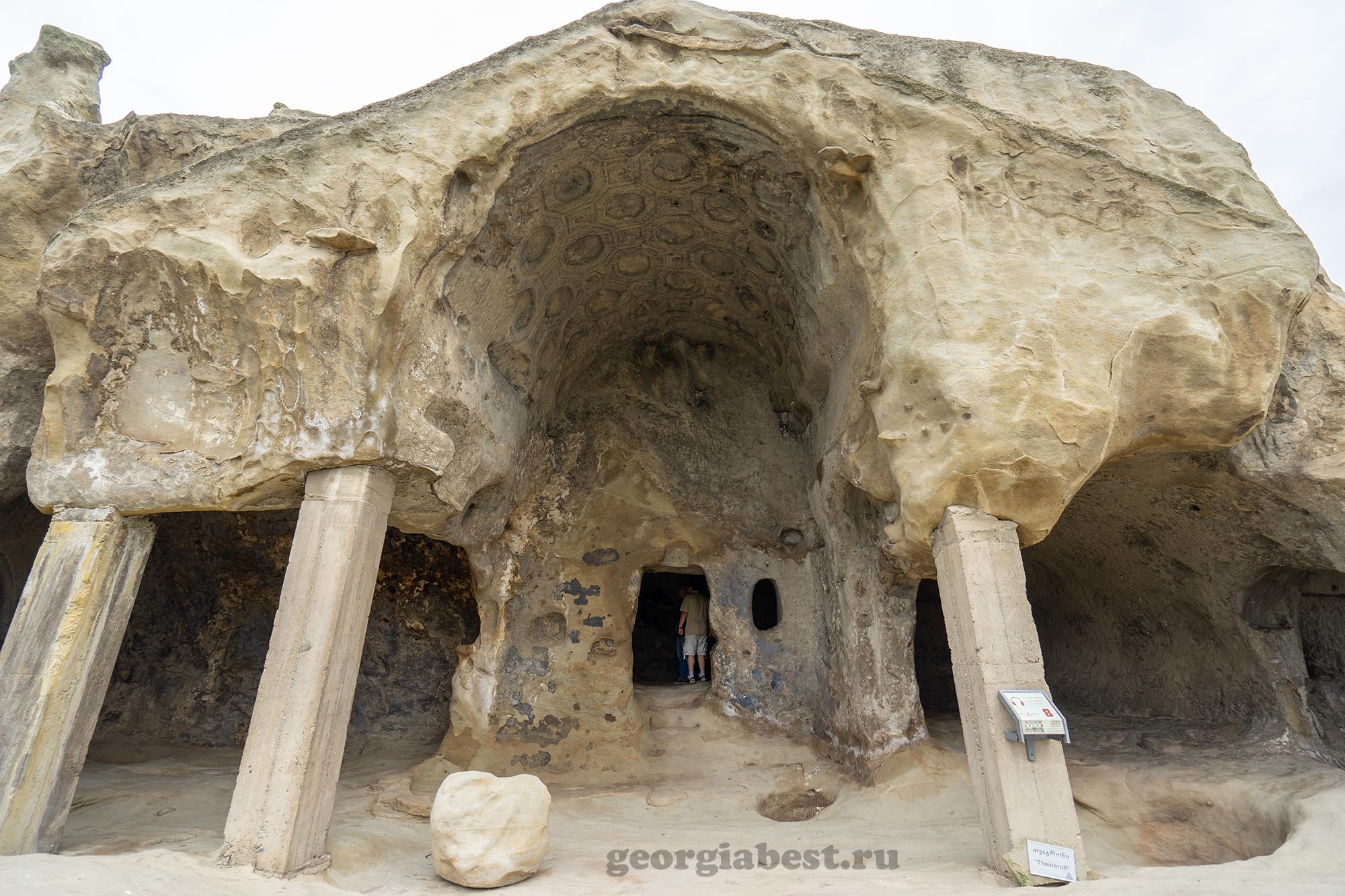
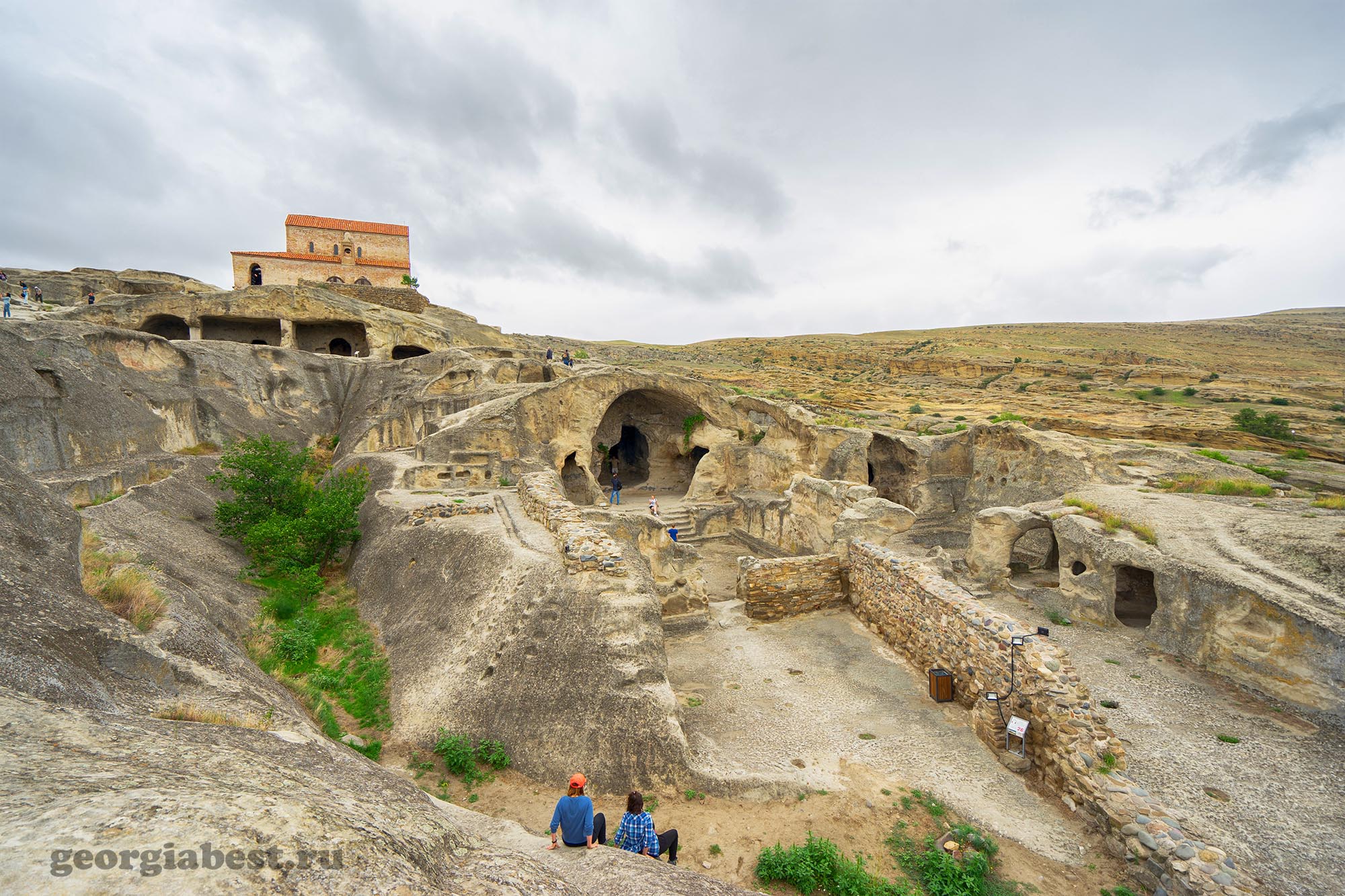
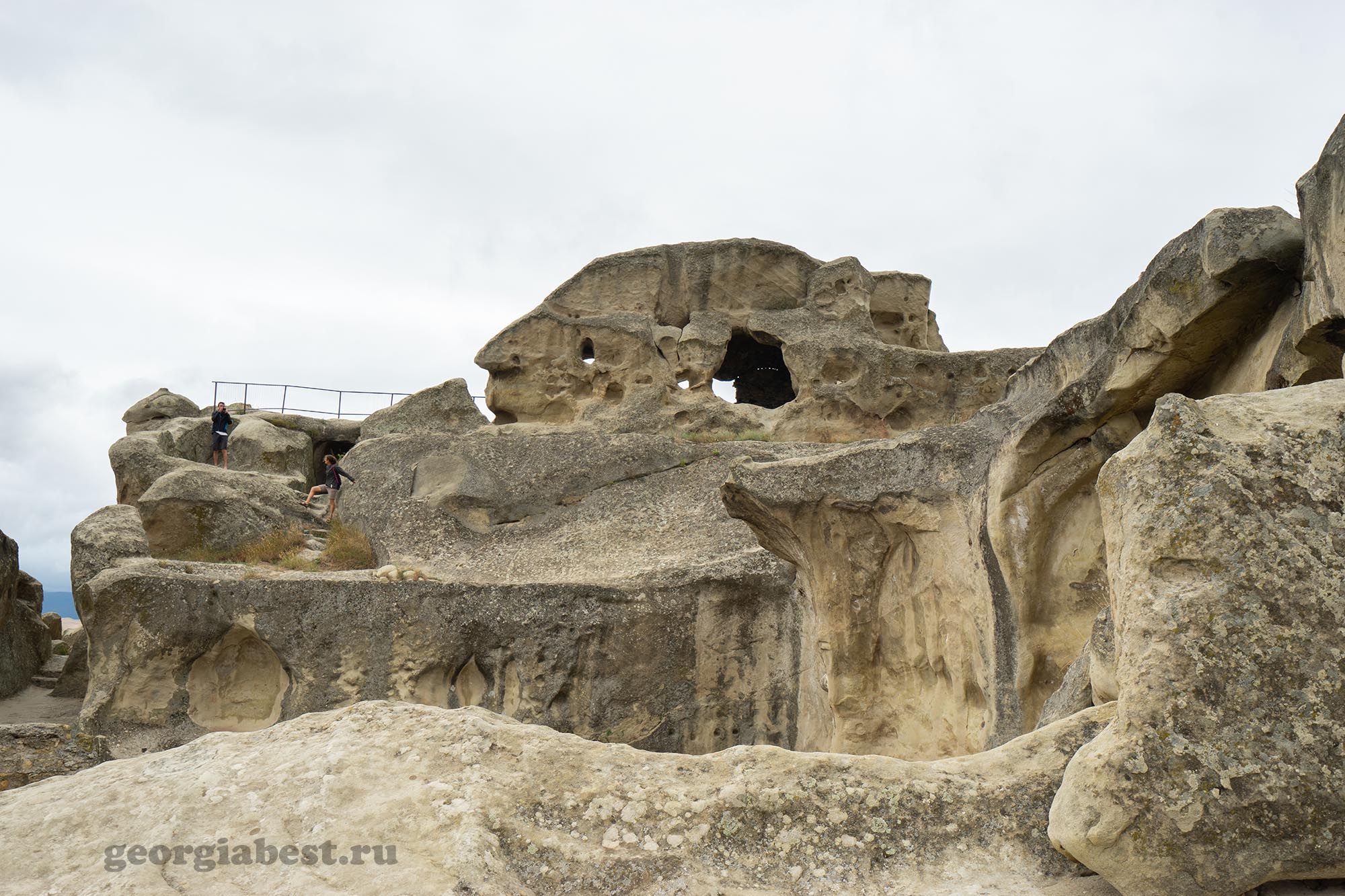
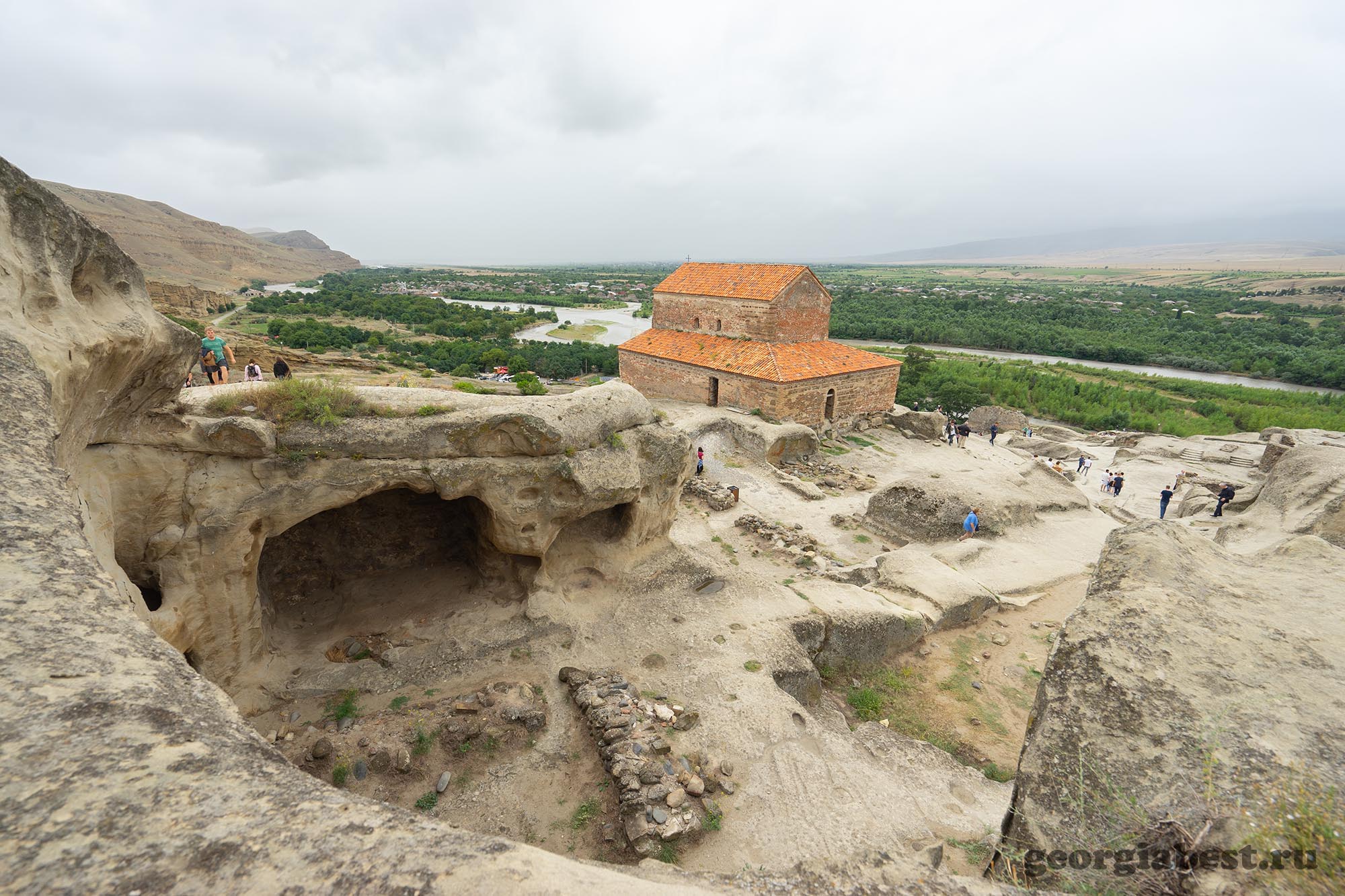
Uplistsikhe is a unique town carved into rock, 12 km from Gori and 98 km from Tbilisi. It stands on the left bank of the Mtkvari River and is one of the very first towns founded in eastern Georgia. A proper town appeared here at the turn of the 2nd and 1st centuries BC, and settlements existed as early as the 5th–4th centuries BC, so it is thousands of years old.
What makes Uplistsikhe special, and is it worth visiting? Absolutely! Where else will you see such an ancient town that lasted so long and was home to hundreds of generations? It is on UNESCO’s tentative list, and once here, you step into a completely different world.
A beautiful legend says the town was carved into the rock by slaves. They were given stone knives, each supposedly holding a gold ingot, which was promised to them along with freedom for hard work, once the knife wore down to reveal the gold. But this legend hardly has any historical basis: the sandstone the caves are carved in is soft and pliable and could not wear down stone knives.
The name “Uplistsikhe” was used from the town’s earliest days. Medieval historians wrote about Uplos, son of Mtskhetos, and the link between the name and this person is the most scientifically sound version. An alternative theory is that Uplistsikhe means “God’s Fortress” or “Lord’s Fortress”, as “uplis” in modern Georgian also means “lord, master”.
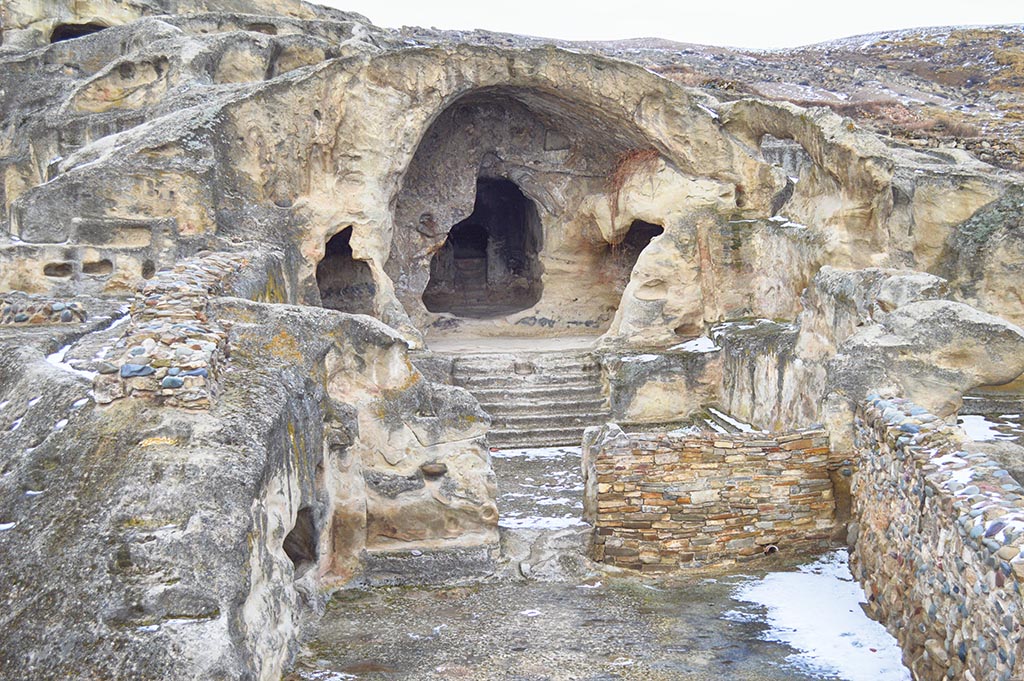
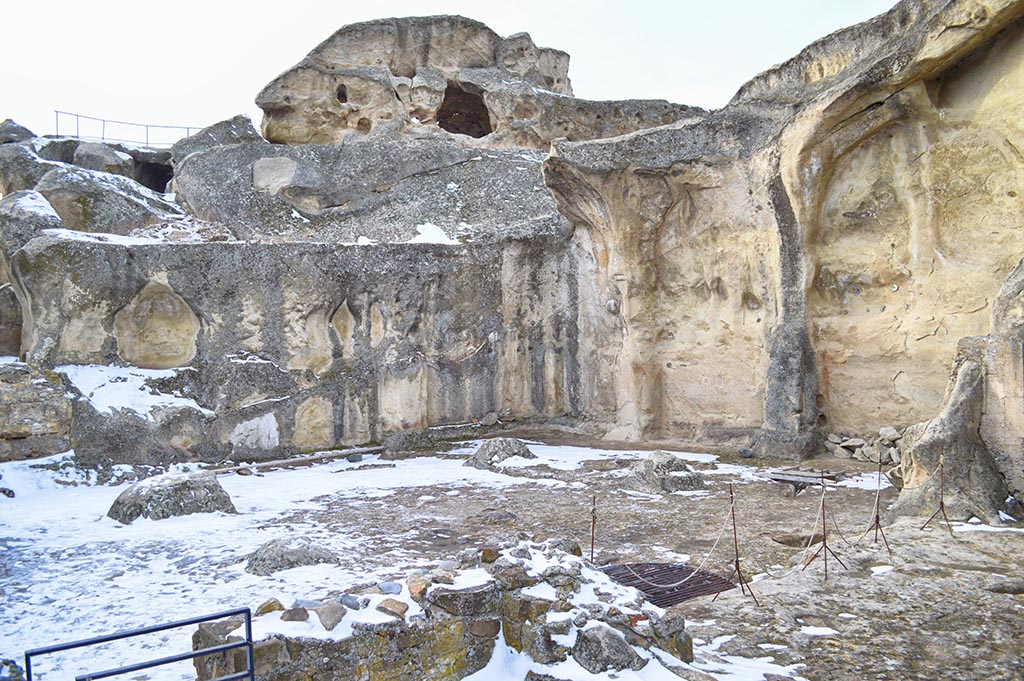
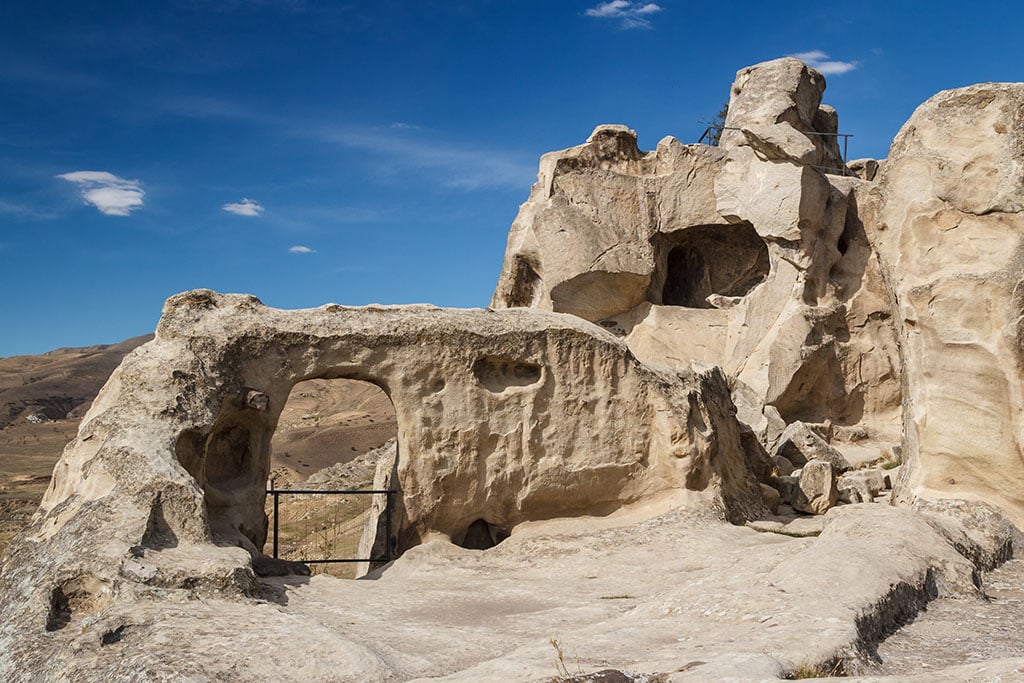
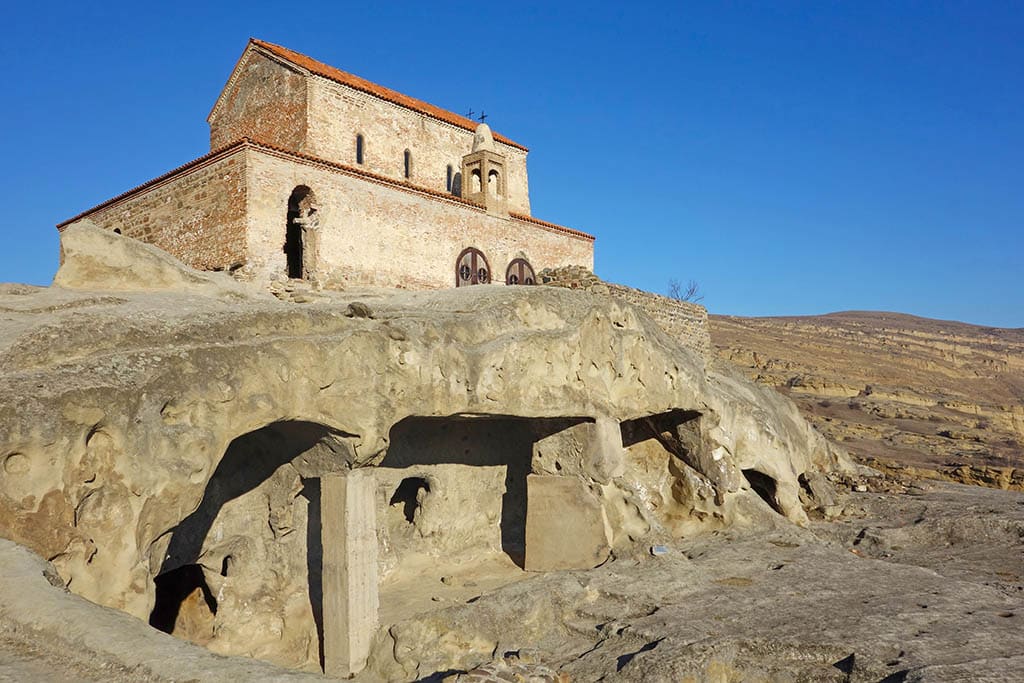
Today about 150 caves are open to visitors; there were once around 700 caves and structures. The town is fascinating because life went on here across several historical and cultural eras, accumulating many architectural, cultural and religious monuments. People lived here from time immemorial until the 19th century, which is astonishing. For three thousand years, in this town hidden from the outside world, people were born, lived, worshipped their gods, went about their daily lives, married, fell ill and died, and it was their refuge, perhaps the only place they ever knew.
Uplistsikhe in brief:
Where: 12 km from Gori and 98 km from Tbilisi, on the left bank of the Mtkvari.
Entrance: 15 GEL, free for children under 6.
Opening hours: from 10:00 to 19:00 from April to October and until 18:00 from November to March.
How to get there: from Tbilisi by minibus to Gori and then by taxi, or on a tour with a driver.
Ancient Uplistsikhe: life before the birth of Christ
People already lived in this area in the Bronze Age. The original settlement was founded on Katlaniskhevi, a hill near the rocky bank of the Mtkvari. A unique clay figurine of a female sun deity was found here. Historical evidence and excavations show that a massive fire broke out here in those ancient times, after which people began to develop the caves, and gradually the town we know as Uplistsikhe took shape. People already understood that the natural material and steep cliffs would help them create a fortified refuge inaccessible to enemies, and they wisely used this gift of nature.
This was the time of the ancient states of Media and Urartu. Uplistsikhe traded with them and gradually adopted much of their approach to urban planning and economy.
Uplistsikhe cave town under Hellenistic influence
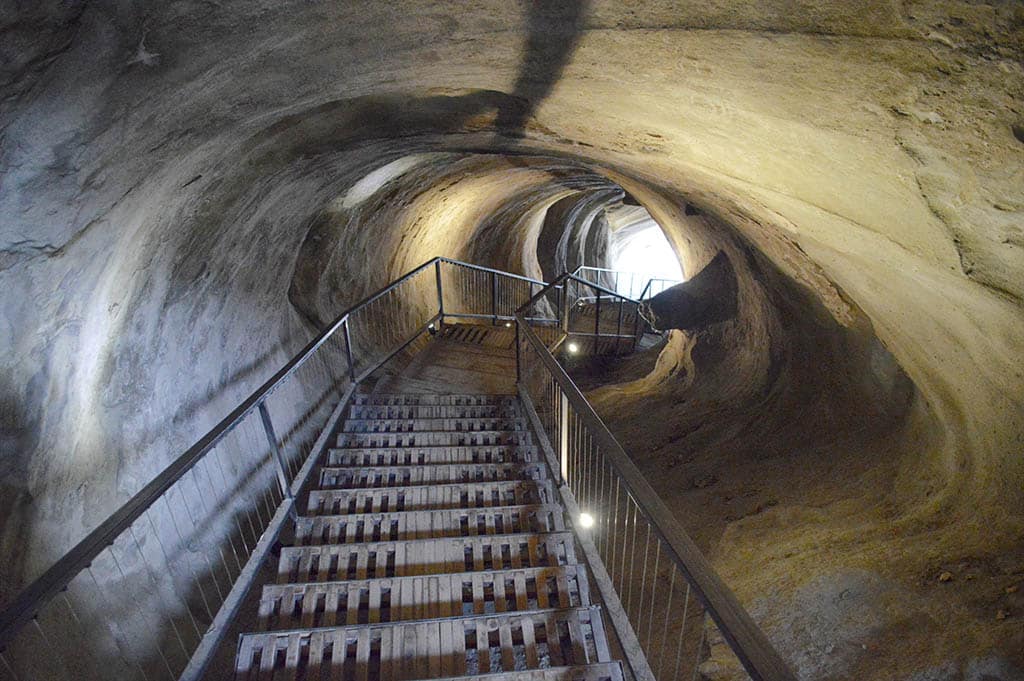
Uplistsikhe lay on the trade route between East and Europe, and partly thanks to this it grew fast in the Hellenistic era and soon became the spiritual centre of Iberia, where people came to make sacrifices to the gods. In the 4th century, when Uplistsikhe turned from a settlement into a proper town, hundreds of new structures appeared. Besides homes there were many public buildings: a theatre, a throne hall and a pharmacy. The town had sewers, wells, drains and a water reservoir. For defence, a moat was cut and a wall built where the cliff was not steep enough. The main entrance was protected by a gate, from which a sacred road led. Another entrance was only for pedestrians, and the other two opened straight onto sheer cliffs, apparently purely decorative. The tunnel in the rock leading down to the river has survived: you can walk through it and imagine yourself as an ancient resident of Uplistsikhe.
The townspeople worshipped not only the sun deity but also the gods of earth, water and other Georgian pagan deities.
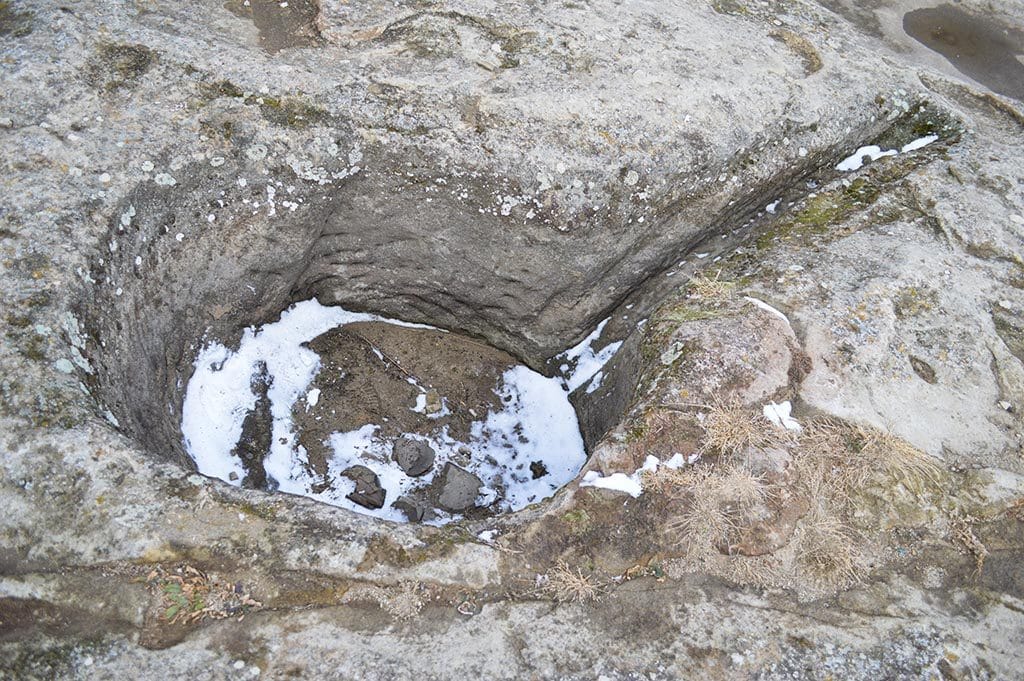
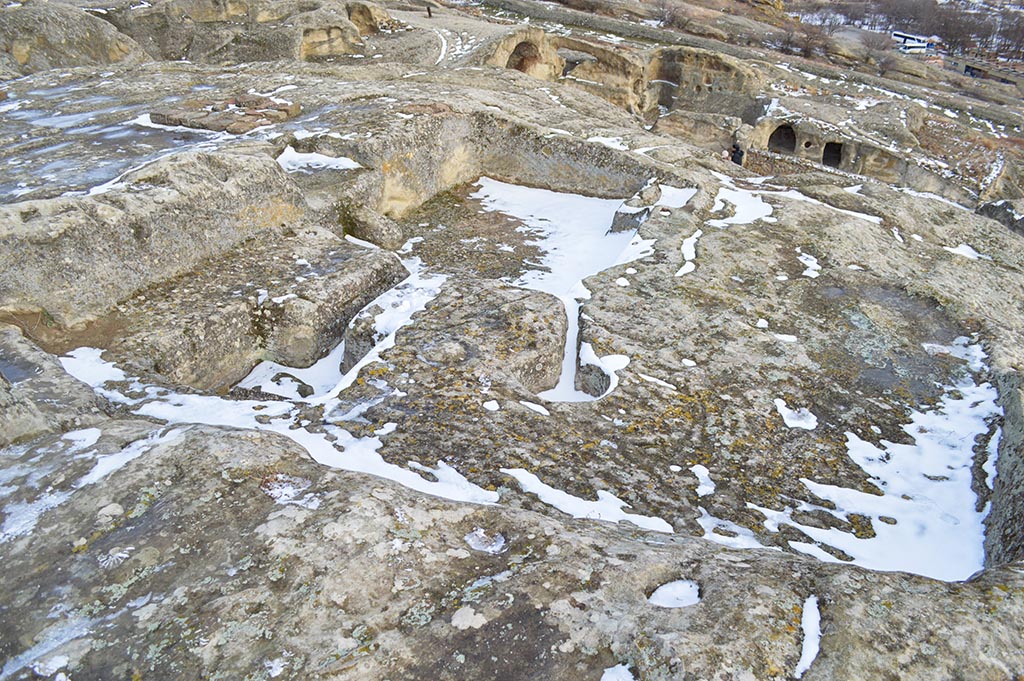
In the streets you will still find strange pits in the rock right under your feet. Scholars puzzled over their purpose for some time. Some thought these pits of different sizes (1–4 m across and up to 12 m deep) were prisons. But analysis of material from their bottoms showed they were altars to the god of the underworld: animals were lowered into them as sacrifices.
Interesting details and facts about Uplistsikhe
Queen Tamar’s Hall
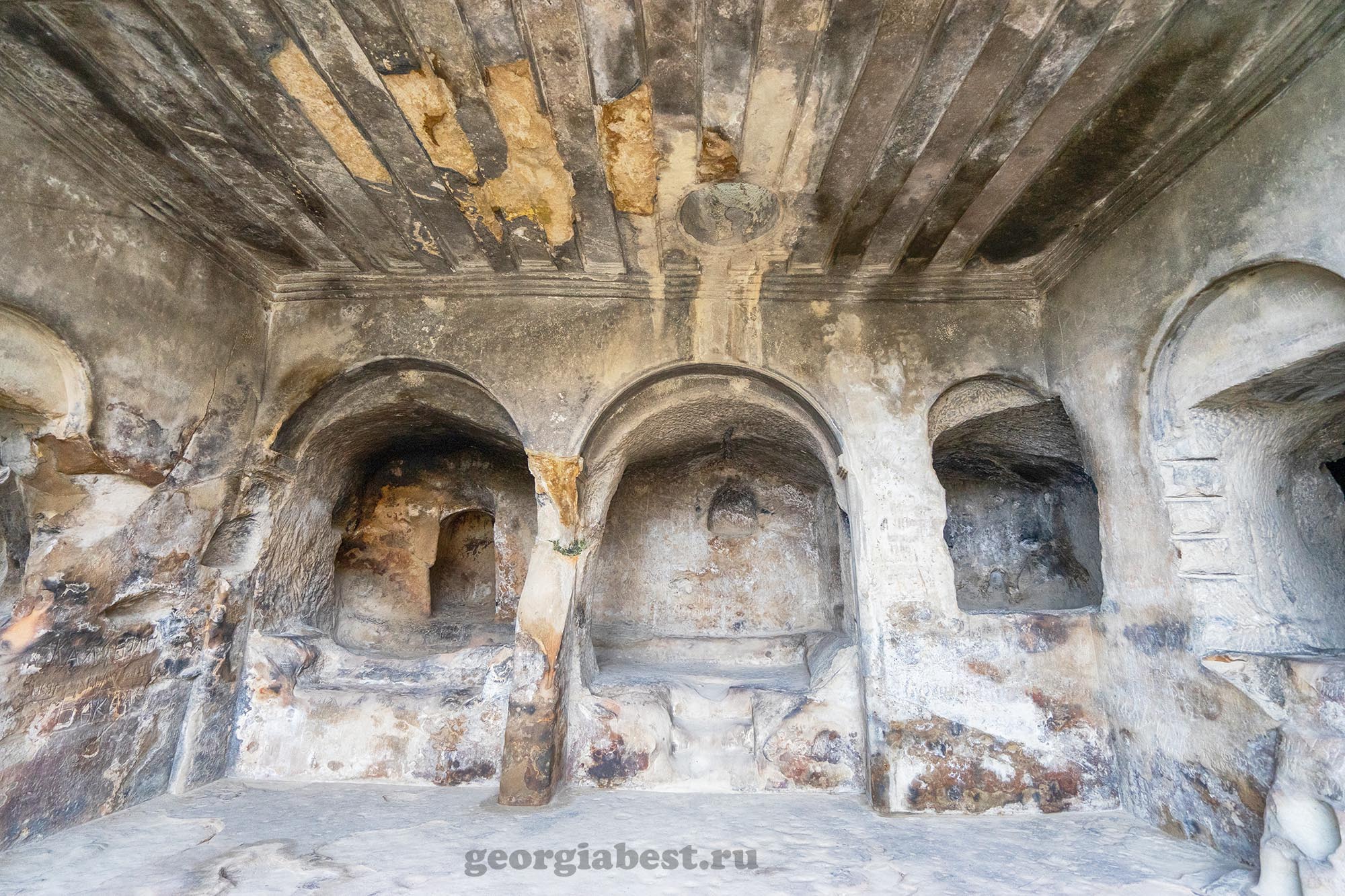
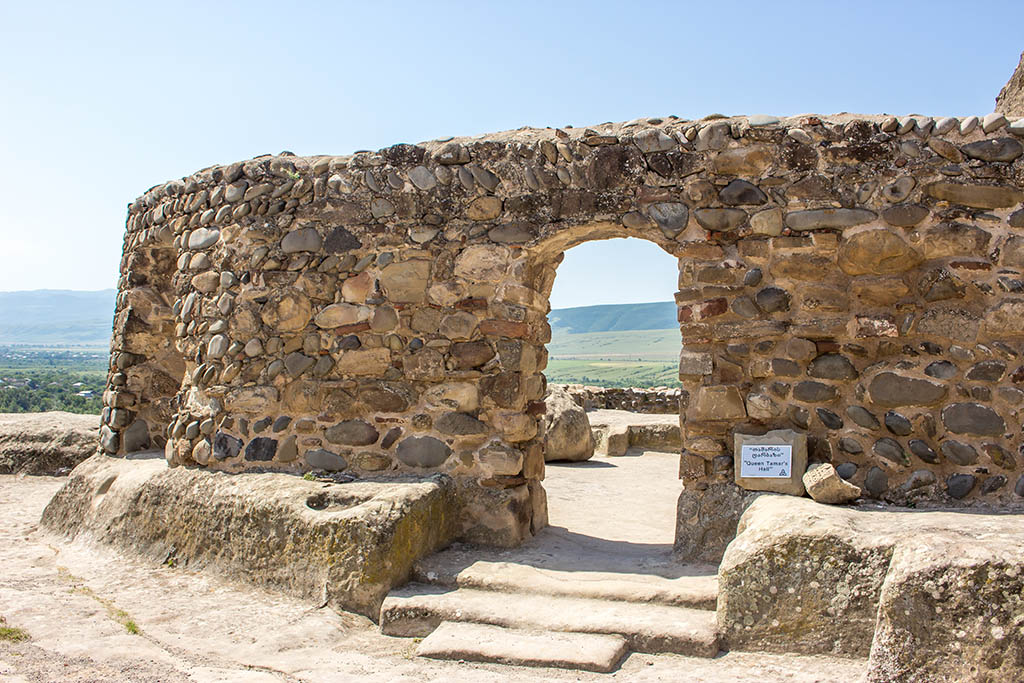
Tamar was crowned in Uplistsikhe and also married here in the church. The coronation most likely took place in this hall, and the wedding feast may have been held here too. The hall has a marani, a wine storage vessel, and a hole in the ceiling for light.
Ancient ovens
All over Uplistsikhe you will see pits with channels running off to the side. Some think they were ancient altars, but in fact they were ordinary tone ovens used for heating and baking bread. The side channel let in air to fan the fire. As the landscape here is steppe with little vegetation, firewood was hard to get, so cow dung was the main fuel for heating and cooking.
Pharmacy
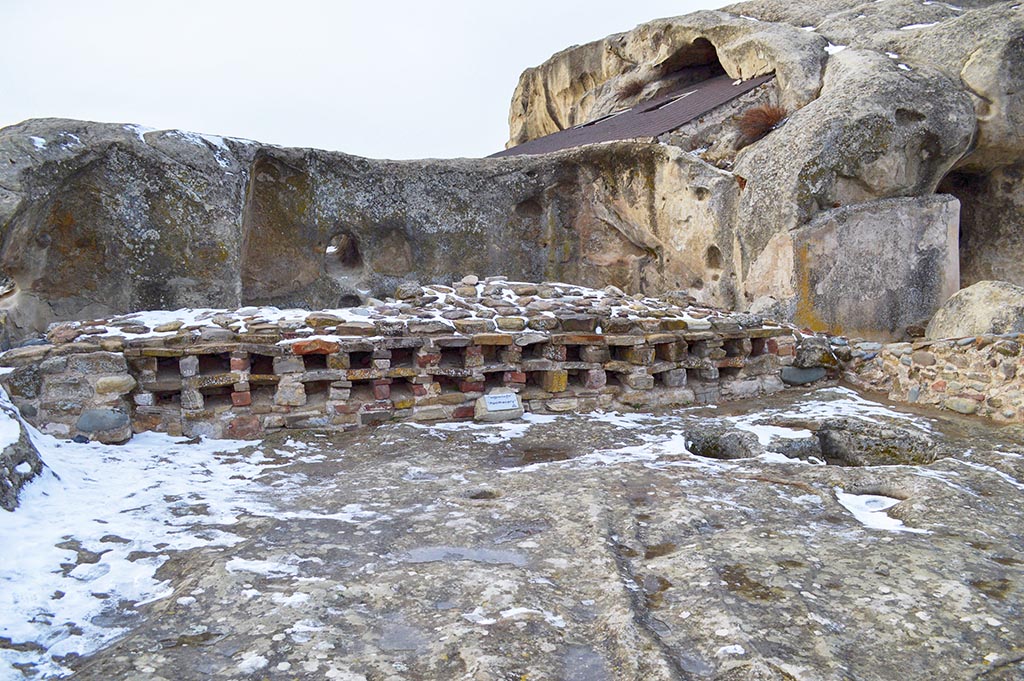
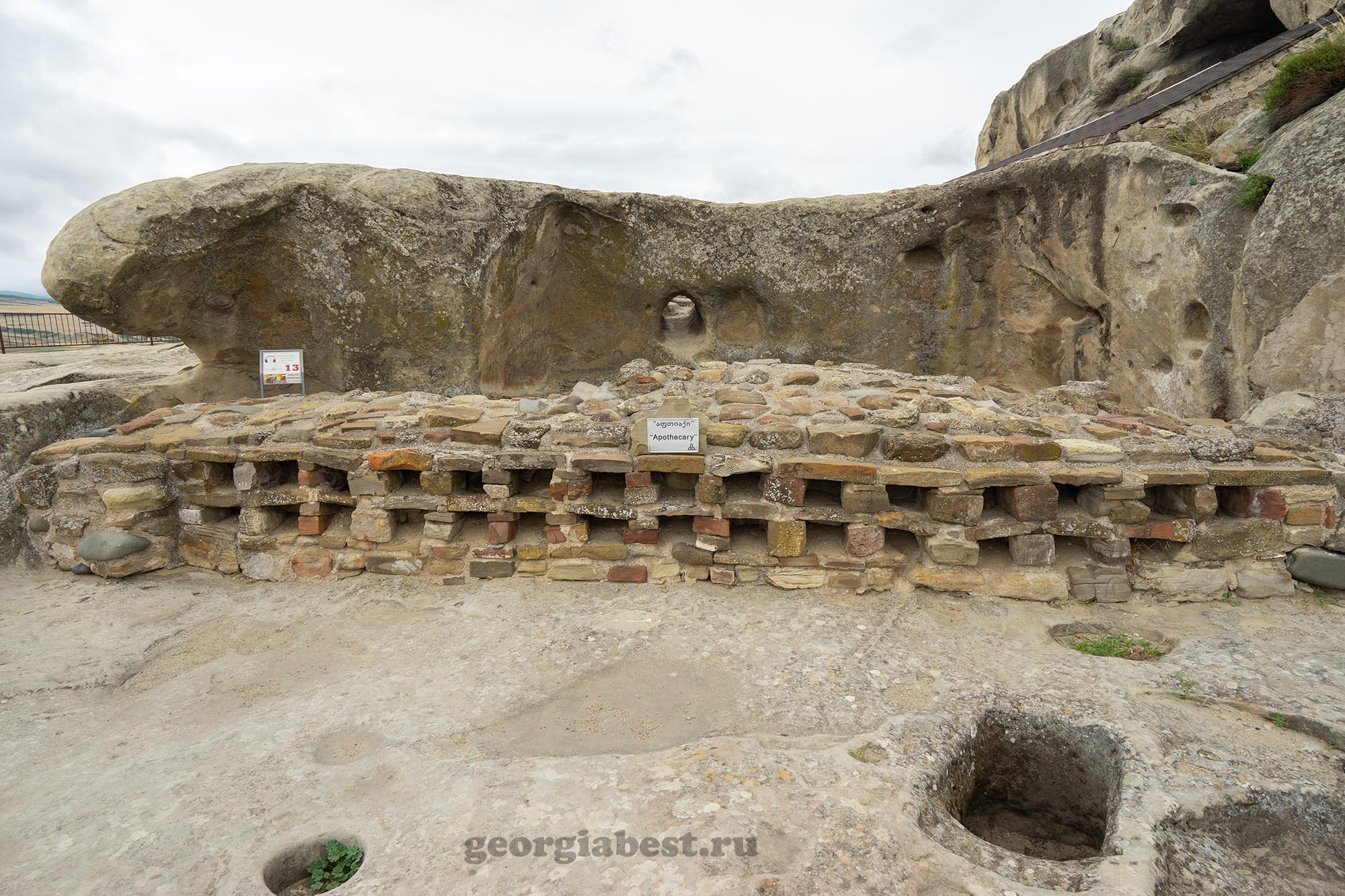
At first archaeologists could not work out the purpose of a room with stone brick shelves and a stone bath. But analysis of dust from the niches showed that various herbs and powders were stored there.
Winemaking
Research shows that wine made in Uplistsikhe was considered sacred. At that time there were dense forests around the town, and grapes were brought from afar.
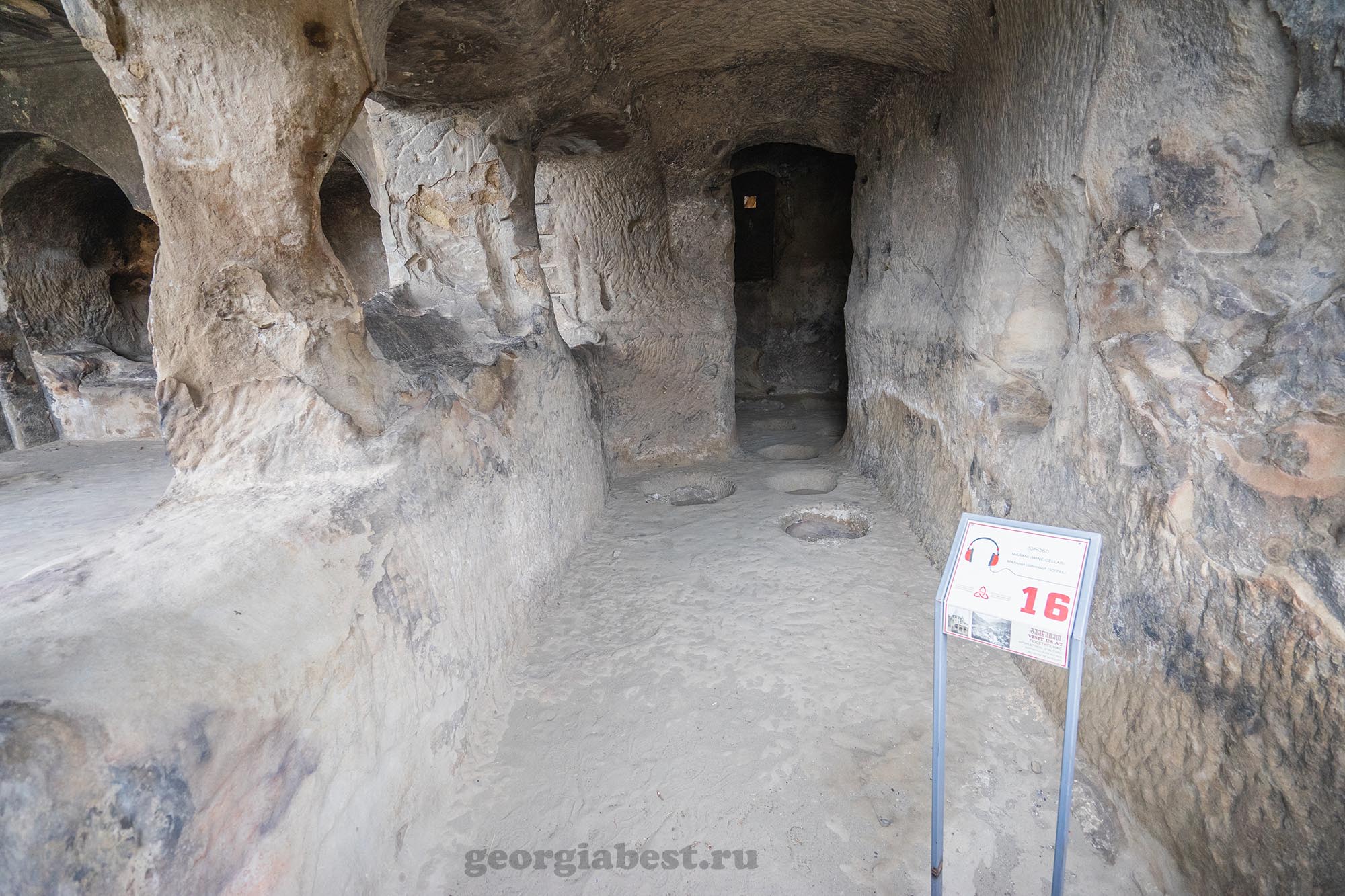
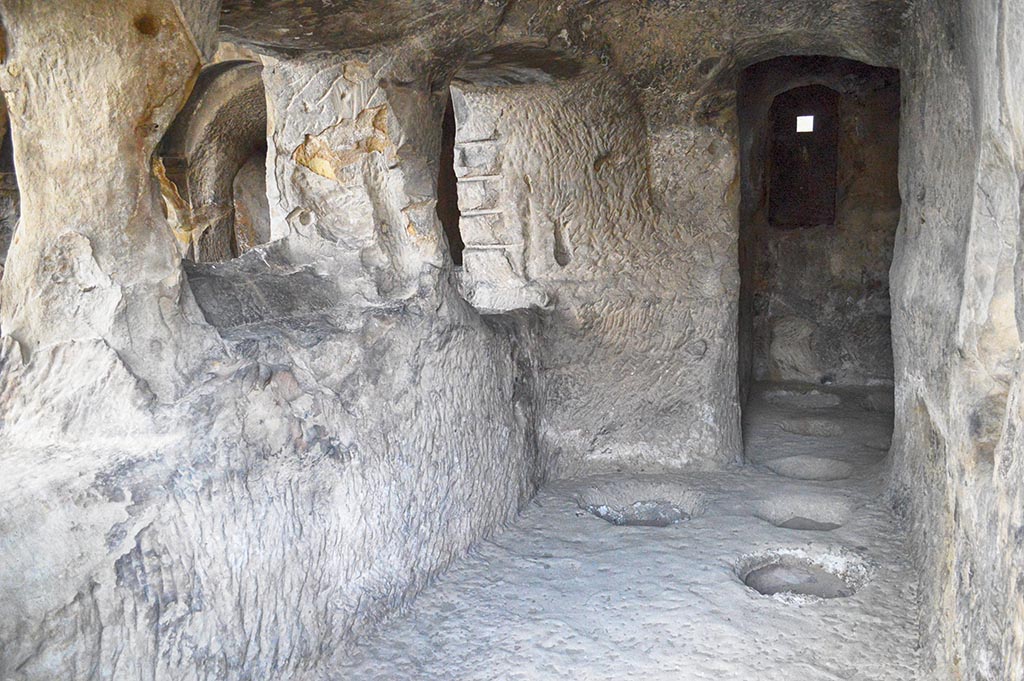
The ancient wine presses are two large square pits connected by a channel. Grapes were crushed in one pit and the juice flowed into the other. It was then mixed with the pomace to start fermentation. After two or three weeks the juice was strained and made into wine, and the pomace into strong chacha. The presses are near the ticket office: you will see them first as soon as you step onto the rocks. The marani (rooms where wine fermented and was stored) are in the caves of the town.
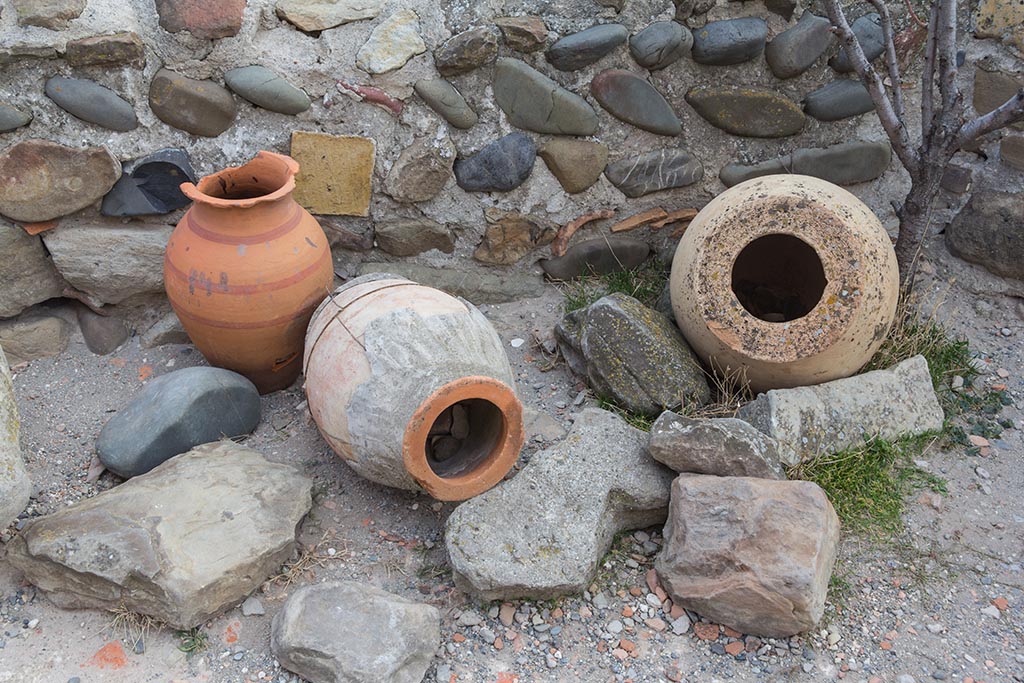
Uplistsikhe had one large wine store for 58 qvevri and several small ones, which the Christians who came to the town destroyed and burned.
The Red Room
Above the church is an interesting room that stands out among the other caves. It is called red because of remains of red paint on the ceiling, though some say the rock itself is that colour. The room has a relief of a hand, the only such sculpture found in Uplistsikhe, so the room is also called the architect’s room, as if the hand commemorates the person who planned the cave town.
Uplistsuli and the ruins of the three-nave basilica
In 337, when Georgia became a Christian country, many priests and residents of Uplistsikhe were executed. The conflict brought destruction and fires, and over time all the temples were rebuilt as Christian churches, including the large temple by the main square, which became a three-nave Christian basilica, a church with an ordinary roof and no dome. Unfortunately these buildings soon fell apart, and a new church was needed.
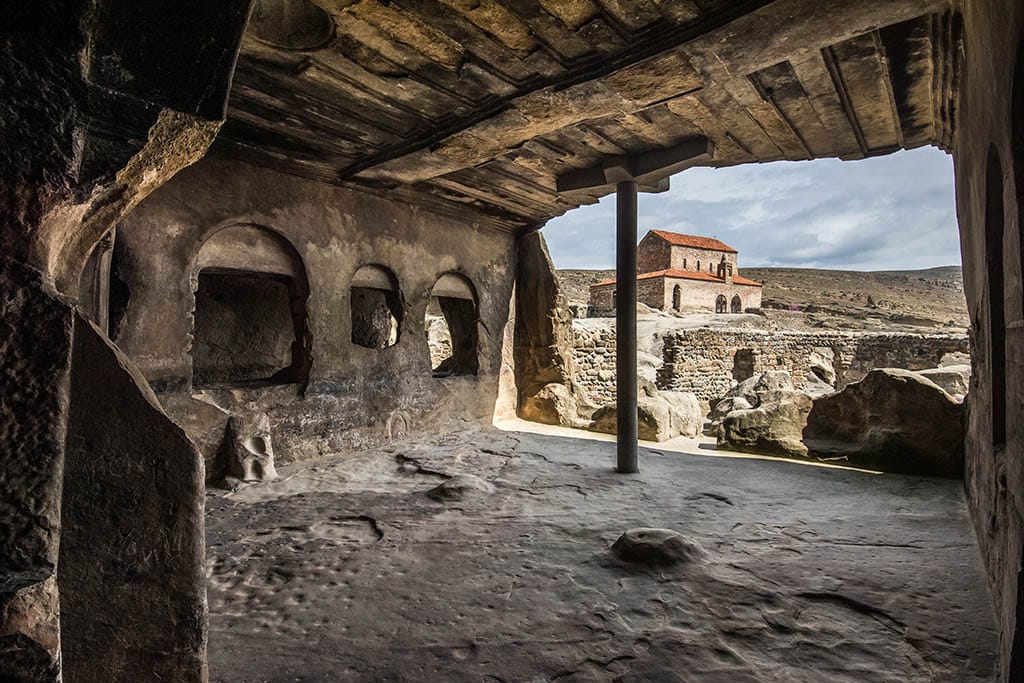
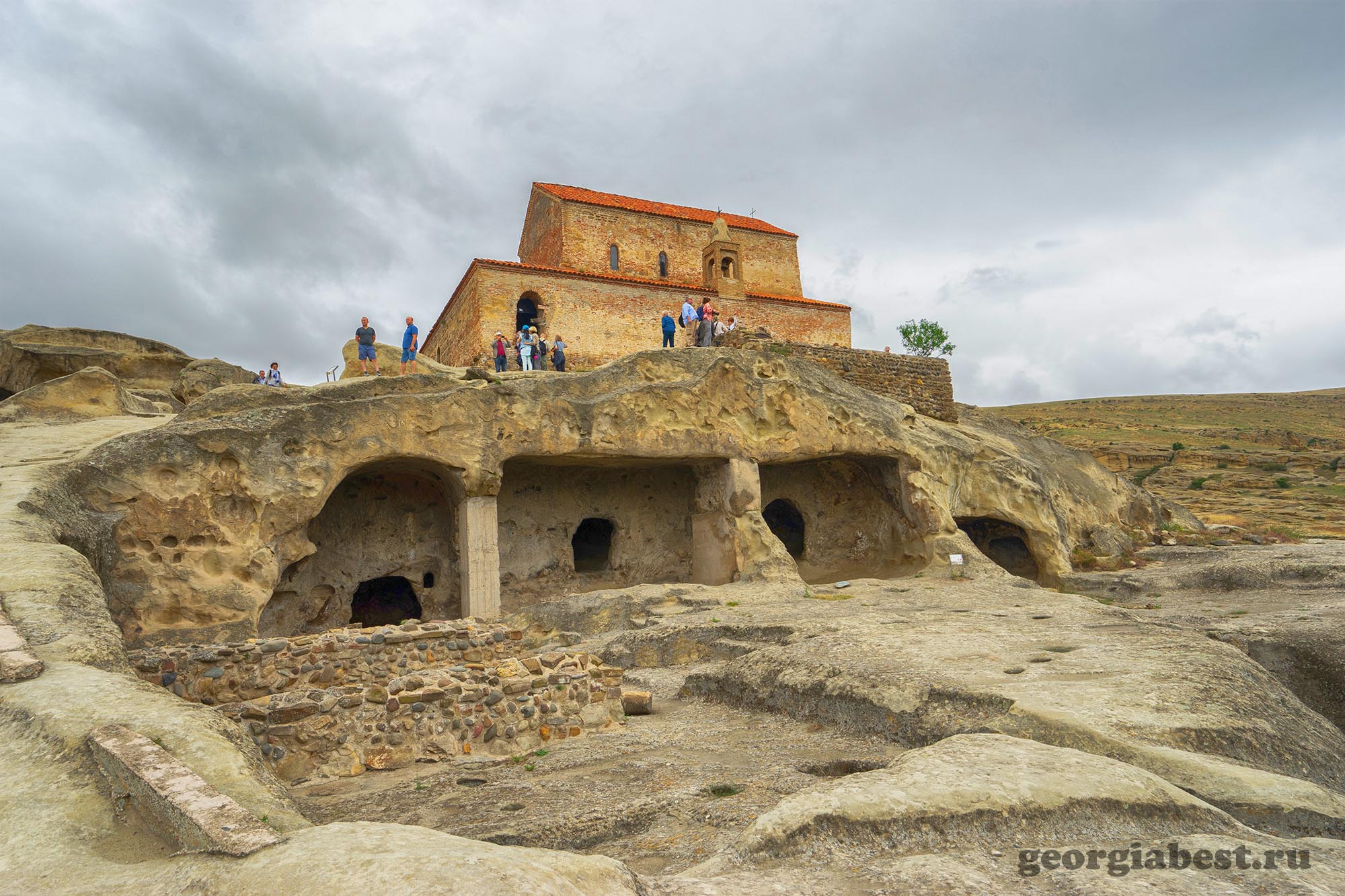
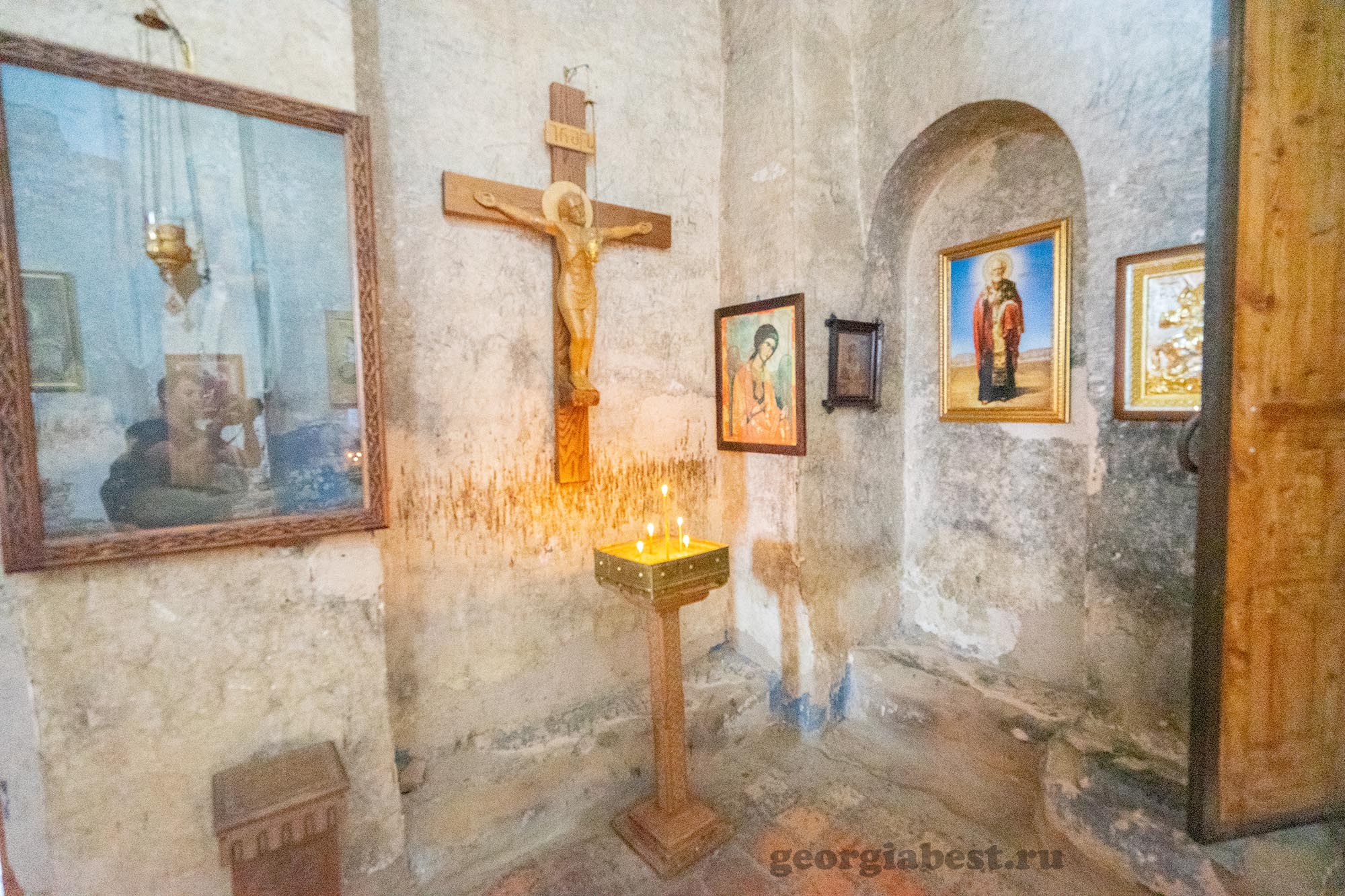
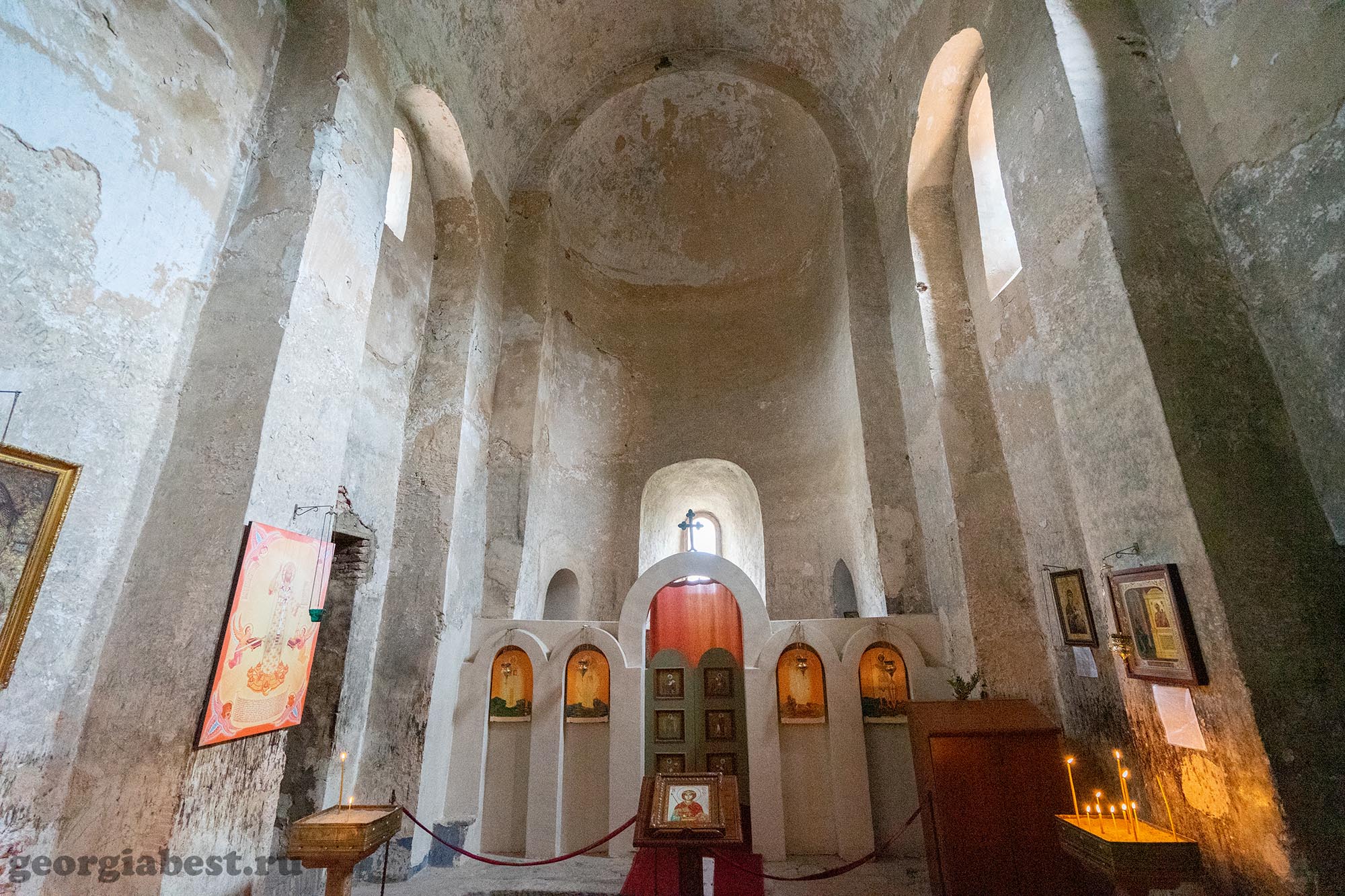
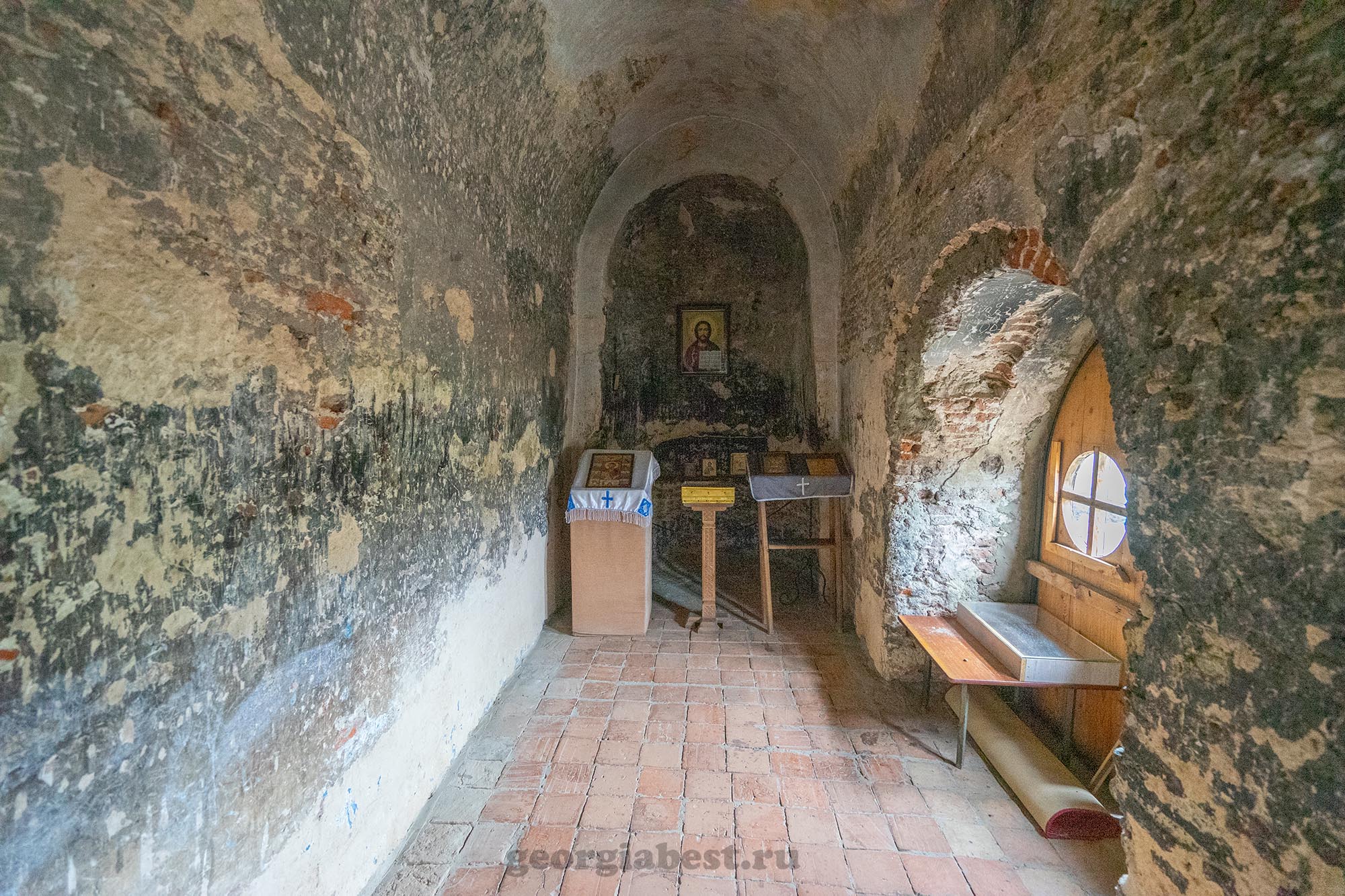
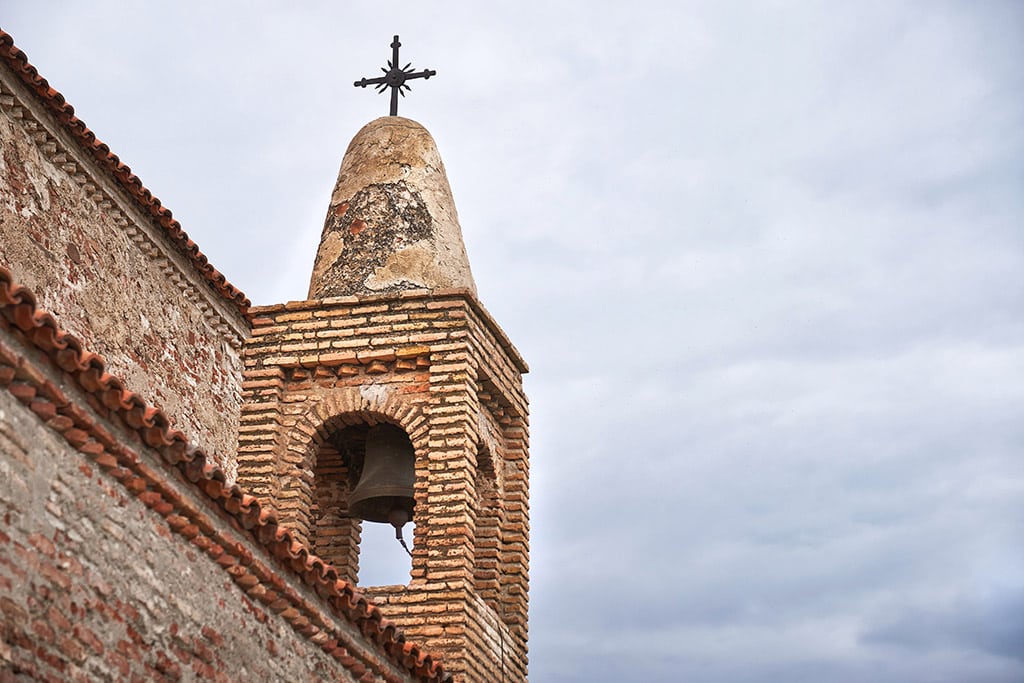
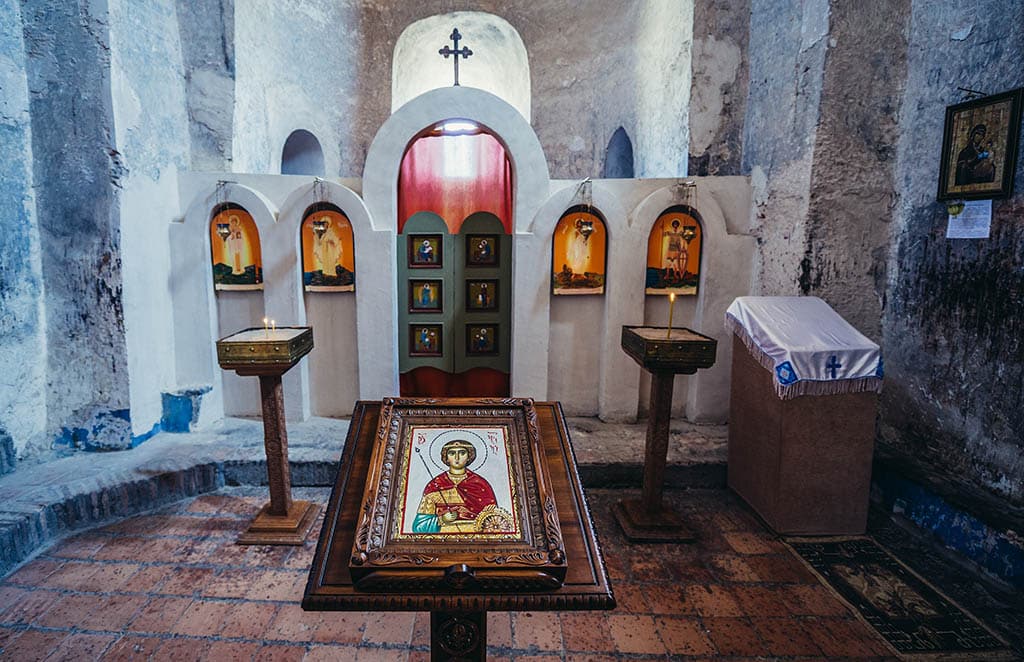
Uplistsuli, which means “Prince’s Church” in Georgian, was built in the 10th century and is still active. Architecturally it looks very simple. It is one of the rare churches built in the purely Georgian “three-church basilica” style: the two side rooms are separated from the main hall not by columns, as in three-nave churches, but by walls. That is what makes Uplistsuli unique.
Next to it are the ruins of that basilica, which in pre-Christian times was a pagan temple, and some believe it was once even an arena for gladiator fights. Later, in the Middle Ages, it was used as a bakery.
Single-column hall
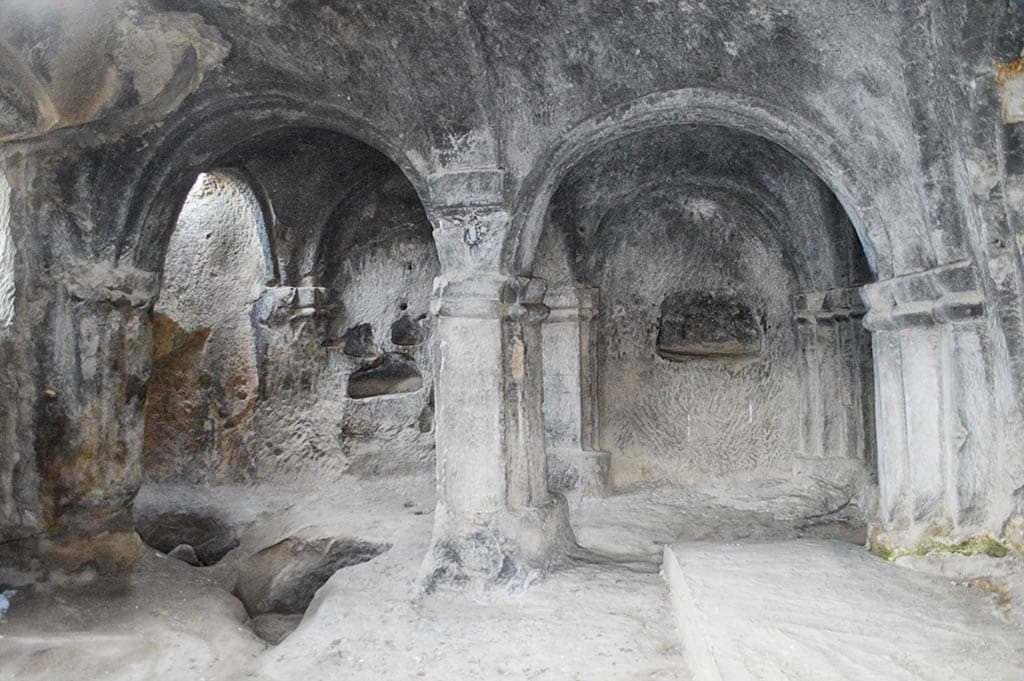
This hall is west of Uplistsuli church and is known for its surprisingly well-preserved columns, which look almost as they did when they were carved; in other halls only remains of such columns survive. The room apparently belonged to a very important and wealthy person, perhaps a priest. Its decoration and layout are very different from the other rooms, and it is considered the most beautiful in the whole cave complex.
The treasure found in Uplistsikhe
This ancient treasure was a real sensation among scholars. It dates from the town’s earliest period and included four wheels, symbols of the morning star, the moon, the sun and the town’s patron star. The numbers 4 and 8 are everywhere in Uplistsikhe: for example, there are 8 steps to the temple of the female sun deity, and it was by their number that the room was identified. The treasure helped confirm many theories about buildings whose purpose was hard to establish. Part of it is now in several Georgian museums.
There are still places where research has not even begun, while archaeologists work in other parts of the ancient town.
Uplistsikhe, capital of Kartli
Interestingly, there was a period in Georgian history when the Kingdom of Kartli was so tiny that it did not extend beyond Uplistsikhe. It is hard to imagine, but in the 8th–10th centuries this rock-cut town saved the Kingdom of Kartli from disappearing completely. Uplistsikhe was the capital then, and Tbilisi was a Muslim emirate. Almost right outside the town gates began the lands of other rulers.
The Mtkvari (Kura) changes course
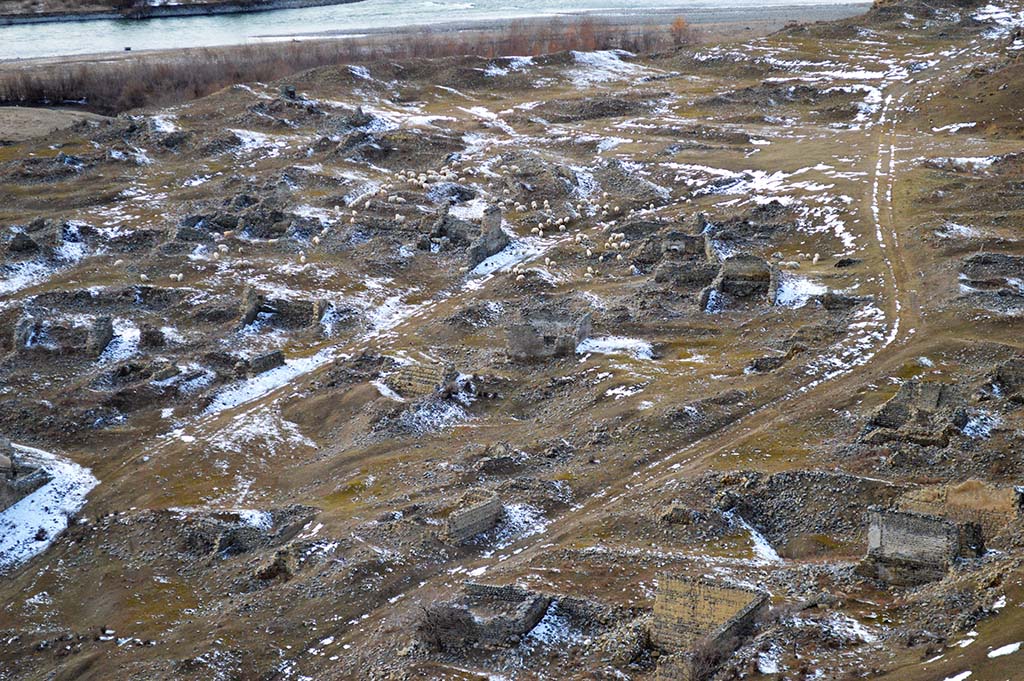
In the Middle Ages Uplistsikhe flourished as the capital of the Kingdom of Kartli, with about 20,000 inhabitants. During this time a rare event happened: the river on whose bank the town stands changed its course. A strip of land appeared below the cliff, and people began to build houses and settle there. This settlement was also called Uplistsikhe and lasted until the 1970s.
The decline of Uplistsikhe
The cave town was conquered many times. At different times it belonged to Armenians, Arabs and Abkhazians and suffered Seljuk attacks. When Georgia was freed from the Arabs in 1122, Tbilisi became the main city and Uplistsikhe lost its status as capital. The town finally declined after several Mongol raids, which burned it repeatedly. In the 13th century Hulagu, grandson of Genghis Khan, attacked the town, and his army killed about 5,000 monks who lived there.
Even so, people lived here until the early 20th century. But its heyday was over, and through the Middle Ages and modern times it stayed in the shadow of Tbilisi and Mtskheta.
A powerful earthquake in Georgia in 1920 badly damaged the town, destroying many caves and buildings, and people no longer settled here.
Archaeological excavations are currently under way in Uplistsikhe, and more caves and rooms open to visitors every year.
How to get to Uplistsikhe from Tbilisi
How to get there: the most popular option among tourists is a private tour from Tbilisi with a guide-driver, or simply a driver for the day. Gori and Mtskheta are nearby, so it is best to take a route that combines these places. Another popular option includes a stop in Borjomi.
A budget option is to get to Gori by minibus or by shared taxi from Didube metro station, and take a taxi from there to Uplistsikhe. It is about 12 km, so agree with the driver to wait while you look around and take you back: there is no public transport to the cave town itself.
From Batumi you can get to Uplistsikhe by car, about 310 km and roughly 5–6 hours. By public transport, you first need to get to Tbilisi.
Opening hours: from 10:00 to 19:00 from April to October and until 18:00 from November to March.
Entrance: 15 GEL, free for children under 6.
Tips for visitors
In summer it is best to visit Uplistsikhe in the morning, before it gets hot, as the site is open with no shade and the sun is merciless. Make it the first stop of your day if you are visiting other places too.
Uplistsikhe 2018–2019
The town stretches along the slope in the shape of a long rectangle. Uplistsuli church stands roughly in the centre, which makes it a handy landmark as you wander the streets of Uplistsikhe.