


In the picturesque Kartli Valley, where two rivers meet, the turbulent Greater Liakhvi and the full-flowing Kura, lies Gori. The town is surrounded by mountains covered in rich vegetation and has a population of about 48,000; it is the main town of Shida Kartli.
People rarely come to Gori specially. Usually they stop here on the way from Tbilisi to Batumi, Borjomi or Akhaltsikhe, and visit the cave city of Uplistsikhe 12 km away at the same time. That is exactly the right format: half a day is enough for the town itself, and you will have impressions for a whole day.
Gori: the trip in brief (2026)
- Where: about 80 km west of Tbilisi, roughly an hour along the Tbilisi–Batumi highway.
- How much time you need: half a day for the town and another 2–3 hours for Uplistsikhe.
- Stalin Museum: 15 GEL, the guided tour and the railway carriage are included; 10 GEL for students; daily from 10:00 to 18:00.
- Gori Fortress (Goristsikhe): free and open at any time; the gates are not even closed at night.
- Uplistsikhe: 15 GEL; from April to October 10:00–19:00, in winter until 18:00.
- What to combine it with: Mtskheta on the way from Tbilisi, then Borjomi or Akhaltsikhe.
A half-day route
Gori Fortress → the memorial to its defenders → Stalin Avenue and the Museum of Military Glory → Stalin Museum → lunch → Uplistsikhe. By car you can do it all in a day without rushing and be in Borjomi or Tbilisi by evening.
The history of Gori in a nutshell
The name means “hill”: it was on a rise that an ancient tower first stood, and later the Goristsikhe fortress grew. People lived here long before the first mentions of the town. That was discovered by chance: in 1946 a large landslide brought down part of the fortress’s northern wall, and under it ancient burials were found with rings, necklaces and wine vessels from the 1st century BC.
Gori rarely had a quiet life: it was captured by the Aq Qoyunlu, the Iranian Shah Tahmasp, the Ottomans and the Persians. And in 1920 a powerful earthquake destroyed the town so badly that it had to be rebuilt almost from scratch. That is why hardly any old churches or castles remain here; the main survivor is the fortress on the hill.
What to see in Gori
Gori Fortress (Goristsikhe)
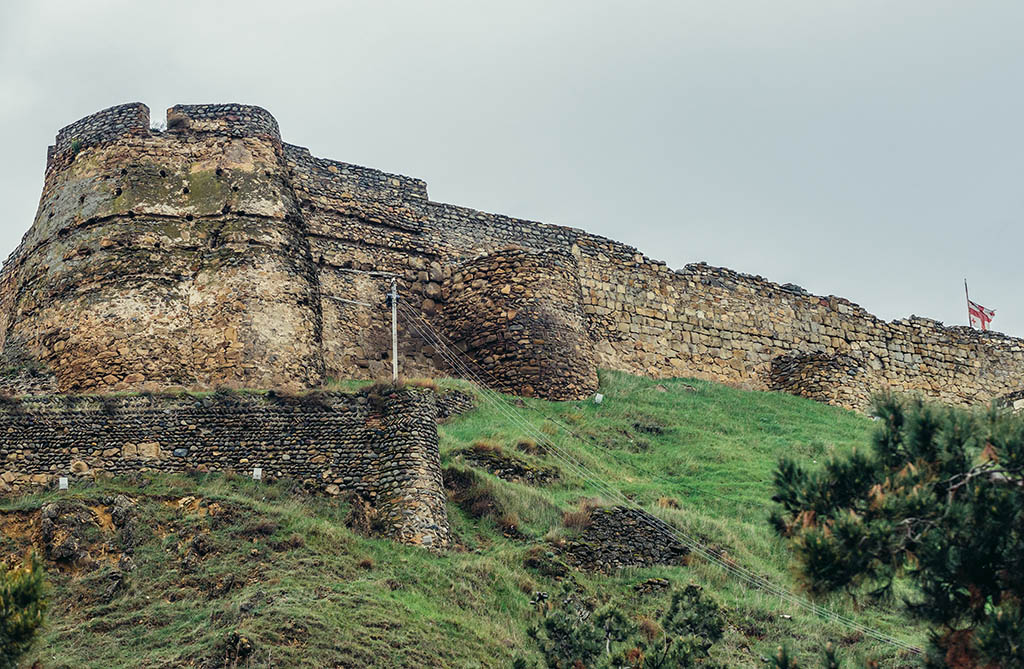
The town’s calling card stands right in the centre, on a rocky hill. Part of the walls is ruined, but the surviving battlements and smooth stone walls still look impressive. Its construction is attributed to David the Builder, and in a 13th-century chronicle the fortress is first mentioned as… “the Gori prison”.
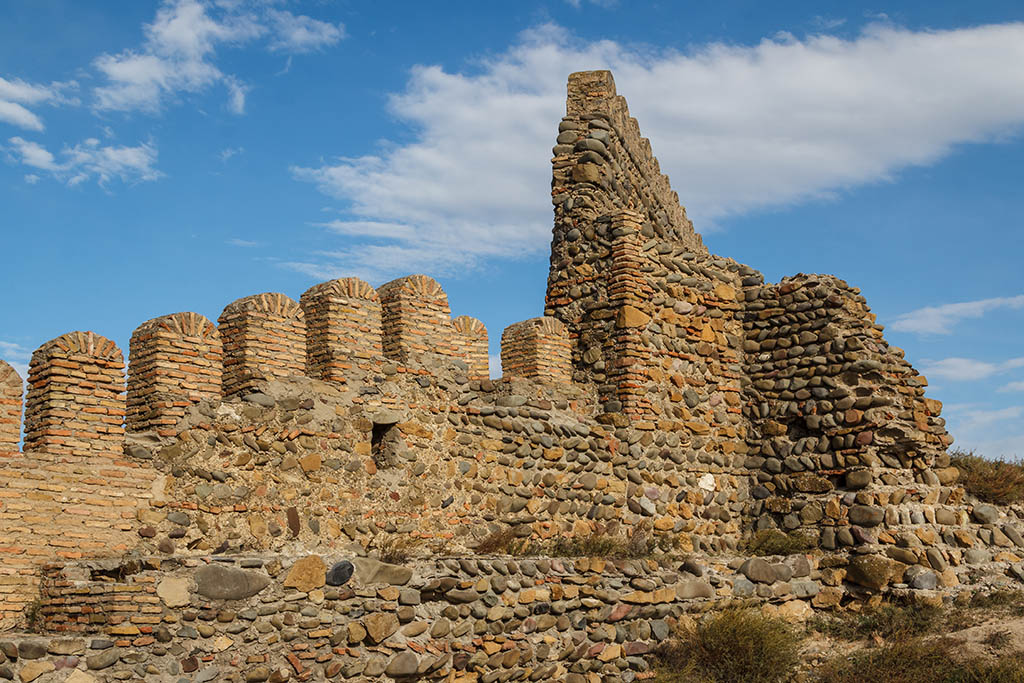
A winding path leads up. Inside is a large meadow where everyone stops for a rest, and the best-preserved part is called the “Nine Gates” (Tskhra-Kara): arches, battlements, towers and a view of the whole town. Entrance is free, and the gates are not even closed at night.
Memorial to the defenders of Goristsikhe
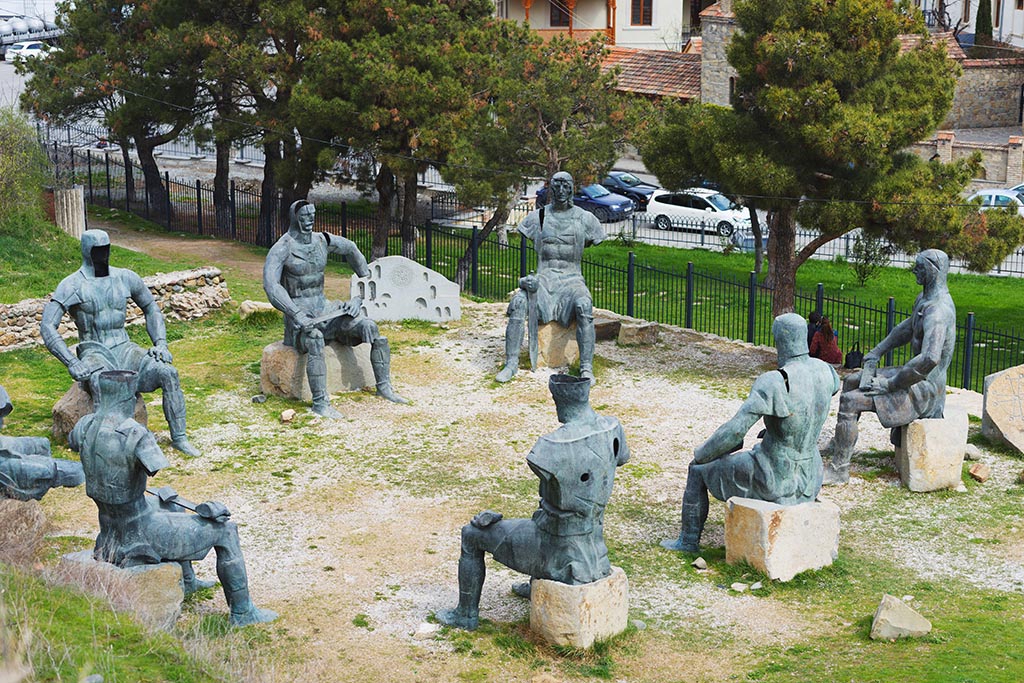
At the foot of the hill stands a monument you cannot miss: eight huge warriors sitting on boulders, each missing some part of his body. The memorial was put up in 2008 in honour of the fortress’s ancient defenders. It looks a little eerie, but very powerful: the defenders do not give up, even after losing part of themselves.
Stalin Museum
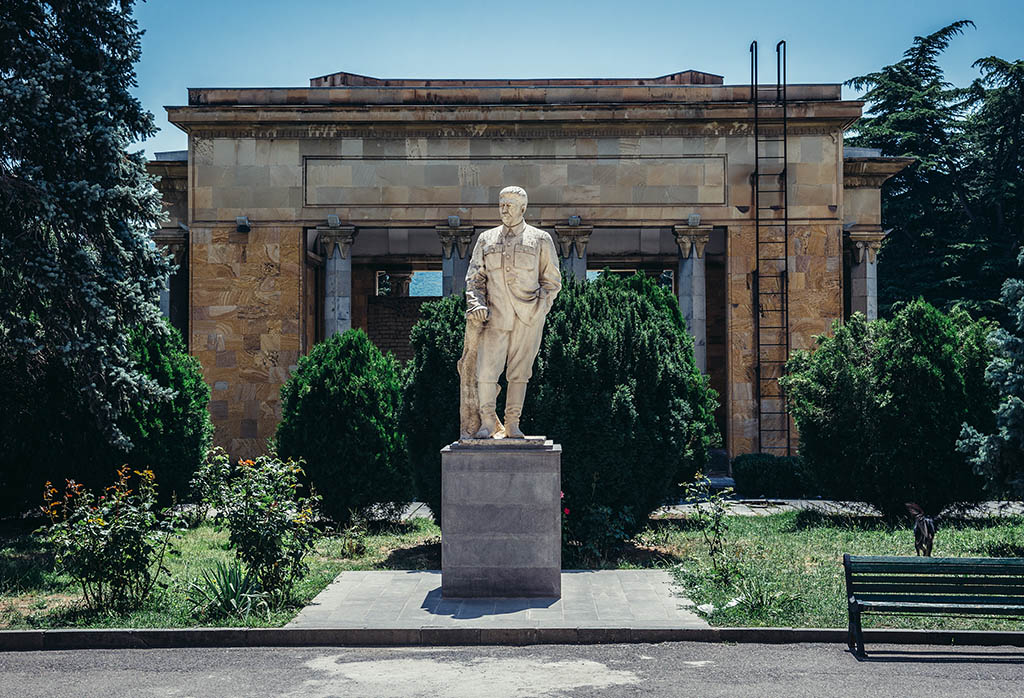
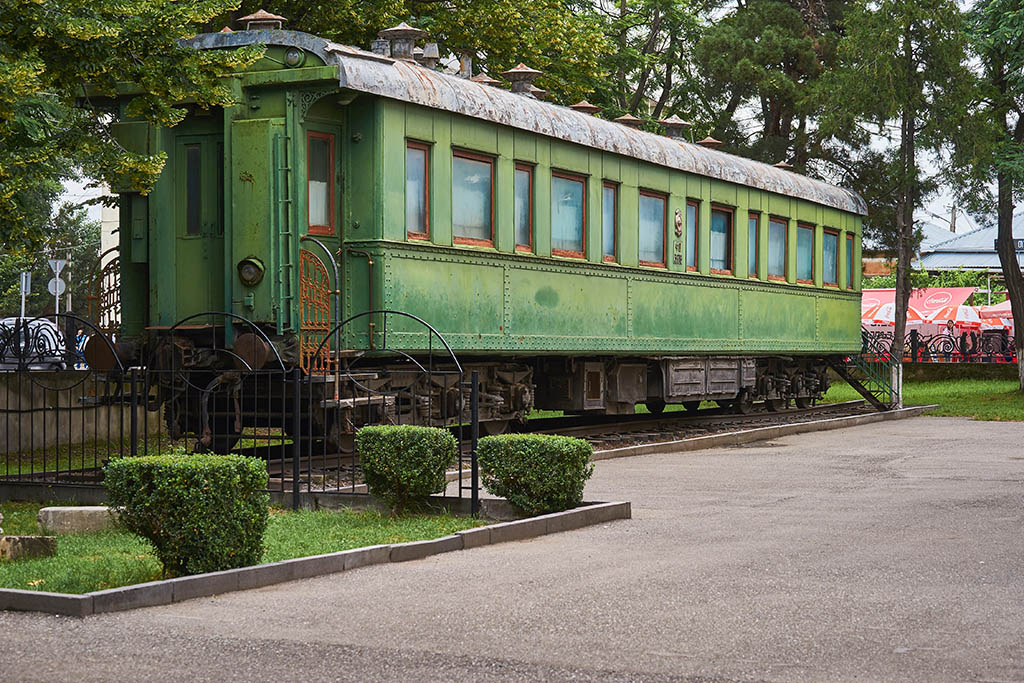
The most advertised sight in Gori and the main reason tourists turn off here. Stalin was born in Gori, and in the 1950s a whole museum complex was built around the small house where his family lived:
- The Jughashvili house: a modest hut with the family’s beds, table and personal belongings.
- The museum: a huge palace whose halls hold more than 60,000 exhibits: gifts, busts, documents, photographs and weapons.
- The armoured railway carriage Stalin travelled in, including to the Yalta and Potsdam conferences.
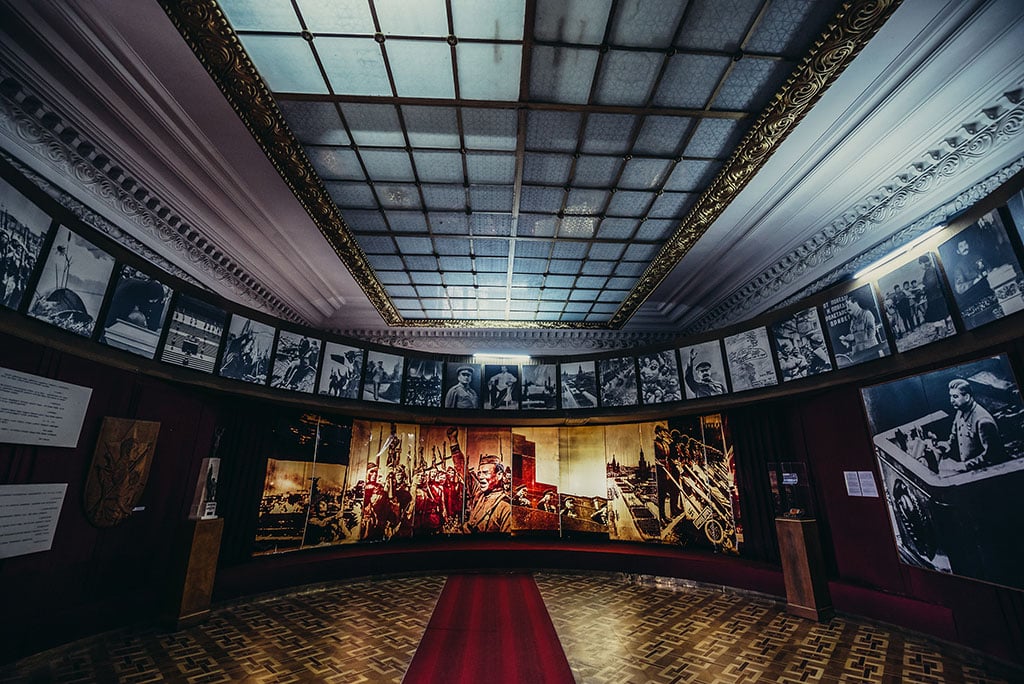
You can walk around the grounds for free. A ticket costs 15 GEL and already includes a guided tour and the carriage; 10 GEL for students. Tours are given in Georgian, Russian and English. The museum is open daily from 10:00 to 18:00 at 32 Stalin Avenue. Bear in mind that this is a Soviet-era museum and its presentation is to match: see it as a monument to its time rather than an objective account of Stalin.
Museum of Military Glory
On the same Stalin Avenue, at no. 19, there is a smaller but no less interesting museum, especially if you like history. It covers the 20th–21st-century wars Georgia was involved in: the Second World War, Afghanistan and the 2008 conflict. Exhibits include fragments of a Smerch rocket and an RBK-500 cluster bomb. A ticket costs 10 GEL, and it is open from 9:00 to 19:00.
History and Ethnography Museum
Five minutes from the Stalin Museum is a museum far fewer people know about, which is a pity. It holds archaeological, numismatic and ethnographic collections from Shida Kartli, old manuscripts and works of art. Almost all labels are translated into Russian and English. A ticket costs 3 GEL; it is open Tuesday to Saturday from 10:00 to 17:00, on Kirion II Street.
St Mary’s Cathedral
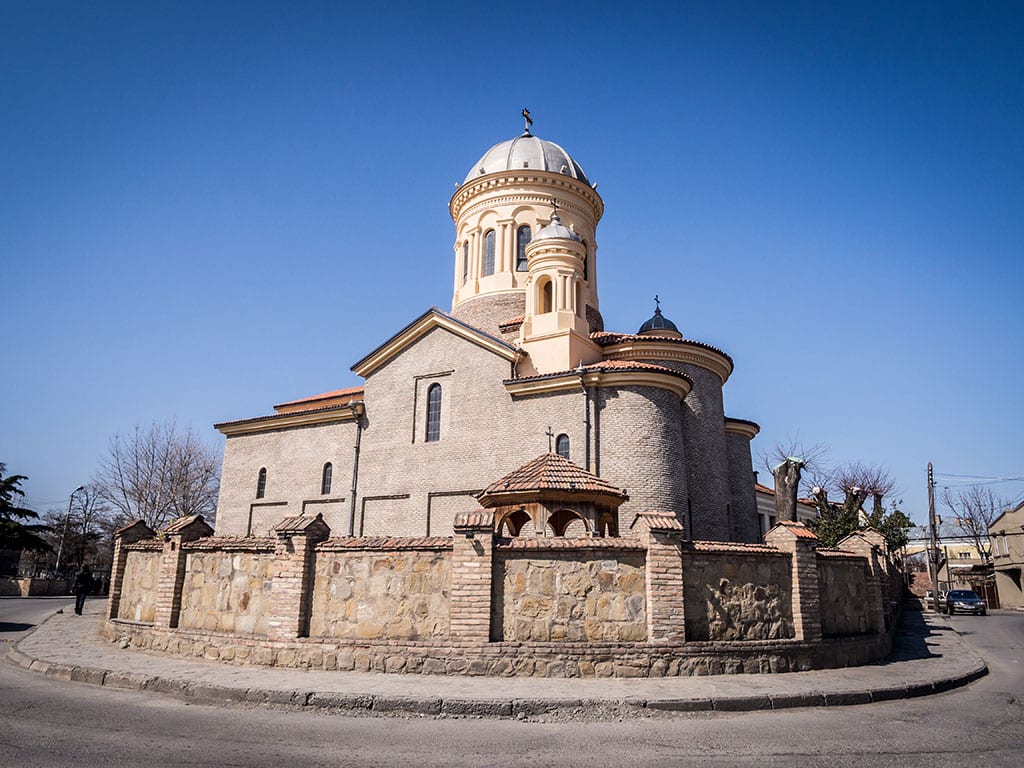
200 metres from the memorial, at 7 Lomouri Street, stands a cathedral built in 1806–1810 as a Catholic church. In Soviet times it was looted and used as a warehouse and then a music school. In 1990 it was handed over to the Georgian Orthodox Church, and restoration was completed in 2013. There are usually few people here even on holidays; entrance is free, and for photos it is best to ask the priest’s blessing.
Gorijvari Hill and St George’s Church
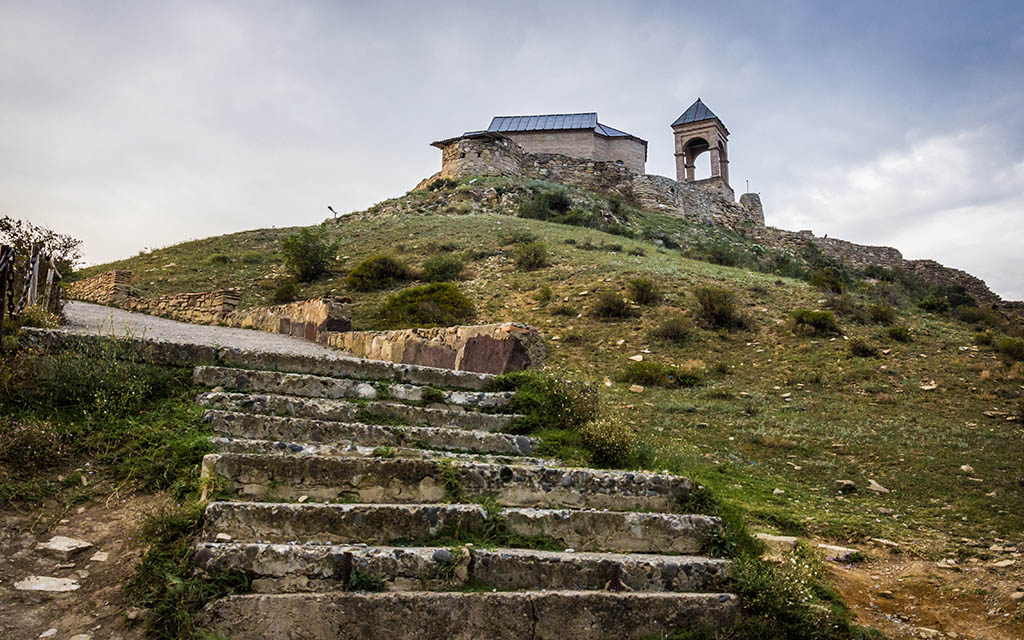
The real pride of the locals is the small St George’s Church on top of a hill on the edge of town. And if you come on 6 May or 23 November, during Giorgoba, you will see something no museum can show. Almost the whole of Gori climbs the hill, and here Orthodoxy and paganism mix in a strange way.
People ask St George to grant their dearest wishes, and when a wish comes true, they sacrifice an animal, a red or black rooster or a ram, first leading or carrying it three times around the church. There are even butchers working on the hill who will help butcher the animal and light a fire. Then the picnic begins, and tourists are often invited to the table: do not refuse, so as not to offend your hosts.
Entrance is free. It is about 1.5 km on foot from the railway station, and on the other side of the hill there is a road a taxi can take you up to the top. The view of the Kartli Valley is excellent, especially at sunset.
What to see near Gori
Uplistsikhe cave city
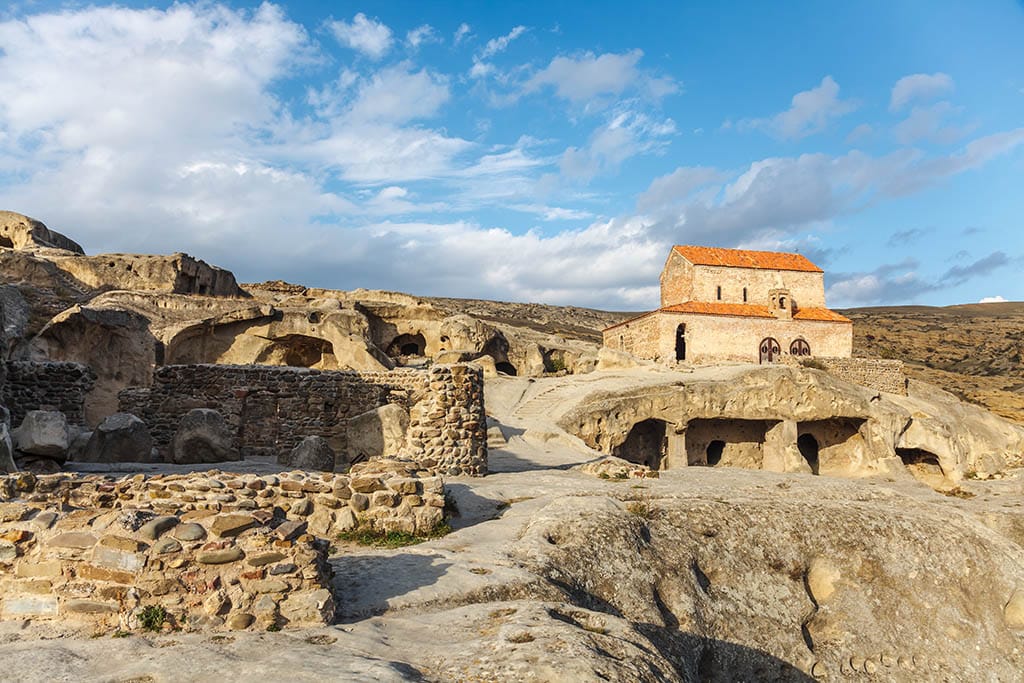
This is why most people stop in Gori. The town carved into the rock is also called God’s Fortress: multi-level structures like honeycombs, halls, tunnels, huge stone columns and a view of the Kura from the very top. Entrance costs 15 GEL; from April to October it is open 10:00–19:00, in winter until 18:00.
Uplistsikhe is 12 km from Gori. The easiest way is by taxi: agree with the driver right away to wait while you walk around and take you back. Minibuses also run from the bus station to the village of Kvakhvreli, opposite which Uplistsikhe stands. We cover its history and what to see inside in a separate article, “Uplistsikhe cave town“.
Ateni Sioni
12 km from Gori, in the village of Ateni, stands a 7th-century church dedicated to the Virgin. Outside it is decorated with stone ornaments, and inside with 11th-century frescoes of Georgian kings and nobles. Nearby, the medieval Atenistsikhe fortress is fairly well preserved. Entrance is free; you can get there by minibus from the bus station or by taxi.
Samtavisi Cathedral
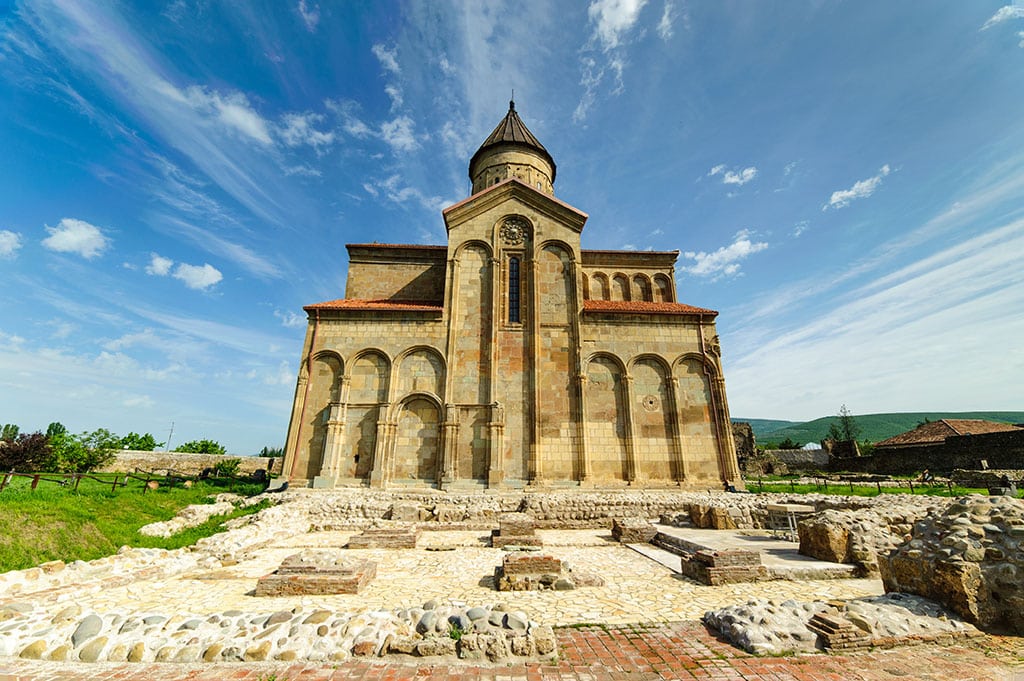
Another ancient church, 30 km from town. The first basilica stood here as early as the 5th century, and the present cathedral was built in 1030. It has been rebuilt many times, so for ornaments a thousand years old go to the eastern wall, which was left untouched. The interior is modest, but the ancient domes with frescoes are worth the stop. Entrance is free; the minibus from the bus station takes 40–50 minutes: ask the driver to stop at the turn-off to Samtavisi.
Where to eat in Gori
It is not easy to stumble upon a decent place to eat in Gori, so here are some proven options, all on or near Stalin Avenue:
- Georgia Gold (26 Stalin Ave): a small café-bar near the museum with a cosy atmosphere, open 10:00–22:00.
- L’avenue (24 Stalin Ave): seating outside and inside, khachapuri, soups and desserts, open until midnight.
- Nacharmagevi: a restaurant with its own bakery on the Tskhinvali highway, on the way out of town. Khinkali, khachapuri and barbecue, a big hall and a shady courtyard.
And if you arrive by bus, have a look at the market, which practically merges with the bus station: fresh meat, dairy, Georgian sweets, homemade wine and every kind of grape, all brought in from the surrounding villages.
Where to stay in Gori
There are not many hotels in Gori, but there are enough options for one night. For romantics there is another choice: a guarded campsite at the foot of Uplistsikhe where you can pitch a tent.
- Gori Inn (8.5 on Booking, over 1,000 reviews): the town’s biggest hotel, with a pool, spa, playground and wine tasting. The main sights are within walking distance.
- Hestia Boutique Hotel (9.6 on Booking, over 1,200 reviews): a boutique hotel with one of the highest guest ratings in Gori.
- Astana Palace (8.7 on Booking): a new hotel half a kilometre from the centre, with panoramic windows and good reviews of the staff and breakfasts.
- Georgia Gold (8.1 on Booking): right on Stalin Avenue, next to the museum. It has a pool and parking at the back, but the windows face a busy street.
- Anna’s Guest House (9.2 on Booking): a guesthouse if you want something homely and inexpensive.
The easiest way to check prices and availability is here: all hotels in Gori on Booking.
How to get to Gori from Tbilisi and Batumi
- From Tbilisi: minibuses and buses run often and take about an hour. The train is even more convenient: every train heading west from Tbilisi stops in Gori.
- From Batumi the easiest way is by car, as Gori is right on the highway. Without a car, take a train towards Tbilisi; the journey takes 5–7 hours.
- By car: it is best to leave the car in the centre; the fortress, the memorial and the Stalin Museum are close together and easy to walk between.
And a detail you will not see anywhere else on the planet: in the hall of Gori railway station, Stalin still stands on a red pedestal.
Gori on the map
When is the best time to visit Gori
The best time is May, early June and late August, with a steady 25–28°C. In July and August it can reach 30–35°C. In autumn the heat eases, and the markets are full of grapes, peaches and cheap vegetables. In winter Gori is grey and damp, and walking around is not much fun.
Gori FAQ
How much is the Stalin Museum in Gori?
15 GEL, with the guided tour and the carriage already included; 10 GEL for students. The museum is open daily from 10:00 to 18:00.
Can I see Gori and Uplistsikhe in one day?
Yes, and it is the most convenient option: half a day for the fortress and the Stalin Museum, then 12 km to Uplistsikhe, and by evening you are back in Tbilisi or in Borjomi.
How far is Gori from Tbilisi?
About 80 km, roughly an hour by car, minibus or train.
What can I see on the way from Tbilisi to Batumi?
Mtskheta, Gori with Uplistsikhe and, if you have time, a detour to Borjomi. We have separate articles about each of them.
Read also: Uplistsikhe, Mtskheta, Borjomi, Akhaltsikhe.

Hello!
I am Victor, the founder of this site and its main, but not the only author.
Traveler and photographer. Visited more than 60 countries.
Born and raised in Batumi. I love to travel in Georgia.
More about me here.