


Georgia is an amazing country with many beautiful places that have kept their unique culture. Small as it is, Georgia packs in a huge number of sights, and once you see them, you fall in love with the country for good. One of these places is the ancient cave city of Vardzia.
Vardzia: ticket price and opening hours (2026)
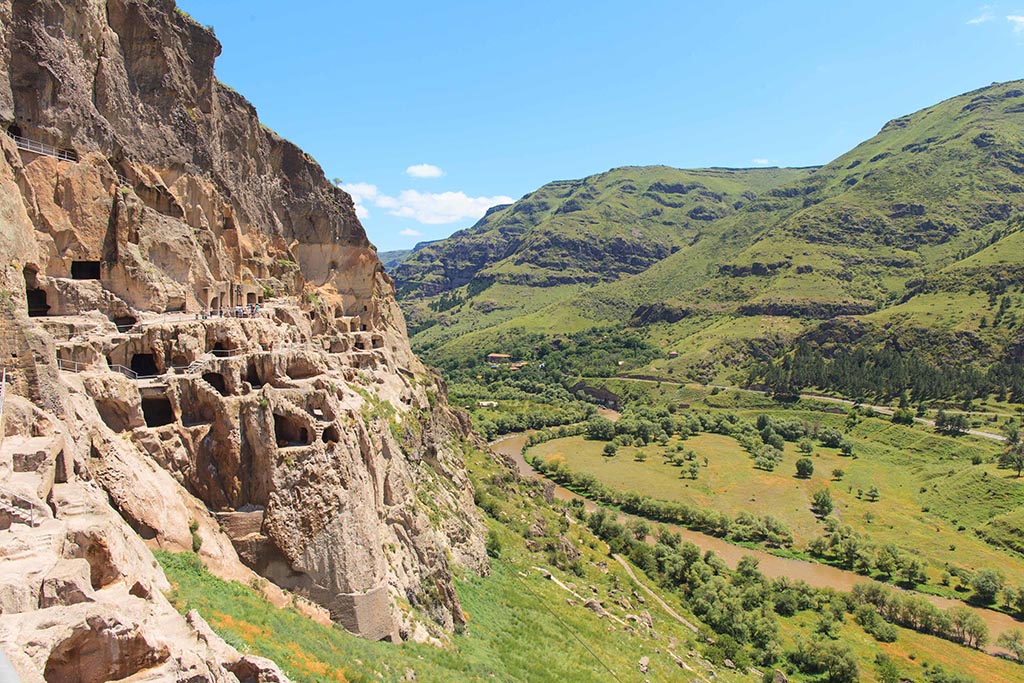
Vardzia is a 12th-century cave town and monastery carved into the rock of Mount Erusheti. There were once around 600 rooms here. In short, here is what you need to know before you go:
- Where: southern Georgia, Samtskhe-Javakheti region, in the Kura River valley, about 70 km from Akhaltsikhe.
- Entrance: 15 GEL.
- Guide: 45 GEL, audio guide: 15 GEL.
- Bus from the ticket office to the caves: 2 GEL. Otherwise you walk uphill.
- Opening hours: daily from 10:00, until 19:00 in summer and until 17:00 in winter.
- How much time you need: about two hours, so arrive at least two hours before closing.
Is it worth going, and who will find it hard?
It is worth it, but it is a long way. A day trip from Tbilisi is possible, but tiring. It is better to combine Vardzia with Borjomi, Rabat Fortress and Khertvisi and stay overnight in Akhaltsikhe or Borjomi.
Inside there are lots of stairs, narrow low tunnels and worn stone steps. Older people and anyone afraid of heights may find it hard going, and keep small children by the hand.
What to wear
Vardzia is a working monastery. Men should wear long trousers; women, a skirt below the knee and a headscarf. You need comfortable shoes with non-slip soles. In summer, bring water and a hat: it is cool inside the rock, but the open paths get hot.
History of the Vardzia cave city
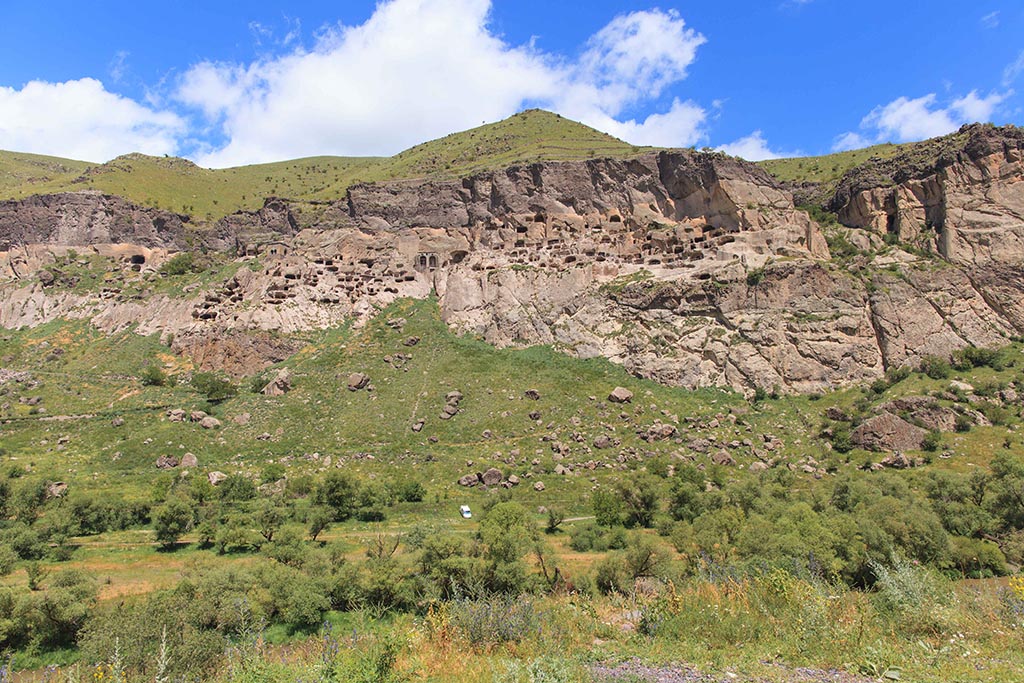
Vardzia is a cave city carved into the Erusheti rock. Construction began in the 12th century, during the reign of King George III, and continued under his daughter, Queen Tamar. The city in the rock was built as a safe refuge from enemy raids. The mountainous terrain made the fortress almost impregnable, and it could shelter up to 20,000 people.
In 1283 a powerful earthquake split a 15-metre-thick layer off the cliff. The city inside the rock was exposed and lost its defensive role.
Large-scale construction took place between 1184 and 1203. Besides the living cells, libraries, storerooms and chapels were built. Queen Tamar built the Church of the Dormition of the Mother of God.
Over the following centuries the city was attacked and plundered more than once. A fire in 1551 badly damaged the complex, but thanks to the thick layer of ash and soot that settled on everything, the frescoes and murals survived almost untouched. While the area was under Ottoman rule, the monastery stood empty. Only two centuries later, after the Russian army took the region, did monastic life return.
Today Vardzia is a working monastery and a national cultural monument of Georgia.
The name of the cave city goes back to Queen Tamar’s childhood. Once she was walking in these caves with her uncle, lost sight of him and called out: “Ak var, dzia!”, which in Georgian means “I am here, uncle!”. George III did not think twice and named the cave city after his daughter’s words.
Another story is about how construction began. The workers first chose a different rock, but the stone there either would not give or crumbled badly. One evening they left their tools by the rock and went home, and when they came back in the morning, the tools were gone. After searching the area, they found their shovels by another rock. The next morning the same thing happened, so the new rock was chosen as the building site. Today we know it as Vardzia.
What to see in Vardzia: cells, tunnels, frescoes and the Church of the Dormition
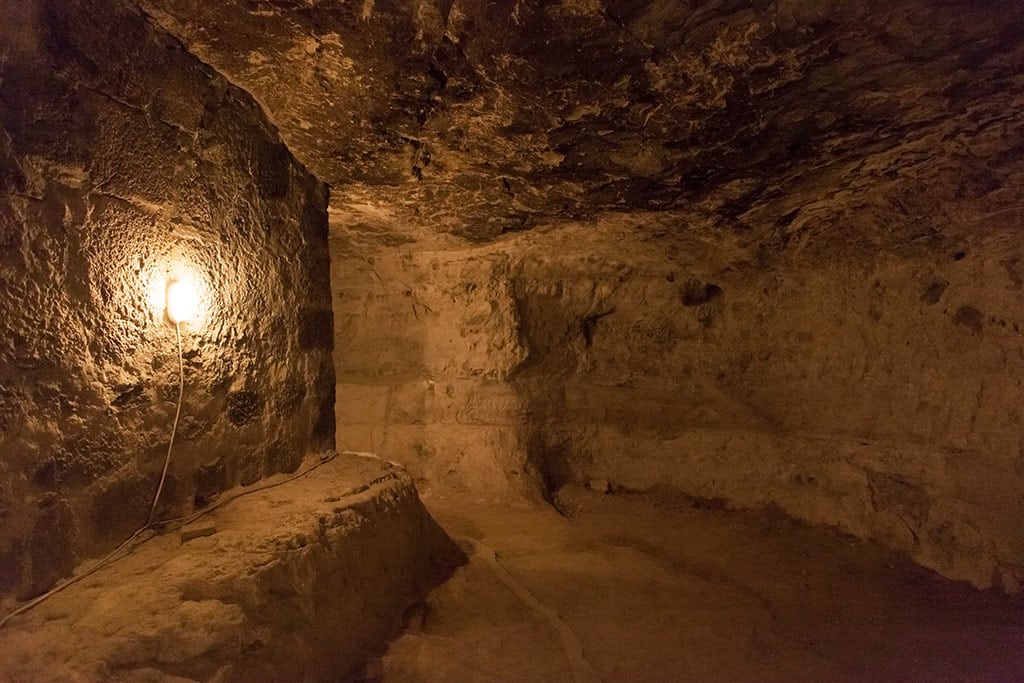
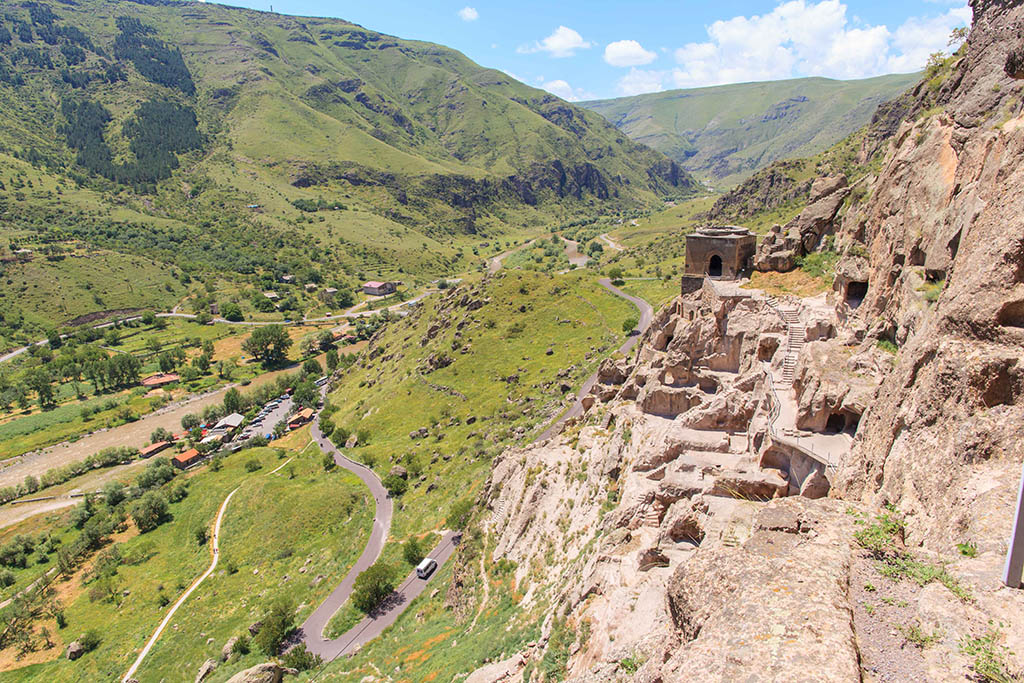
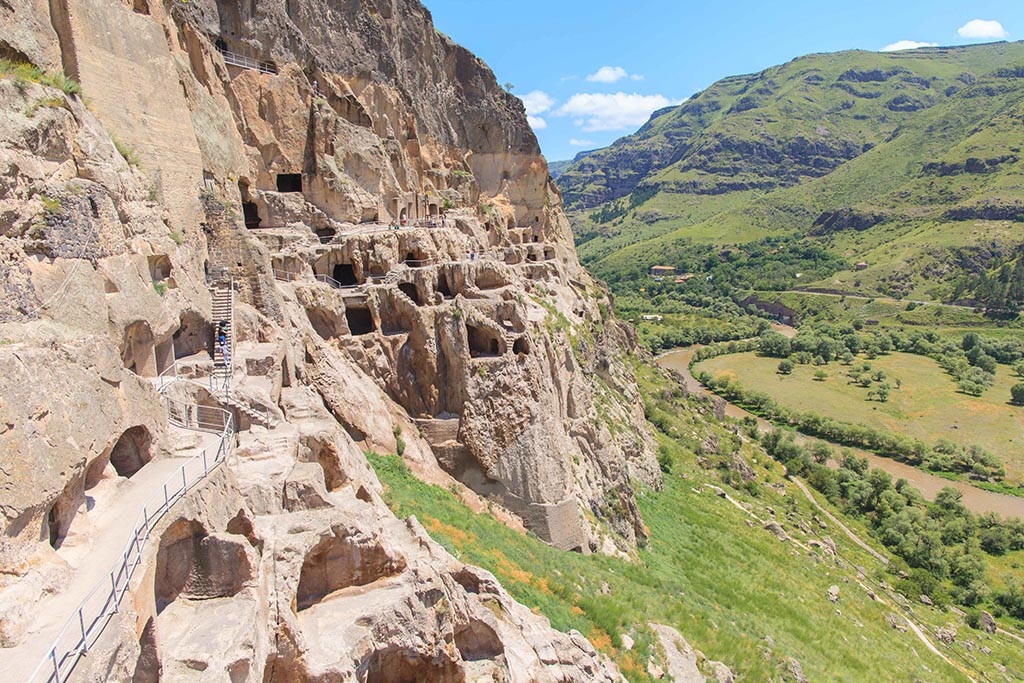
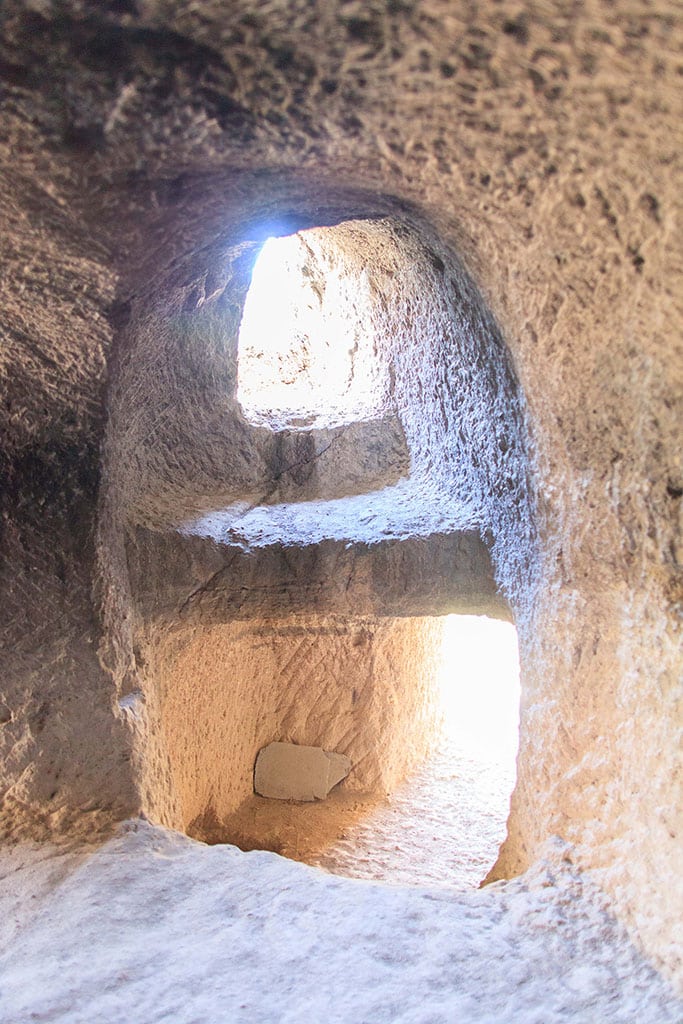
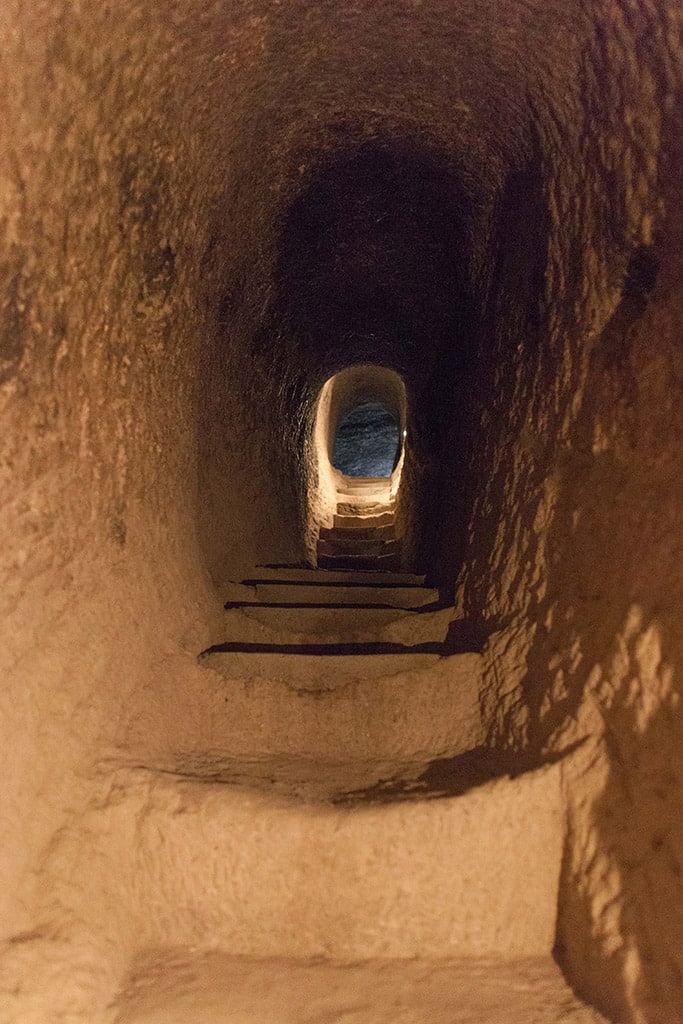
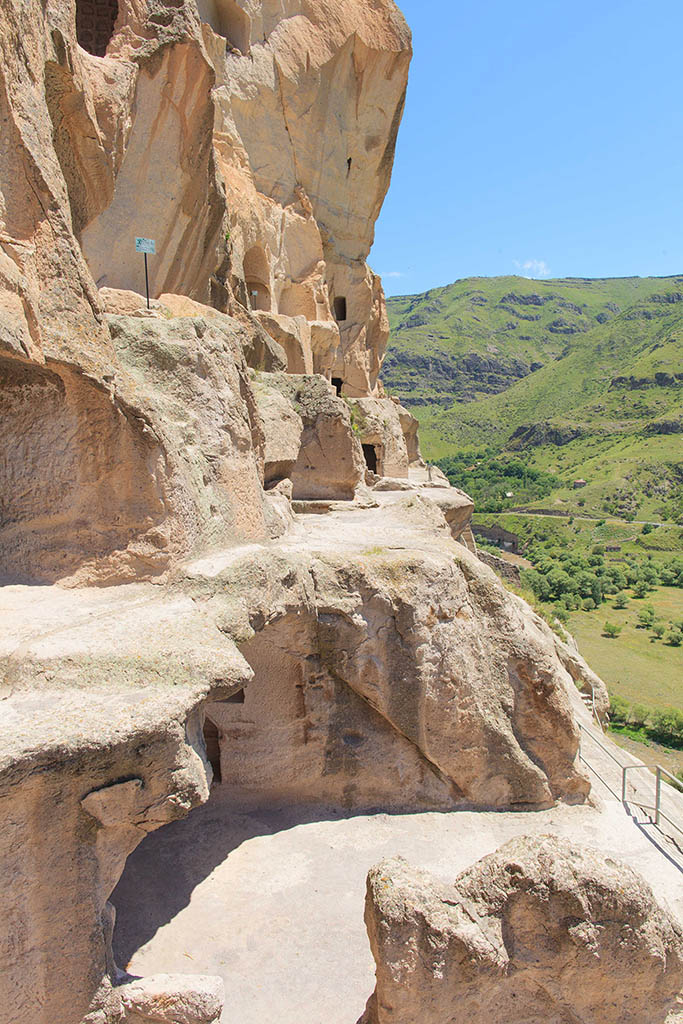
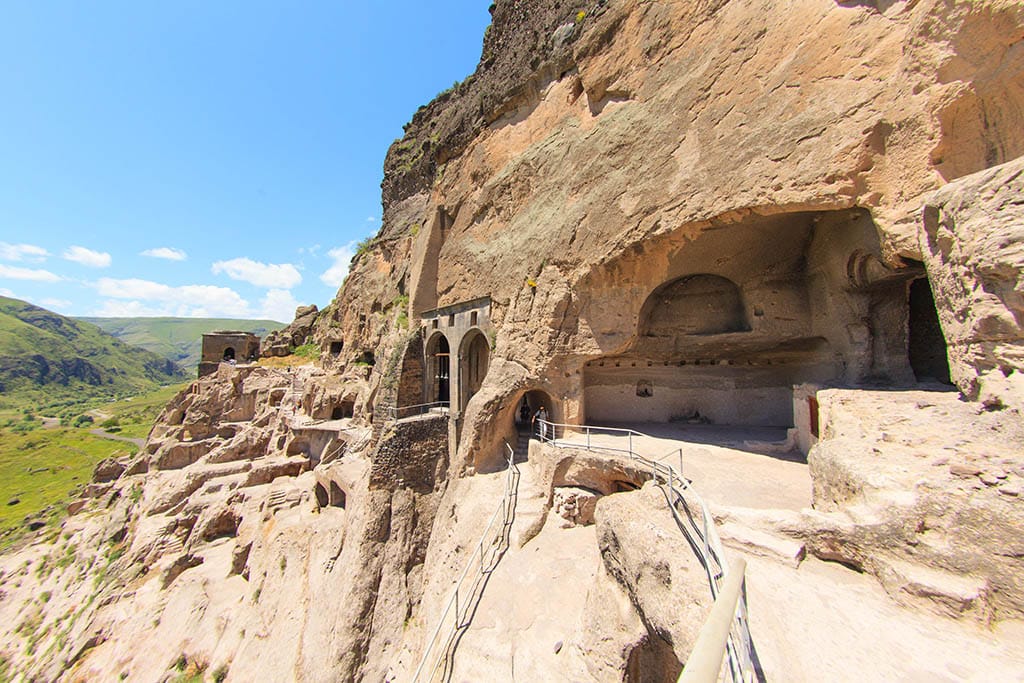
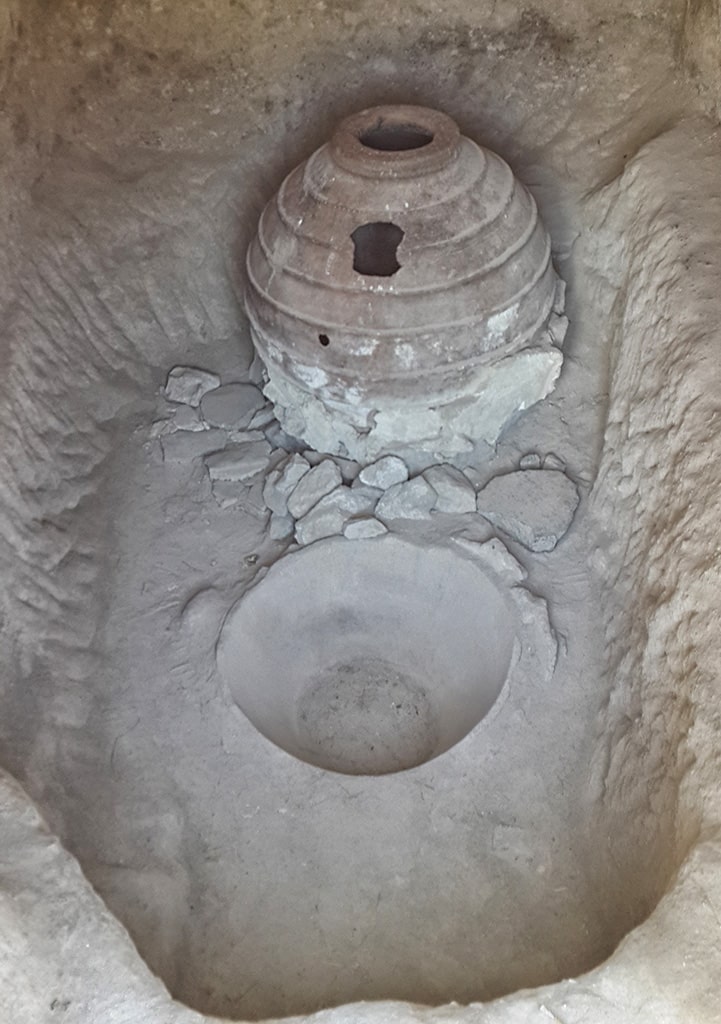
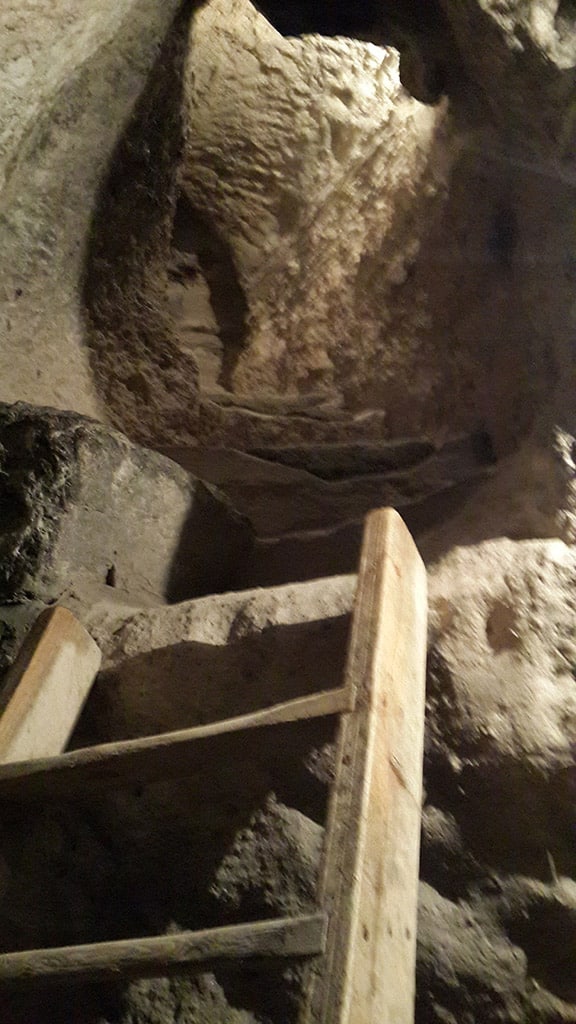
The closer you get to Vardzia, the more the landscape changes. Mountains rise along the road, topped with old, half-ruined fortresses and towers. After a long climb you reach the entrance to the monastery. Further on you can see several open monks’ cells. Past the chapel you enter a maze of narrow corridors in the cave fortress, with stone stairs cut into the rock between the ups and downs. Besides the rather similar cells, you will see rooms with stone ledges and niches in the floor; the many hollows of different sizes in some rooms suggest they were storerooms. Some corridors lead deep into the fortress, getting narrower and darker: these underground passages were once used to defend the city. The viewpoints open up a unique view of the area: mountain ranges, the calm Kura River, Tmogvi Fortress and even the border with Turkey. If you look carefully outside, you can see the remains of the water supply system: pipes sticking out of the stone.
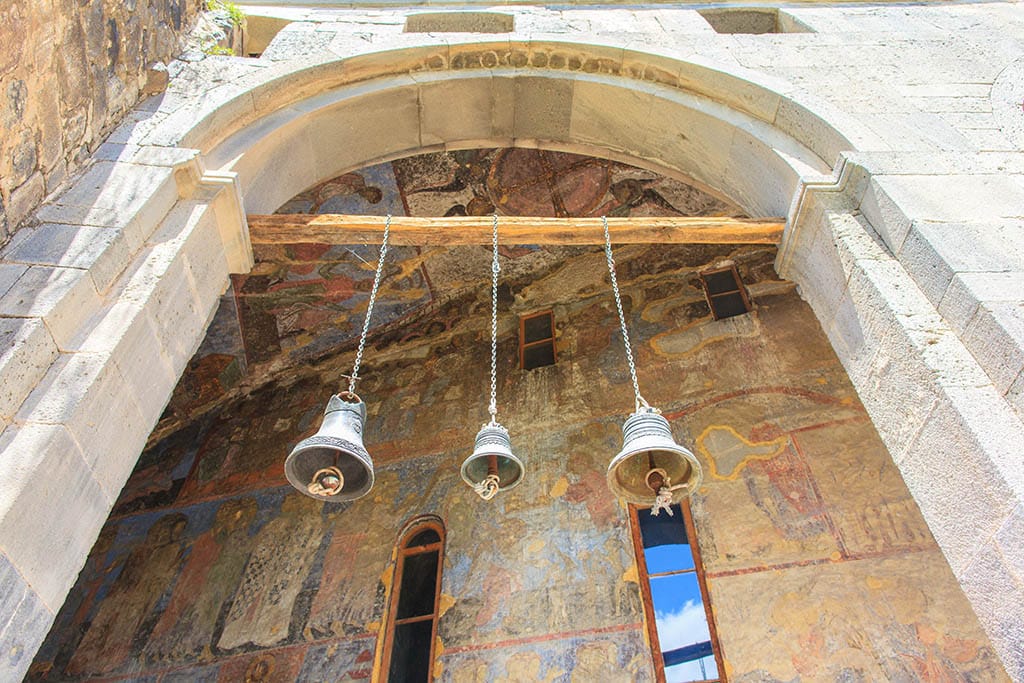
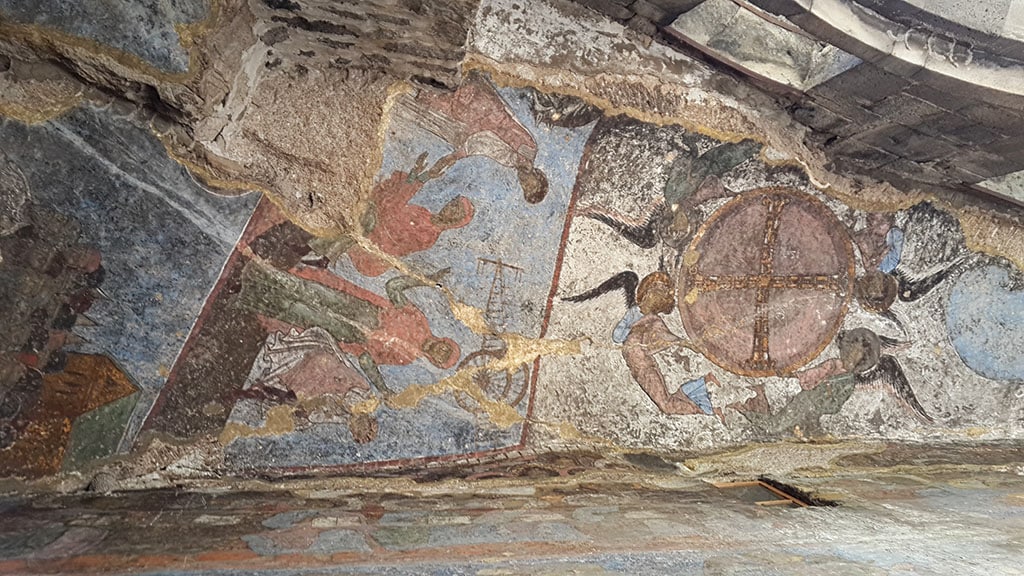
The highlight of Vardzia is the Church of the Dormition. It sits inside the rock and has several entrances. Its walls and altar are decorated with ancient frescoes.
For visitors’ convenience, the corridors inside the rock are lit, there is a spring at the exit from the church, and the viewpoints have benches.
How to get to Vardzia from Tbilisi and Akhaltsikhe
The most convenient way to get to Vardzia is by minibus (marshrutka) from Akhaltsikhe, a town in southern Georgia. You can check the exact schedule by calling the Akhaltsikhe bus station. The fare is 8–10 GEL and the ride takes an hour and a half to two hours.
Getting to Vardzia from Tbilisi is harder: it is about 207 km to Akhaltsikhe and about 70 km more from there to Vardzia. You can take a taxi, but it is expensive, roughly 300–350 GEL. By minibus you leave from Didube bus station and reach Akhaltsikhe in about 3–3.5 hours. The trip used to take longer because of bad roads, but they have since been repaired.
There is also a Rustavi–Vardzia minibus that stops in Tbilisi if it has free seats. In practice, though, it usually does not stop in Tbilisi.
The monastery complex is open all year round from 10:00: until 19:00 in summer and until 17:00 in winter. An adult ticket costs 15 GEL, children pay 1 GEL. The visit takes about two hours. A guide costs 45 GEL and an audio guide 15 GEL. A bus runs from the ticket office up to the caves for 2 GEL, and in hot weather it is worth taking.
Near Vardzia there is parking and there are snack bars with traditional Georgian food.
Vardzia FAQ
How much does it cost to visit Vardzia?
15 GEL for adults. A guide costs 45 GEL, an audio guide 15 GEL, and the bus up to the caves 2 GEL.
How do I get to Vardzia from Tbilisi?
The easiest way is via Akhaltsikhe: the minibus from Didube takes about 3–3.5 hours, then you change to a minibus to Vardzia, which takes another hour and a half to two hours. By car it is more convenient: on the way you can stop in Borjomi, at Rabat Fortress and at Khertvisi.
How much time do I need?
About two hours for the cave city itself, not counting the road.
Can I visit Vardzia with children?
Yes, but inside there are steep stairs and tunnels, and some places have no railings. Keep small children close to you.
Vardzia on the map
The cave complex is in southern Georgia, in Samtskhe-Javakheti: from Akhaltsikhe the road heads south-east towards Akhalkalaki.
What to see near Vardzia
Tmogvi
Once you have explored Vardzia, take a look around. The nearest sight is Tmogvi Fortress.
Khertvisi
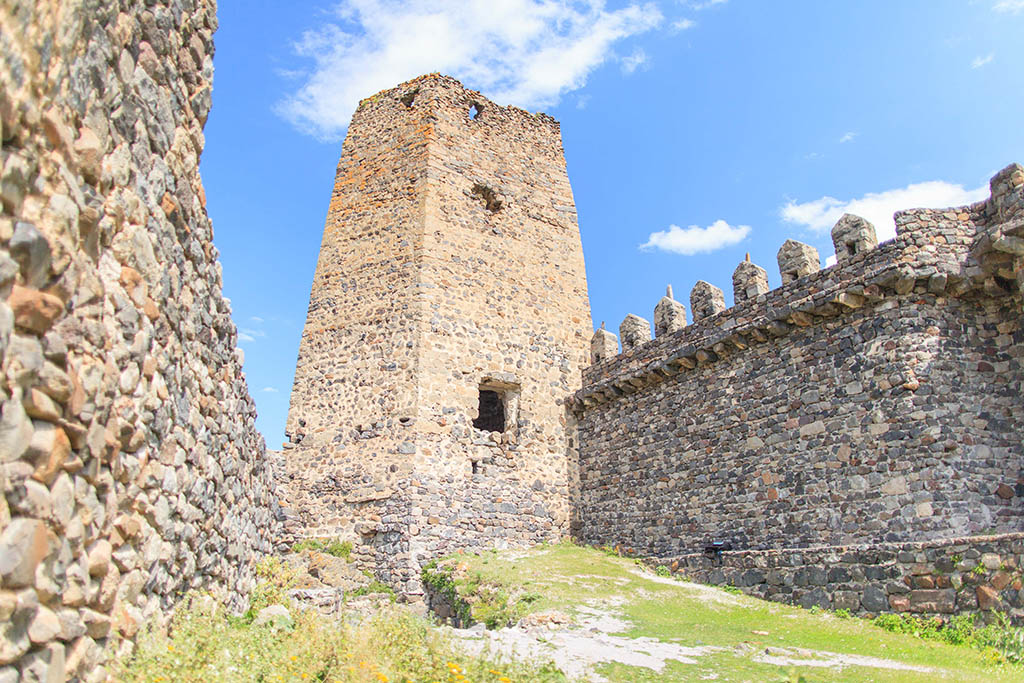
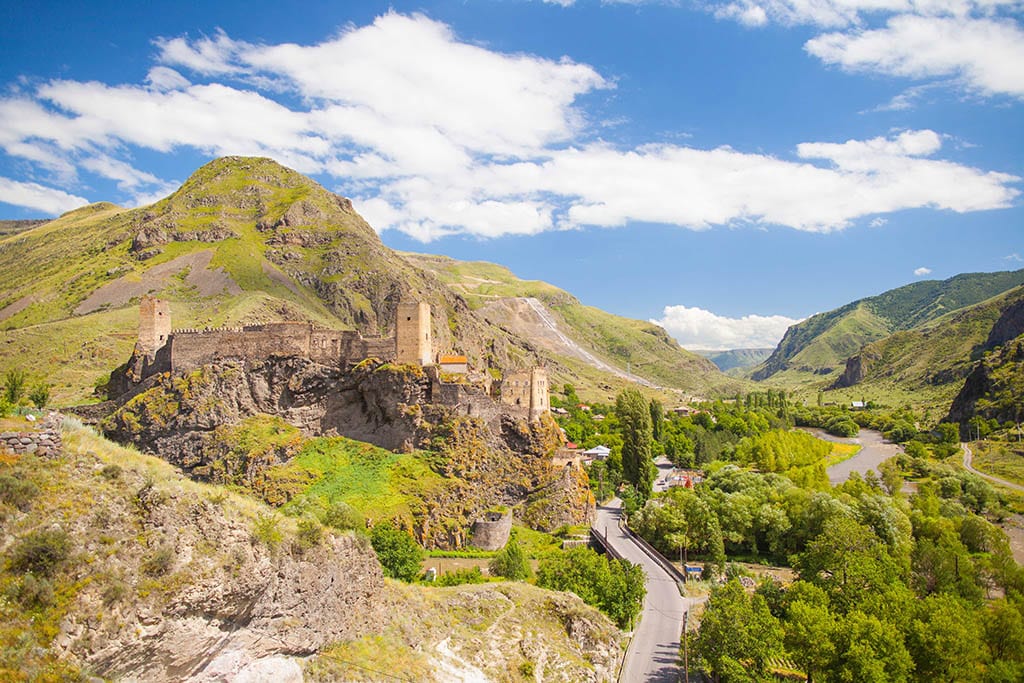
15 km from Vardzia, where the Kura and Paravani rivers meet, stands Khertvisi Fortress. It is one of the oldest in Georgia and, together with Vardzia, is a candidate for the UNESCO World Heritage List.
More ideas nearby:
Rabat, one of the biggest and most beautiful fortresses in Georgia
The road to this region through Dashbash Canyon is one of the most beautiful routes in Georgia.
Photos of the Vardzia cave city
Finally, a small photo report from my trip to this amazing place a few years ago.

More useful reading: Top 15 attractions in Georgia.
See also: Adjara: top 30 attractions near Batumi, cafes in Batumi.

Hello!
I am Victor, the founder of this site and its main, but not the only author.
Traveler and photographer. Visited more than 60 countries.
Born and raised in Batumi. I love to travel in Georgia.
More about me here.