


Want to immerse yourself in the history of the glorious region of Samtskhe-Javakheti, touch ancient artefacts and get lots of positive emotions? Then visit the ancient Rabati fortress in Akhaltsikhe. This mighty, impregnable fortress has become a huge town covering about 7 hectares, and every metre of it holds plenty of mysteries and surprises. When you come to Georgia, do not deny yourself the pleasure of getting to know it.
Rabati Fortress: the trip in brief (2026)
Rabati (Rabat, Akhaltsikhe Fortress) is a huge fortress complex of about 7 hectares in the centre of Akhaltsikhe, in southern Georgia. In short, here is what you need to know:
- Lower part: free, open around the clock. Here you will find a hotel, a restaurant, a wine shop and the tourist information office.
- Upper part: 18 GEL, 10:00–17:30, open every day. Inside are the Akhmediye Mosque with its golden dome, an Orthodox church, the Jakeli Castle, the citadel and a museum.
- How much time you need: from an hour to half a day if you climb all the towers.
- Best time: in the evening, when the fortress is lit up, or in spring and autumn; in summer it can reach +35°C.
- What to combine it with: the town of Akhaltsikhe, the cave city of Vardzia and the spa town of Borjomi.
History of Rabati Fortress
The first mentions of a fortification here date back to the 9th century, though it was nothing like as grand then: a watch post with low walls guarding the settlement. In the 12th century the famous Jakeli princely family built their castle and fortress here, and it grew much bigger, becoming an impregnable outpost in southern Georgia. The princes called it Akhaltsikhe, literally “New Fortress”. In the 14th century it was badly damaged by Tamerlane’s army. In the late 15th century it was raided by Yakub Beg, ruler of the Turkmen Aq Qoyunlu state, and in the late 16th century the mighty Ottoman Empire captured the town and the fortress. Rabati is a true symbol of Georgia: destroyed many times, it was always rebuilt, keeping the memory of its ancestors.
A new life for Rabati Fortress
The ancient fortress got its “chance” at a new life under Georgian President Mikheil Saakashvili, who initiated a large-scale reconstruction backed by the government.
Work began in autumn 2011 on the 7-hectare site. The fortress was in a sorry state: the main walls and central gates had collapsed, only a few buildings were in decent condition, and the site was so overgrown that its beauty was hard to make out.
Restoration
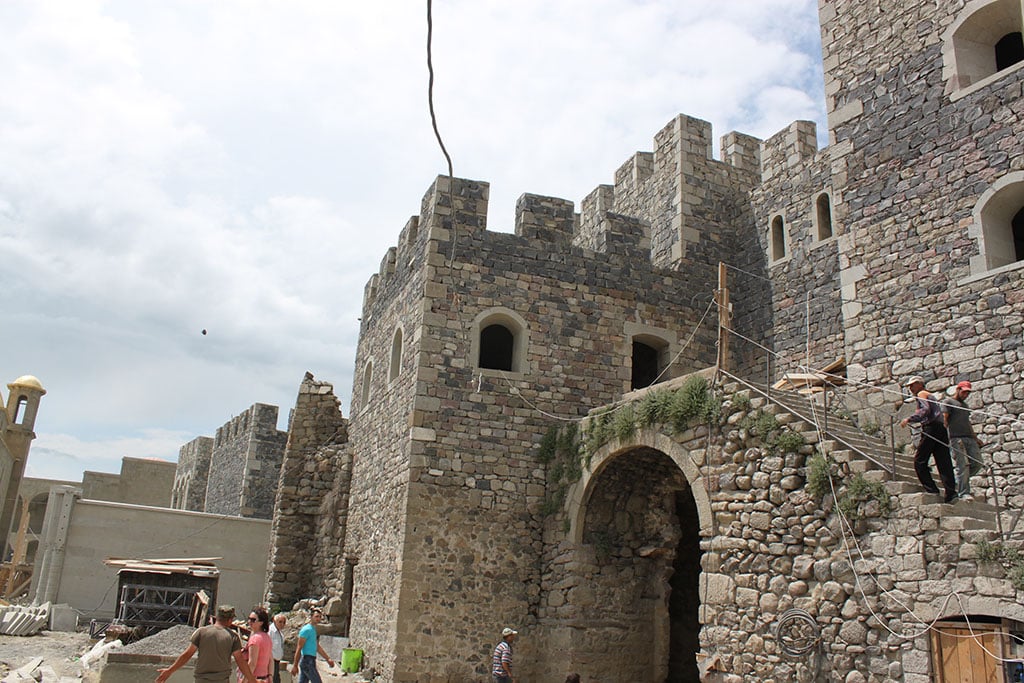
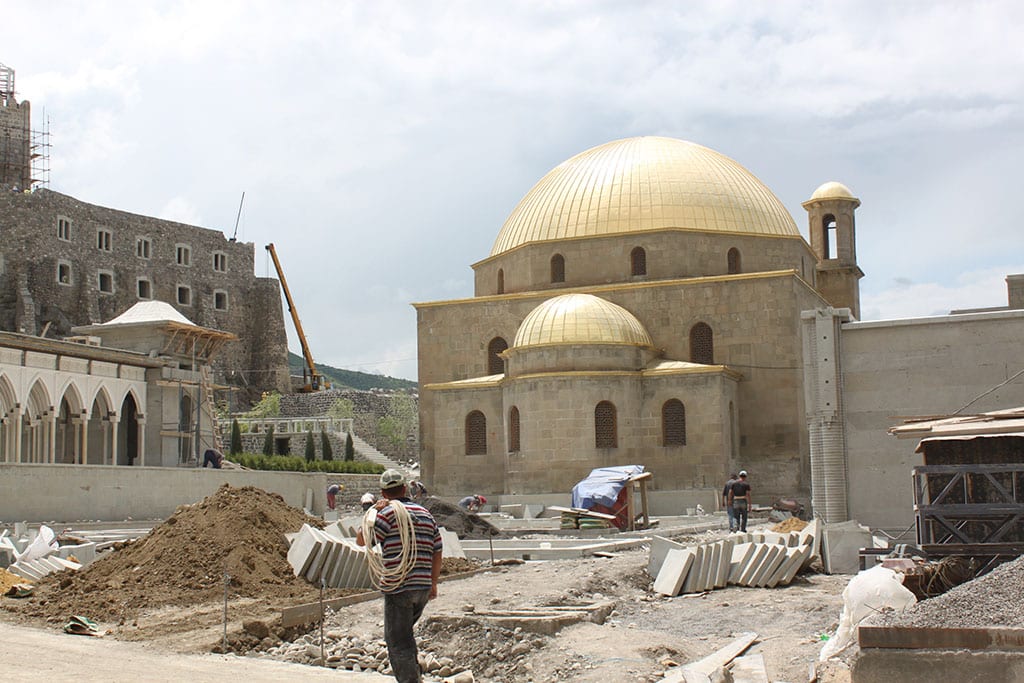
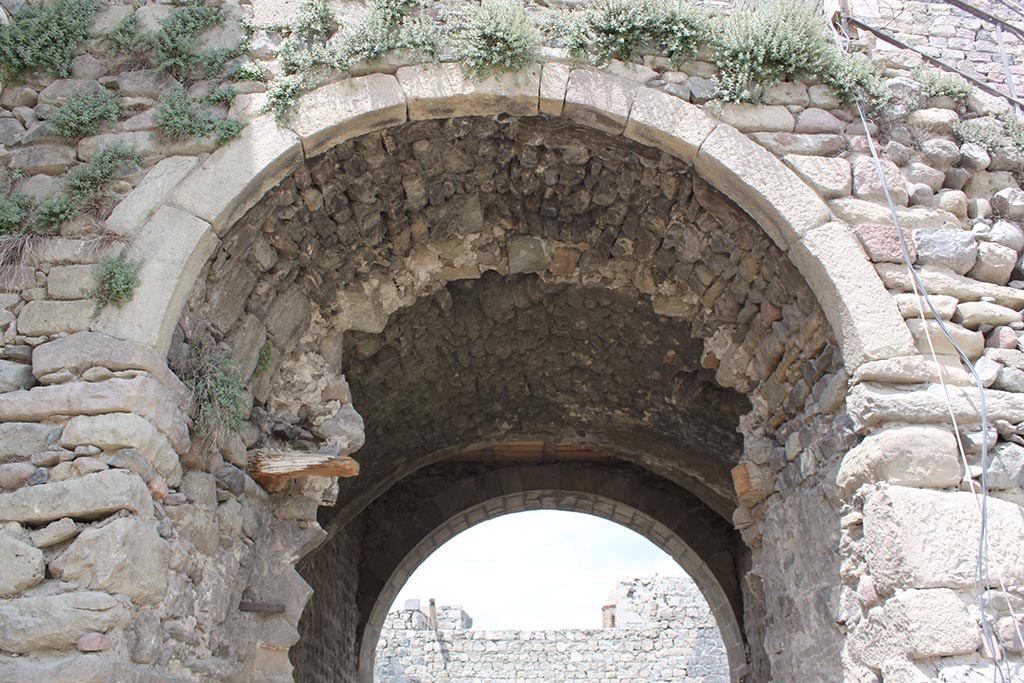

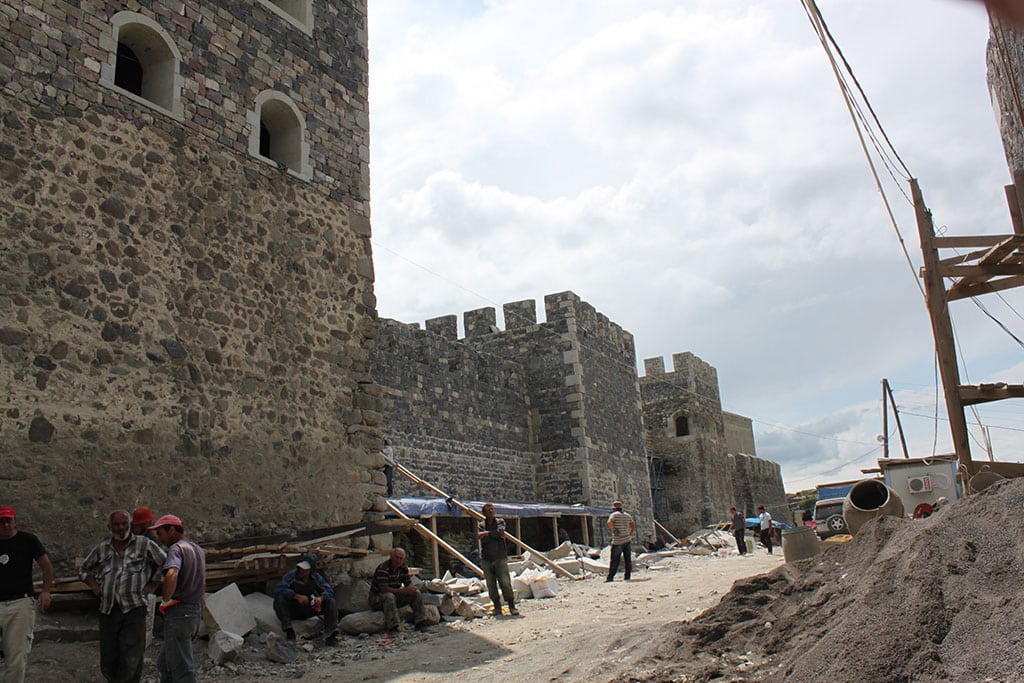
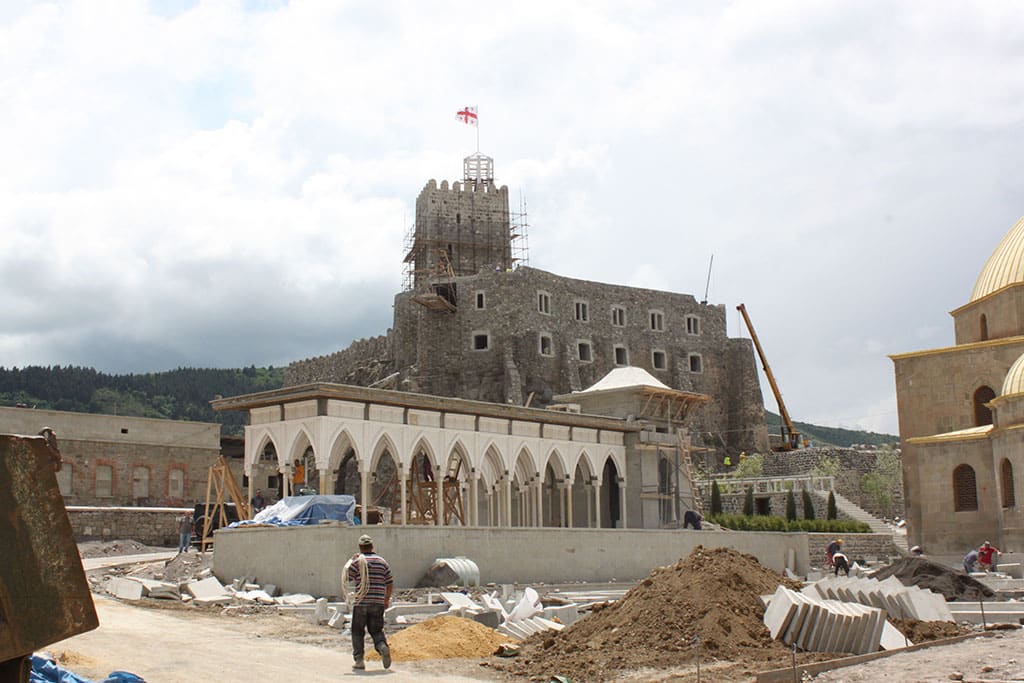
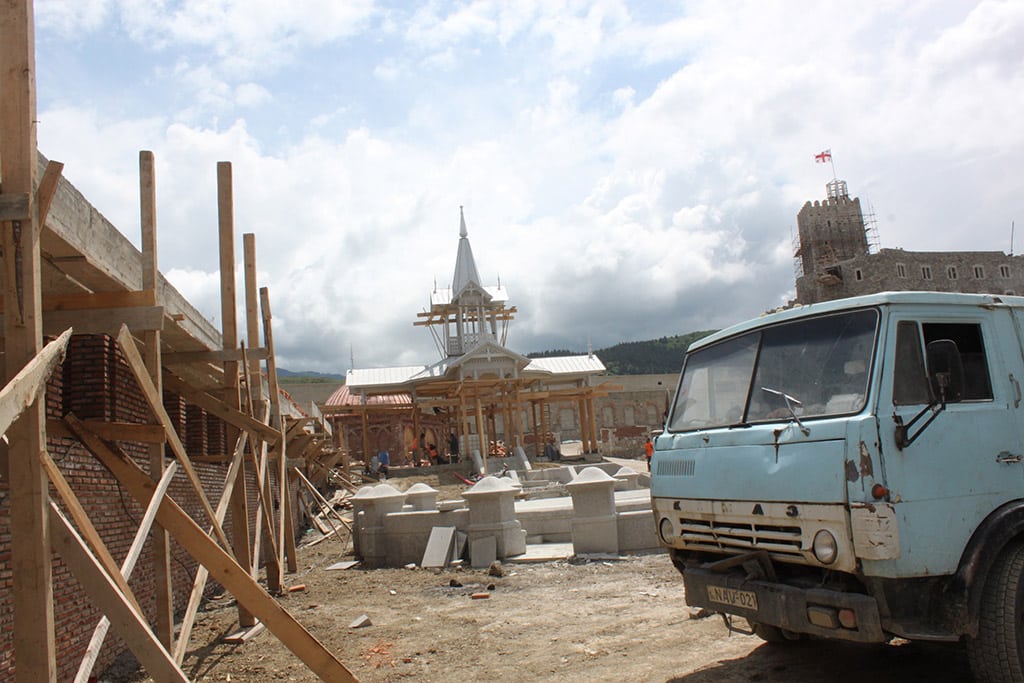
It was not a simple building project: special designs were developed to preserve the authenticity of the surviving monuments, and materials were chosen to “repeat” ancient building techniques. For example, instead of large pebbles on the walls, composite materials of very similar texture were used.
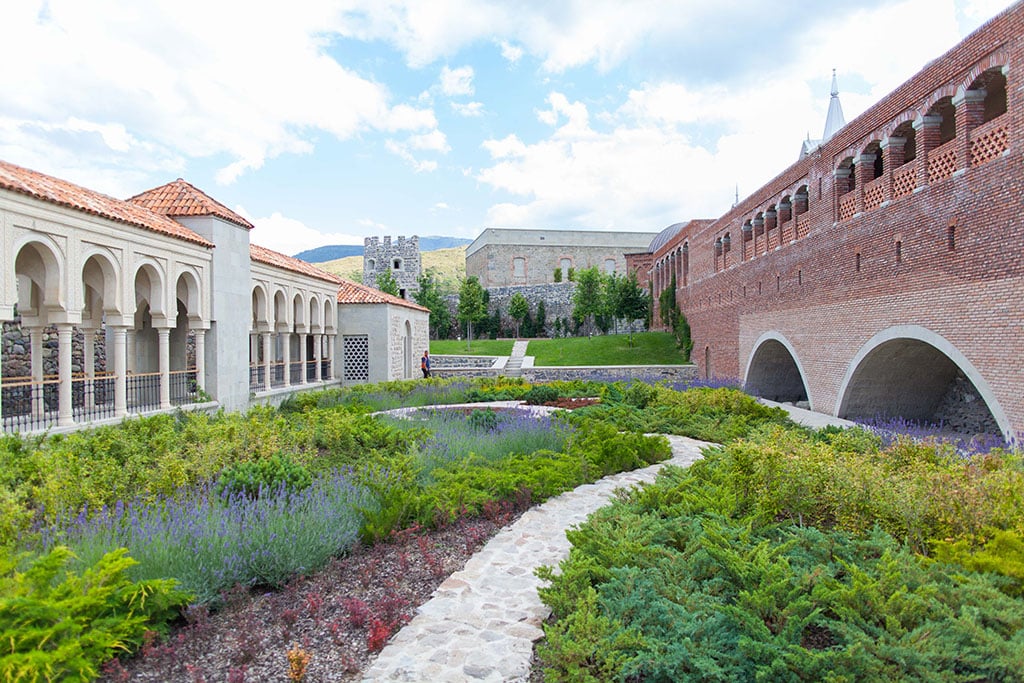
The result: today in Rabati you will not see crumbling plaster, sloppy masonry or any building “blunders”. New structures were also built to create a unique historical ensemble and develop the fortress’s infrastructure: an amazing Moorish gallery, the modern Rabati hotel, shops and restaurants, carved gazebos and fountains.
The reconstruction was not only global but also very fast: by August 2012 all the work was finished, and Akhaltsikhe got a true “New Fortress” that exceeded all expectations.
The government spent more than 34 million lari on the restoration, about 15 million dollars at the time. The project gave the country a new jewel that attracts tourists from all over the world.
If you come to this region and do not visit Rabati, you have not seen modern Georgia! The fortress has become a symbol of the country’s revival.
What to see in Rabati Fortress
Rabati is interesting not only for its architecture: here you can get to know the rich heritage of Georgian and Turkish culture. The fortress is a journey through different eras: an Orthodox church, the 18th-century Akhmediye Mosque, remarkable defensive structures and the Samtskhe-Javakheti museum. Come in the evening and you will find yourself in a real oriental fairy tale: the whole site is lit by powerful floodlights, and the fortress seems to hang in the air. Lovely fountains, pools, unique panoramas and the scent of lavender: the whole site is full of greenery, and you can wander for hours, forgetting the bustle of the city.
The lower part of the fortress: free entry
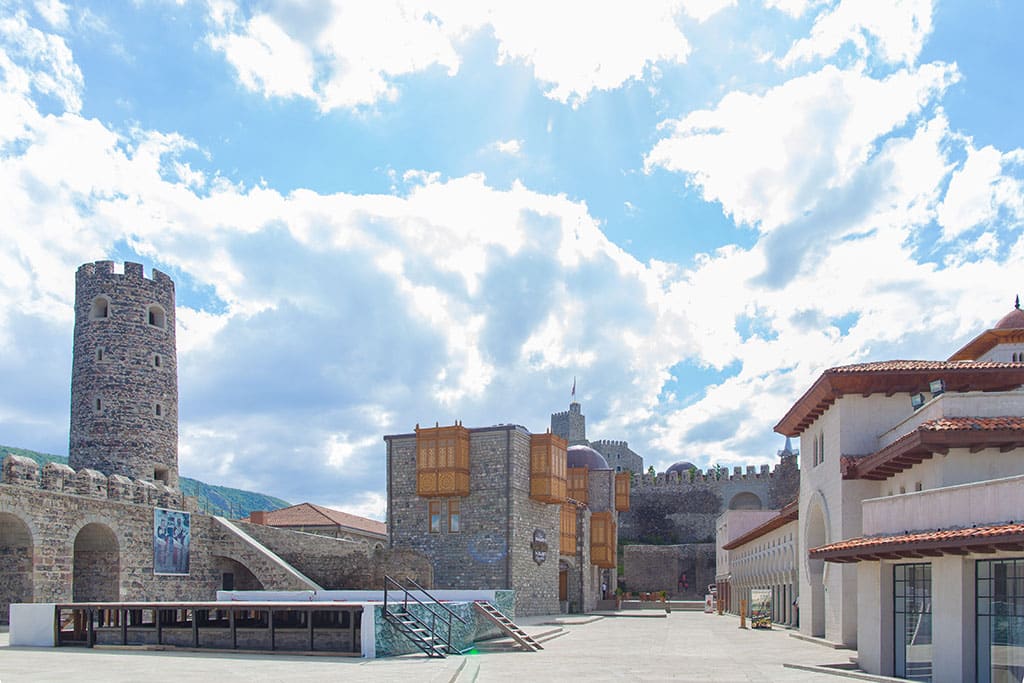
This part can be visited for free. You see huge walls and massive gates leading into the “town”. Clean paved paths, small squares and pools welcome you, along with cosy cafés. There is also a young terraced vineyard. The whole area is very clean and pleasant for walking.
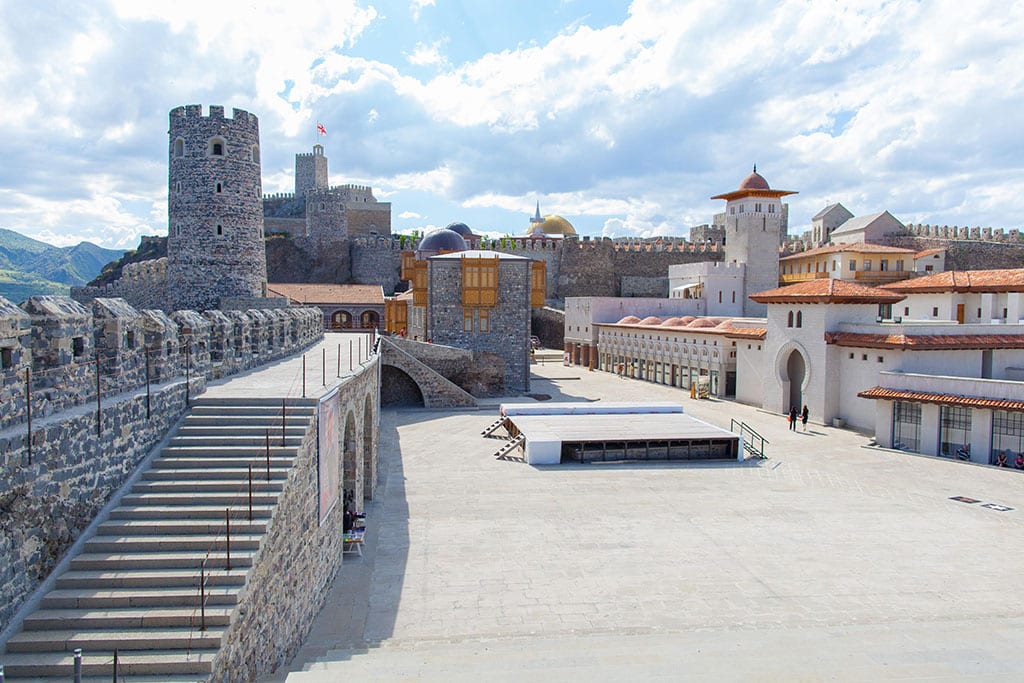
The infrastructure is good too. The lower part has the Rabati hotel with cosy, comfortable rooms and a striking façade of carved wooden balconies and stone walls.
There is also a restaurant of the same name, known for its fine Georgian food, and 10 metres away a bar with an open terrace where you can relax and admire the fortifications.
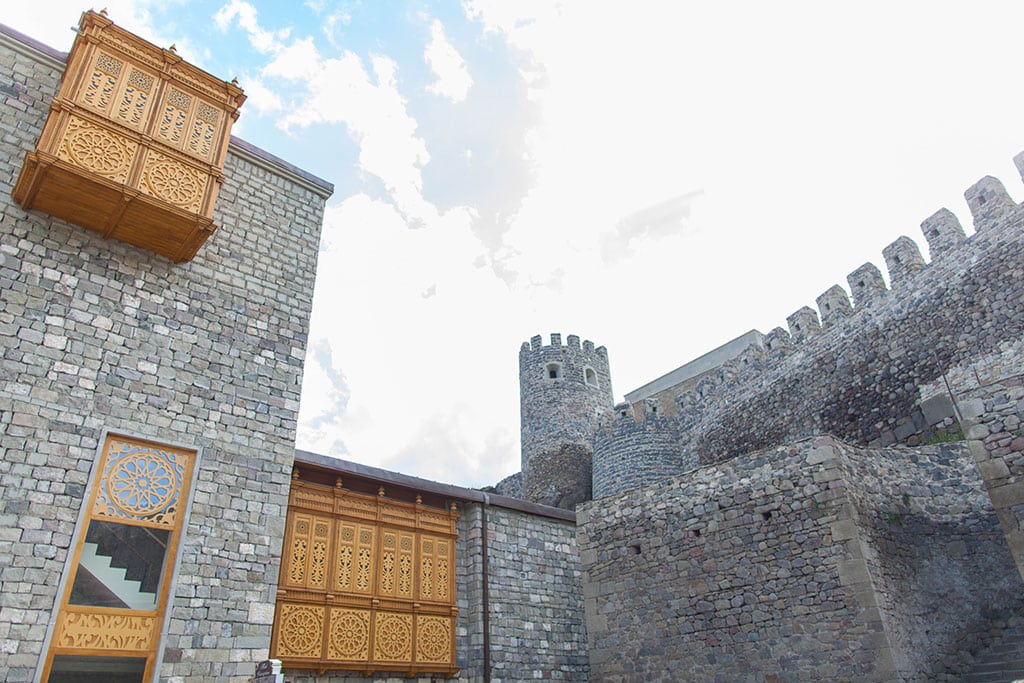
Be sure to visit the KTW wine shop. Besides its superb choice of drinks (one of the best wine shops in Samtskhe-Javakheti), its interior will surprise you: huge mirrored domes on the ceiling, wooden furniture and many display cases. Here you can buy a very rare rose-petal wine, as well as sparkling wine, real Georgian chacha, brandy and all kinds of wine.
The souvenir shop is worth a look too: wine cups and bottles made of pure wax, beautiful jewellery of natural stones and silver, icons and much more.
The lower part also has the tourist information office (1 Kharischirashvili Street). Staff will happily give you maps, sell tickets to the upper part of the fortress and tell you what to see first. Information is free. The whole lower part stays open at night.
The upper part of Rabati: ticket price and what is inside
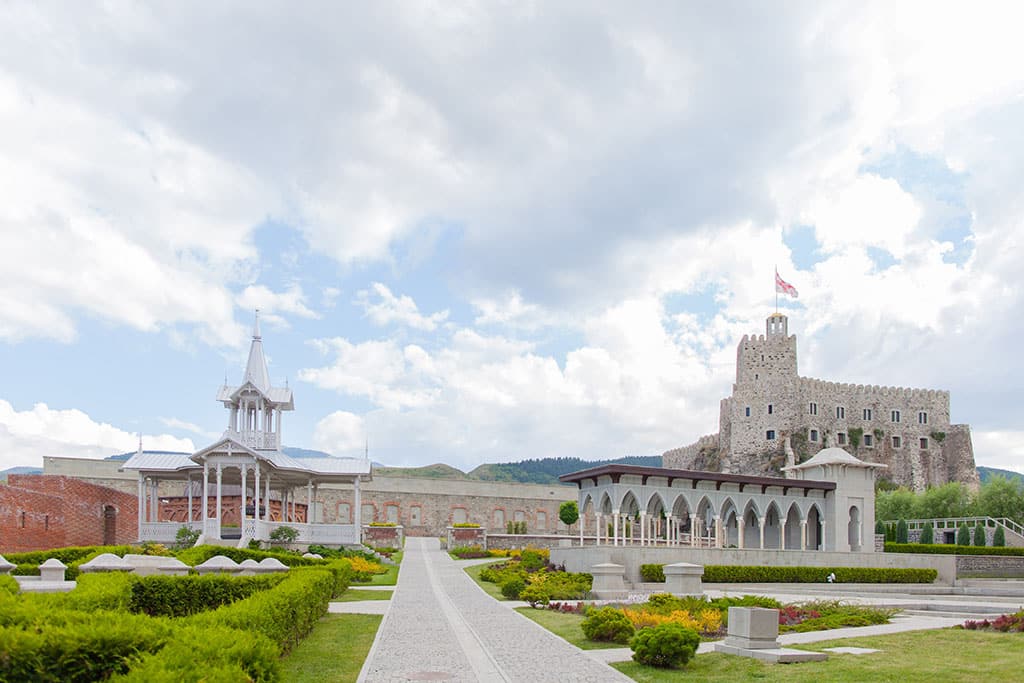
This is the museum area, and entrance costs 18 GEL. For that you can walk around the fortress for as long as you like, take great photos and film videos. Hiring a professional guide is a good idea.
The upper part is separated from the lower by a massive stone wall. Guards at the entrance check tickets and show you where to go.
Many stairways lead up, and spiral staircases take you into the towers. All the buildings are terraced, so be ready to keep climbing.
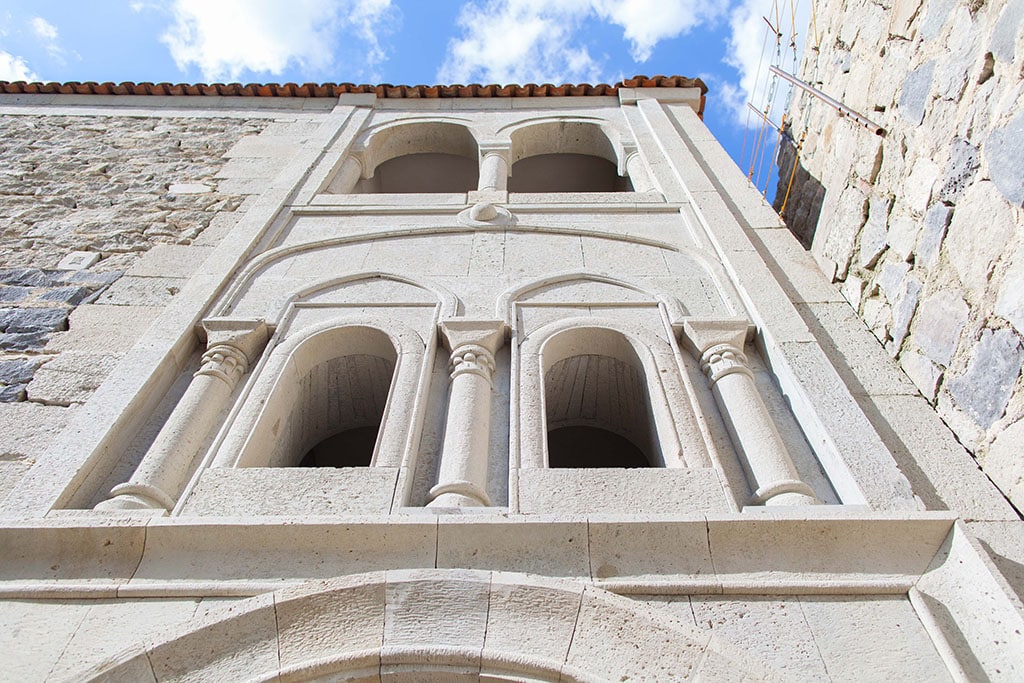
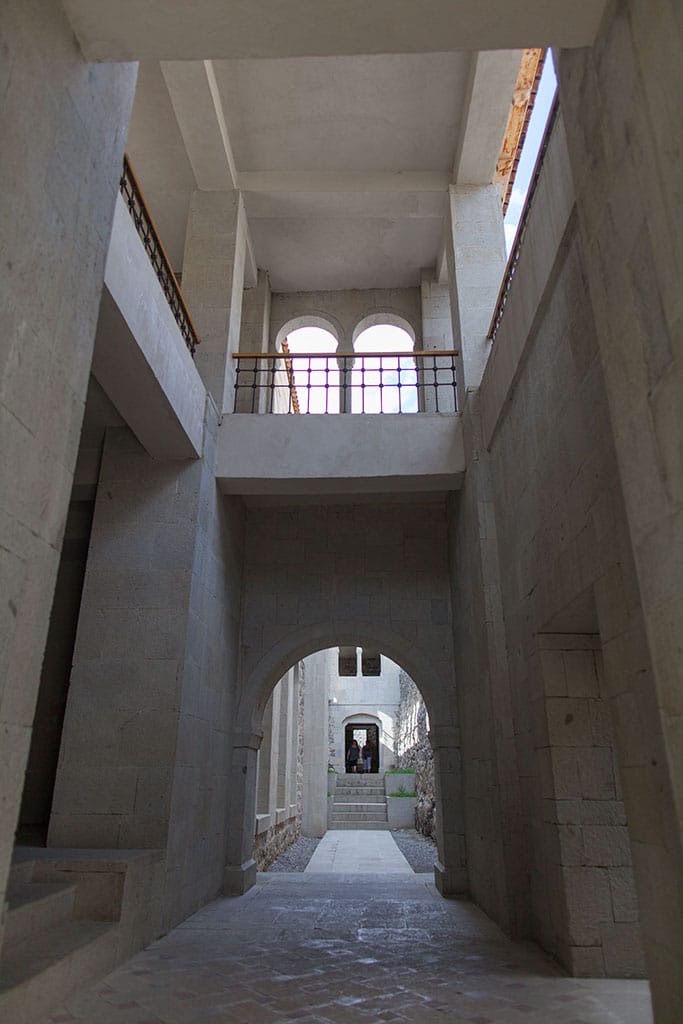
The fortress has 4 huge watchtowers with spiral staircases and spacious viewing platforms at the top, with stunning views of the town, the surroundings and the mountains. Inside, the tower walls are built of stones of different colours, and at the bottom are rooms where weapons were once stored.
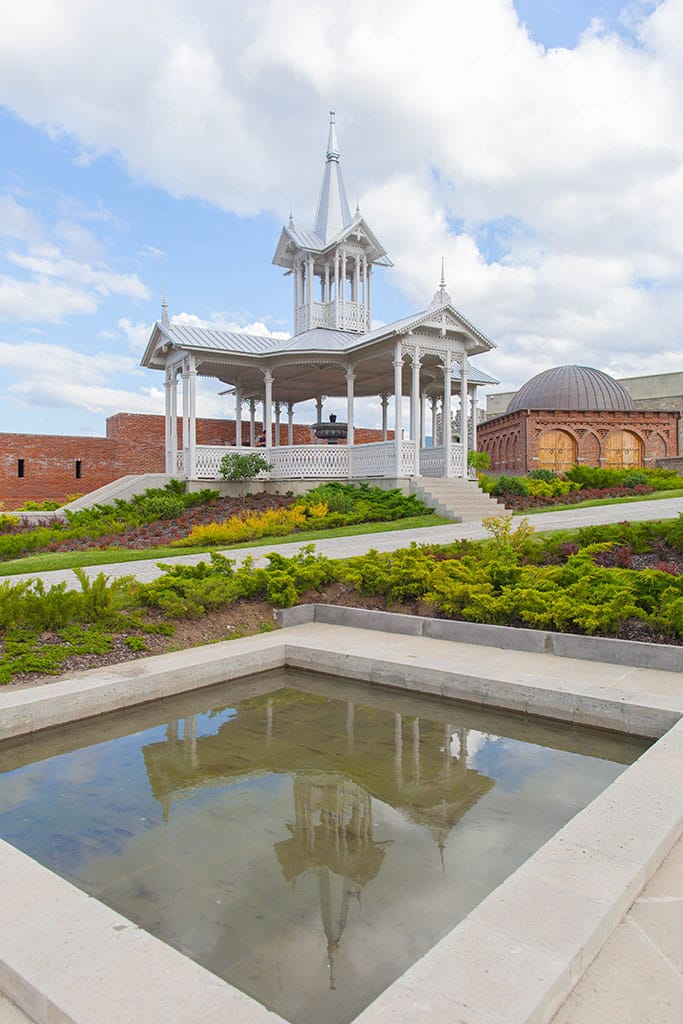
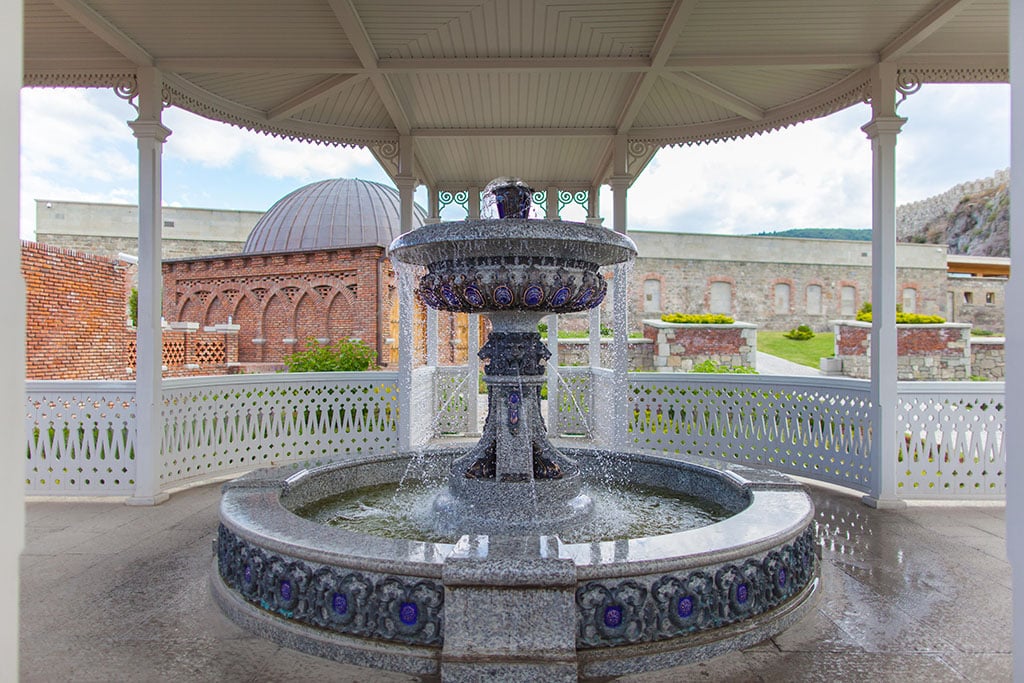
The upper part holds the main sights worth visiting. You can rest in a lovely white gazebo, drink some water and enjoy the coolness of the fountain.
Akhmediye Mosque
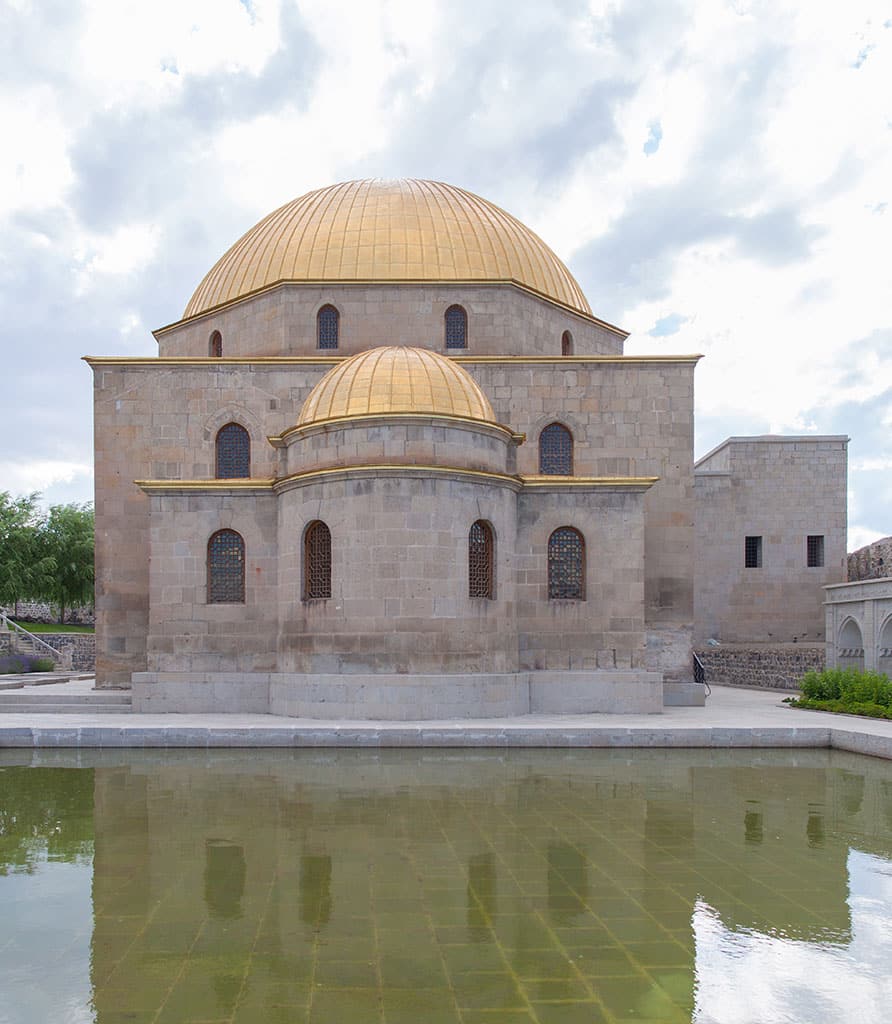
This building dates from the 18th century and is the centre and “soul” of Rabati. The mosque is named after the legendary Akhmed Pasha. Today it stands empty, crowned by a huge gilded dome often compared with the Dome of the Rock in Jerusalem. Inside you can see huge stones with ancient inscriptions and both Muslim and Christian symbols. There is also an unusual exhibit: a stone executioner’s block where enemies were beheaded, still bearing the marks of the axe.
In the early 19th century the mosque was shelled by Russian troops: cannonballs knocked the crescent off the dome and left scratches on the western side of the minaret. After the capture the mosque was turned into an Orthodox church (of the Dormition), and its rich library was taken to St Petersburg; at the time it was considered one of the richest collections of books in the Muslim world.
Inside you will see a niche facing Mecca (the southern wall). In the northern wall is an exit to the stairs leading to the minaret, but it is locked behind a grille.
Leaving the mosque and walking just 5–10 metres to the left, you will see a small old building that once served as a prison for captives and prisoners of war; its small rooms were cells, and only the walls and many niches survive. If you go right from the mosque, you will find an amazing room entirely panelled in wood with masterful carving, with big wooden chests, a sofa and a chair.
The Christian church
As soon as you climb into the upper part, you will see an old church, said to have been built in 1578. The monumental building has a bell tower with old ornaments and inscriptions, and bullet marks can be seen on the walls. There is no traditional altar; instead, huge stone slabs divide the church into two parts. The interior is modest. Outside you can admire curious stone “rams”, elongated sculptures that “guard” the church; historians are not sure which culture they belong to.
On the lawn around the church lie large boulders with original ornaments and inscriptions.
The gallery
In the very centre of the complex you can admire the Moorish gallery, a colonnade of many graceful arches meeting at the top. It looks stunning, like the entrance to an old castle, with every column finely carved. Today it is one of the most striking symbols of the fortress, creating the atmosphere of the mysterious East.
The citadel, the “peak” of the fortress
This grand structure occupies the western part of the fortress. It is the highest point not only of the fortress but of Akhaltsikhe, with a breathtaking panorama of the town and its outskirts. Getting up is hard, but worth it. The citadel has a tall tower and a room with exhibits: photographs, ceramics and household items of Meskhetian culture, like a house where Meskhetians once lived.
The citadel has a special atmosphere that takes you back to the days when the Turks watched Russian columns advance from the Northern Heights through the town.
The Samtskhe-Javakheti Museum
A wonderful museum that has become even more interesting after restoration.
There are many fascinating exhibits: ancient fossils and Turkish rifles of different types. Unique archaeological artefacts from the Bronze and Stone Ages are gathered in 250–300 m², including well-preserved bronze Colchian axes found in Georgia. Huge sabres, muskets, pistols, cannonballs and ancient pottery from different eras are just as interesting. The exhibits tell the turbulent story of southern Georgia and Meskheti.
The halls are spacious and dimly lit, which makes the visit even more exciting. Photography is forbidden, as many artefacts are damaged by flashes. The museum keeps its own hours, so if you want to see it, come early.
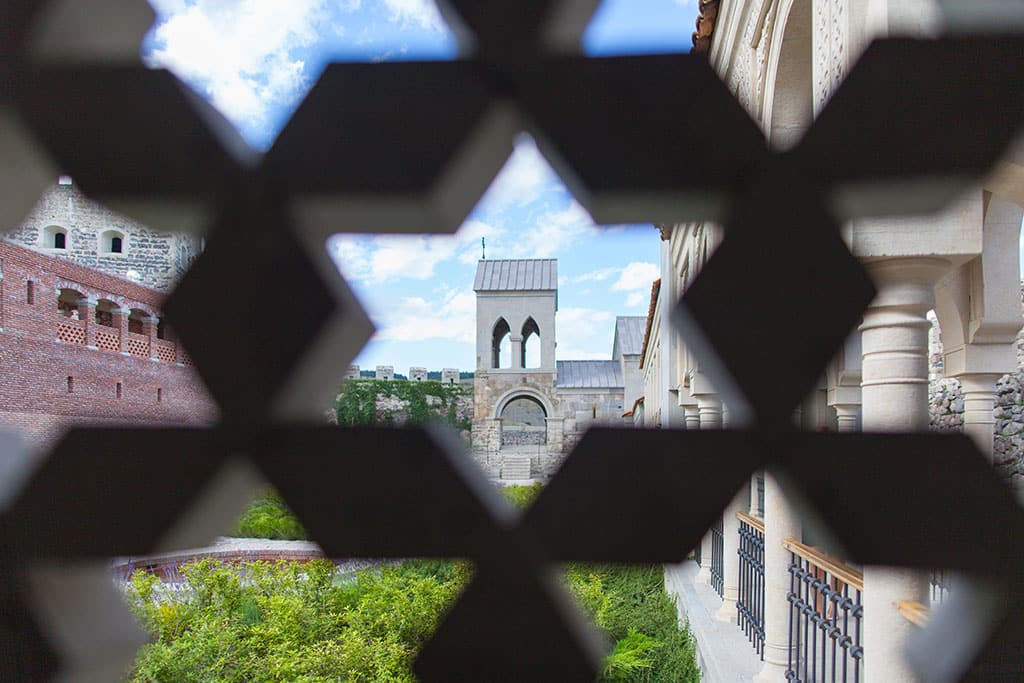
Right in front of the museum entrance stands the famous castle of the Jakeli princes. Climb the stone and iron stairs to its roof for a view of the town and the whole fortress.
Picturesque ponds
Besides the monumental buildings, the fortress has charming stone ponds: at the entrance to the mosque, by the Moorish colonnade and in the quiet garden in the upper part. These ponds have become a favourite spot. By day they reflect the carved columns, the golden dome and the huge walls. Their bottoms glitter with coins left by visitors who make a wish, which is sure to come true.
But it is not only the ponds that catch the eye: huge bowls with trees growing in them, beautiful flowers and amazing flowerbeds make you feel as if you are in a park full of rare plants.
How to get to Rabati Fortress in Akhaltsikhe
Akhaltsikhe’s main sight is right in the centre, easy to reach from anywhere in town, as the main road, Tamarashvili Street, runs right below the hill. Below the fortress is a small square from which local minibuses and buses leave. If you arrive by bus, you will be at the town bus station, right below the fortress: just walk to the Rabati gates. From the right bank of the Potskhovi, go under the railway bridge to the fortress hill; it takes no more than 15 minutes.
Opening hours and prices (2026)
The whole lower part of the fortress is open around the clock and free. The upper, museum part is open during the day, from 10:00 to 17:30, every day. Entrance costs 18 GEL, with tickets sold at the tourist information office by the main gates.
You can admire Georgia’s grandest and most beautiful fortress all year round, though summer is very hot (up to 35°C in July–August). Spring brings unforgettable views: flowers bloom and the air is full of the scent of herbs and mountain lavender. From April it is a comfortable 25–28°C. Autumn is just as breathtaking, when the mountains are already capped with snow and the forests “burn” red and yellow.
Rabati Fortress is an amazing sight where you can plunge into history and enjoy the beauty of the restored complex. Be sure to include it in your route around southern Georgia!
Rabati Fortress FAQ
How much does it cost to visit Rabati Fortress?
The lower part is free. A ticket to the upper, museum part costs 18 GEL and is sold at the tourist information office by the gates.
What are the opening hours?
The lower part is open around the clock. The upper part is open from 10:00 to 17:30, every day.
Where is Rabati Fortress?
In the centre of Akhaltsikhe, right above the town bus station, a few minutes’ walk to the gates.
What else is there to see near Rabati?
In Akhaltsikhe itself, the Jewish quarter and Queen Tamar’s church; nearby, Sapara Monastery, Vardzia and Borjomi.
Read also: Akhaltsikhe, Vardzia cave city, Borjomi.
My name is Vitaly Kibitlevsky, I am a tour guide and creator of unique quests in Batumi. If you want to walk around the city with a fascinating storyteller or plunge into an exciting adventure, write to the mail: vitkibit@gmail.com
Find out more about me and my projects here