


Dashbashi Canyon (also called Tsalka Canyon) is one of the most striking places in southern Georgia, an hour and a half to two hours’ drive from Tbilisi. The Khrami River has cut a deep gorge into volcanic rock here: sheer basalt walls, caves, green slopes and cascades of waterfalls. In 2022 a glass Diamond Bridge with a café right in the middle was hung over the canyon, and Dashbashi turned from a quiet picnic spot into a big tourist complex.
Dashbashi Canyon, Georgia: tickets, prices and opening hours
- Where: Tsalka Municipality, by Dashbashi village, about 100 km from Tbilisi. The drive takes 1.5–2 hours.
- Entrance: 79 GEL for foreigners, 46 GEL for Georgian citizens, children under 3 free. One ticket covers everything: the glass bridge, the viewpoints and the trail to the waterfall. Tickets are non-refundable. If you come with a tour guide, entry is often cheaper — 59 GEL.
- Opening hours: daily from 10:00, closing between 18:00 and 20:00 depending on the season.
- Extra activities: the giant swing over the canyon is 35 GEL, the sky bike on a cable across the canyon is 120 GEL.
- Trail to the waterfall: about 1.8 km down. It is closed in rain, heavy fog and snow; visitors must be taller than 1.2 m.
- What to bring: comfortable shoes — there are plenty of steps. Pets are not allowed.
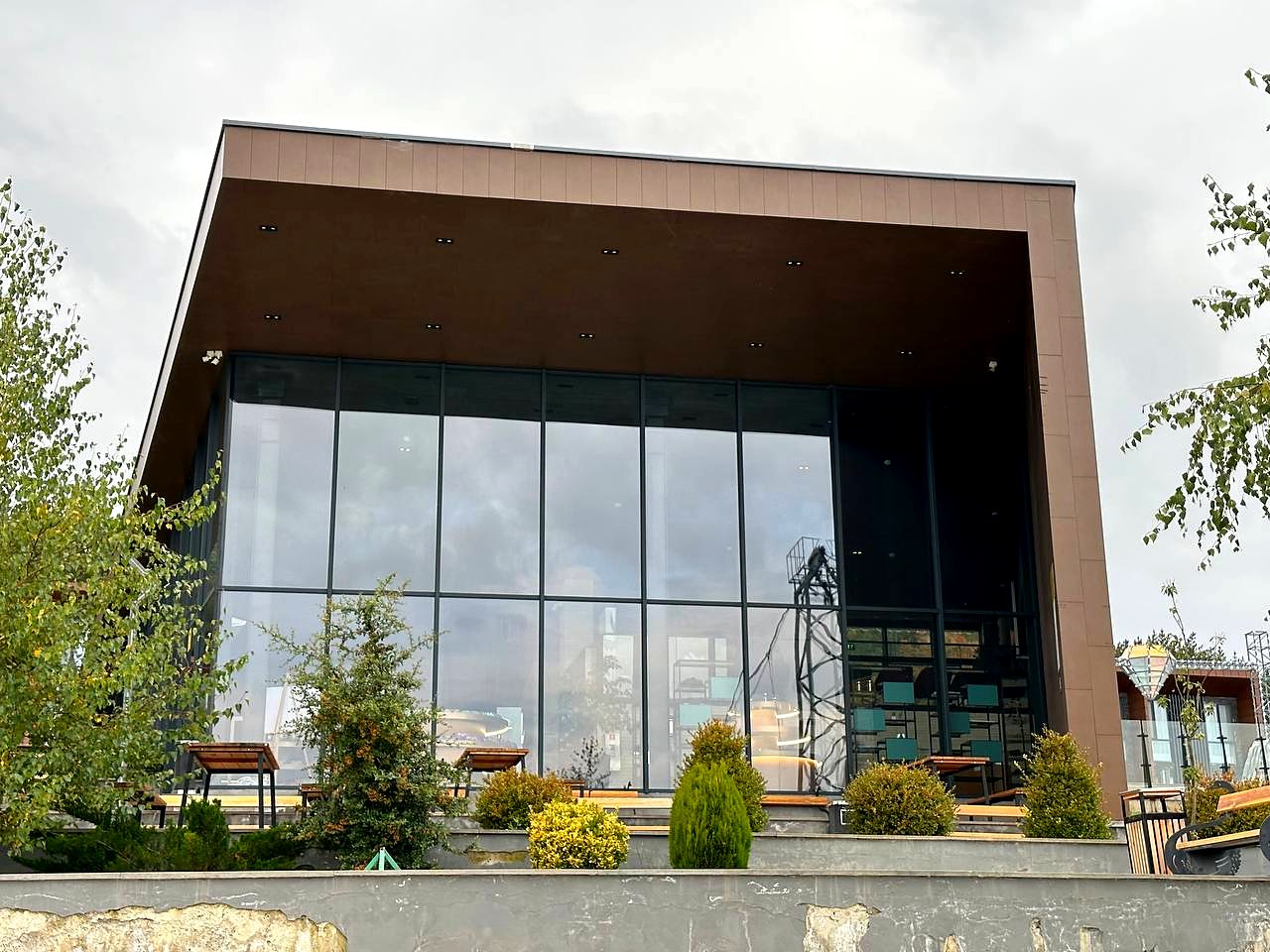
Dashbashi Canyon: nature and waterfalls

The canyon lies 1,100–1,500 metres above sea level, is about 8 km long and covers 669 hectares. There is a lot of groundwater here and plenty of dramatic waterfalls. The walls of Dashbashi are several hundred metres high — sometimes vertical, sometimes gentle, in places almost hanging over the river.

The caves catch your eye: there are lots of them, both natural and man-made. The landscape is remarkably varied too — volcanic cones and plateaus, forest, shrubs, steppe and meadows. The reason is the canyon’s location on the border of two very different regions of Georgia, Kvemo Kartli and Trialeti. That is why it is known for its biodiversity and matters for animals living in both regions.

The green slopes and waterfalls create their own micro-landscape and microclimate, home to animals you won’t find elsewhere in the country. The canyon itself is a protected natural monument.
Diamond Bridge: the glass bridge in Georgia over Dashbashi Canyon
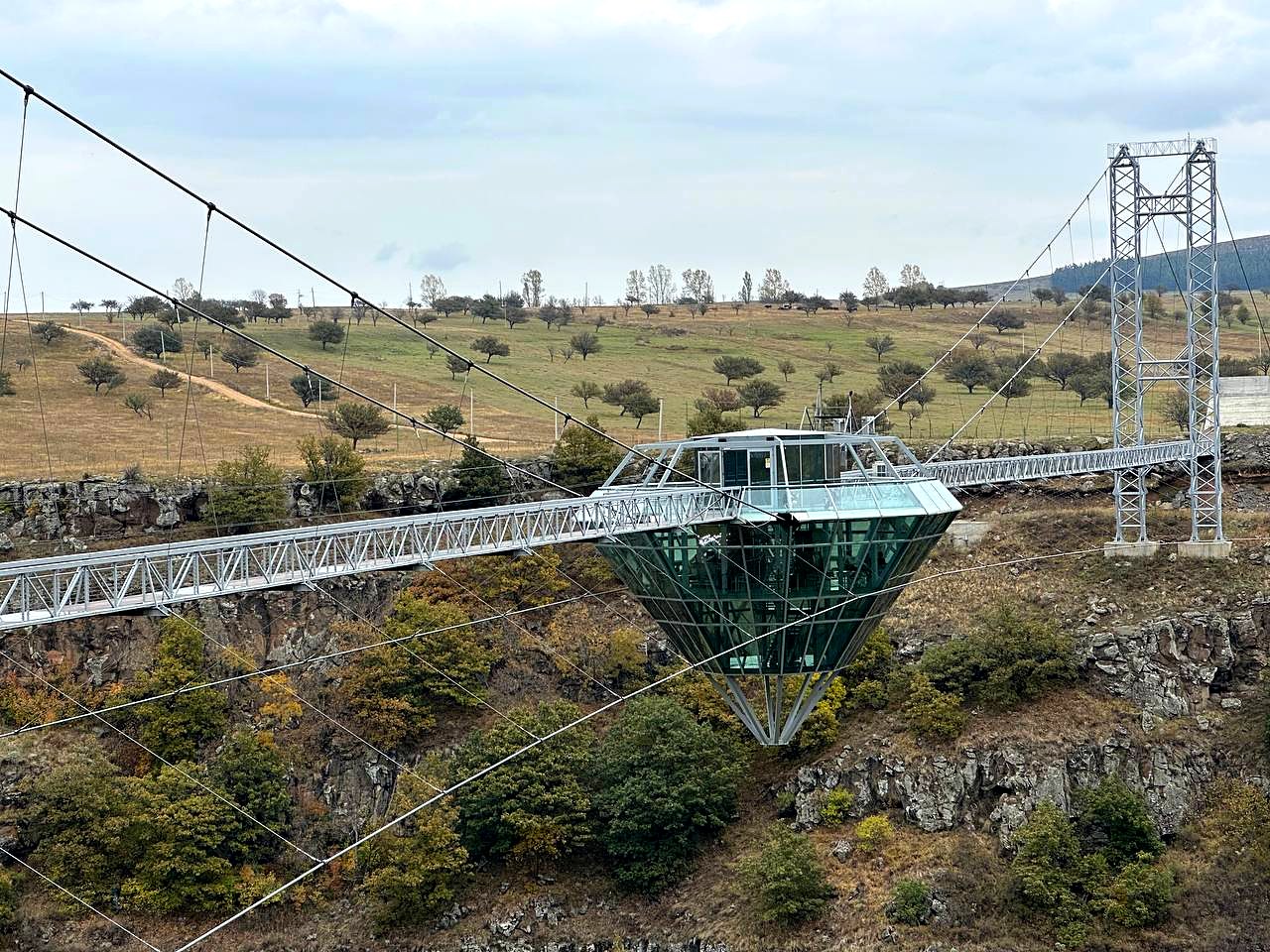
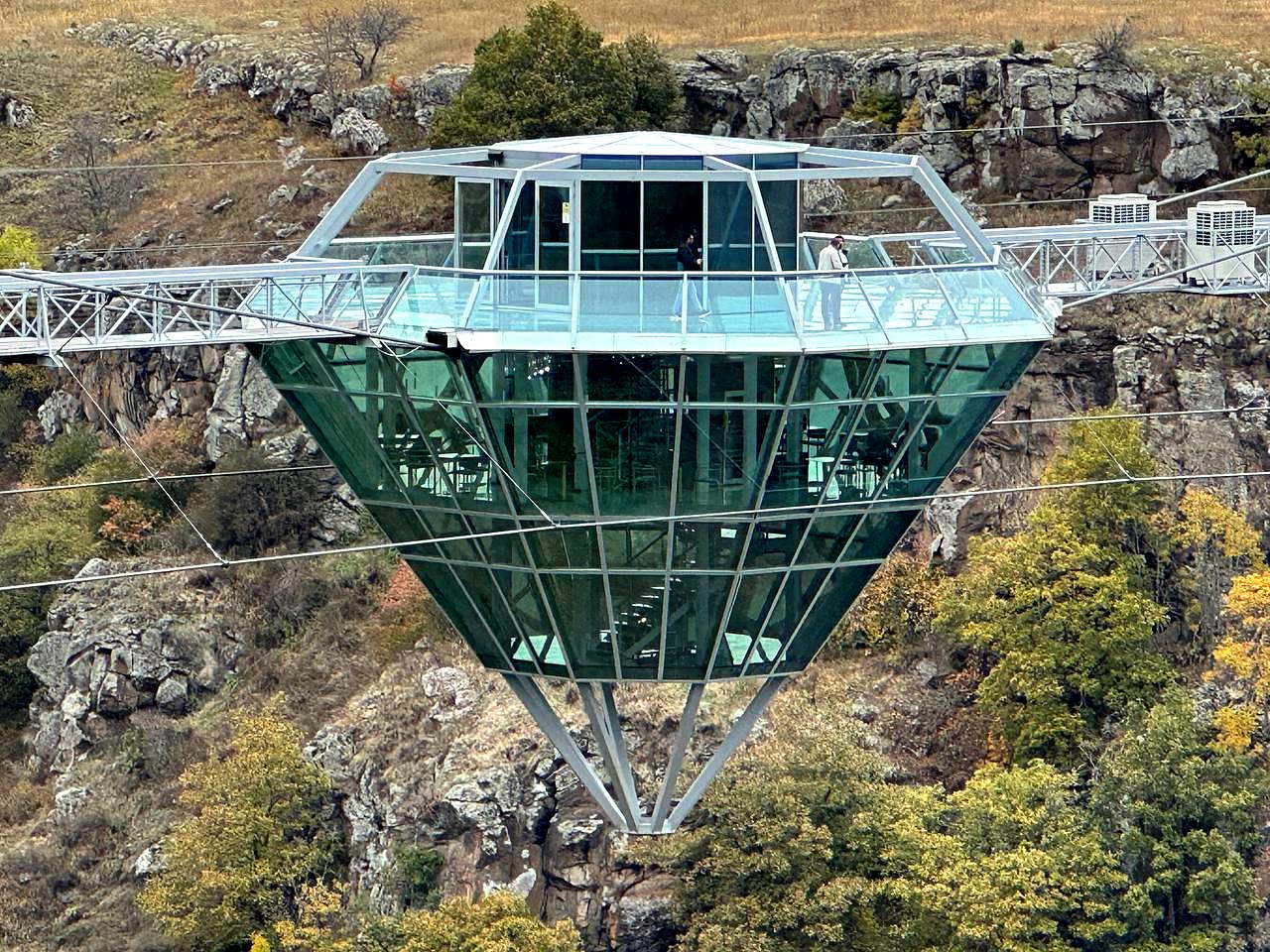
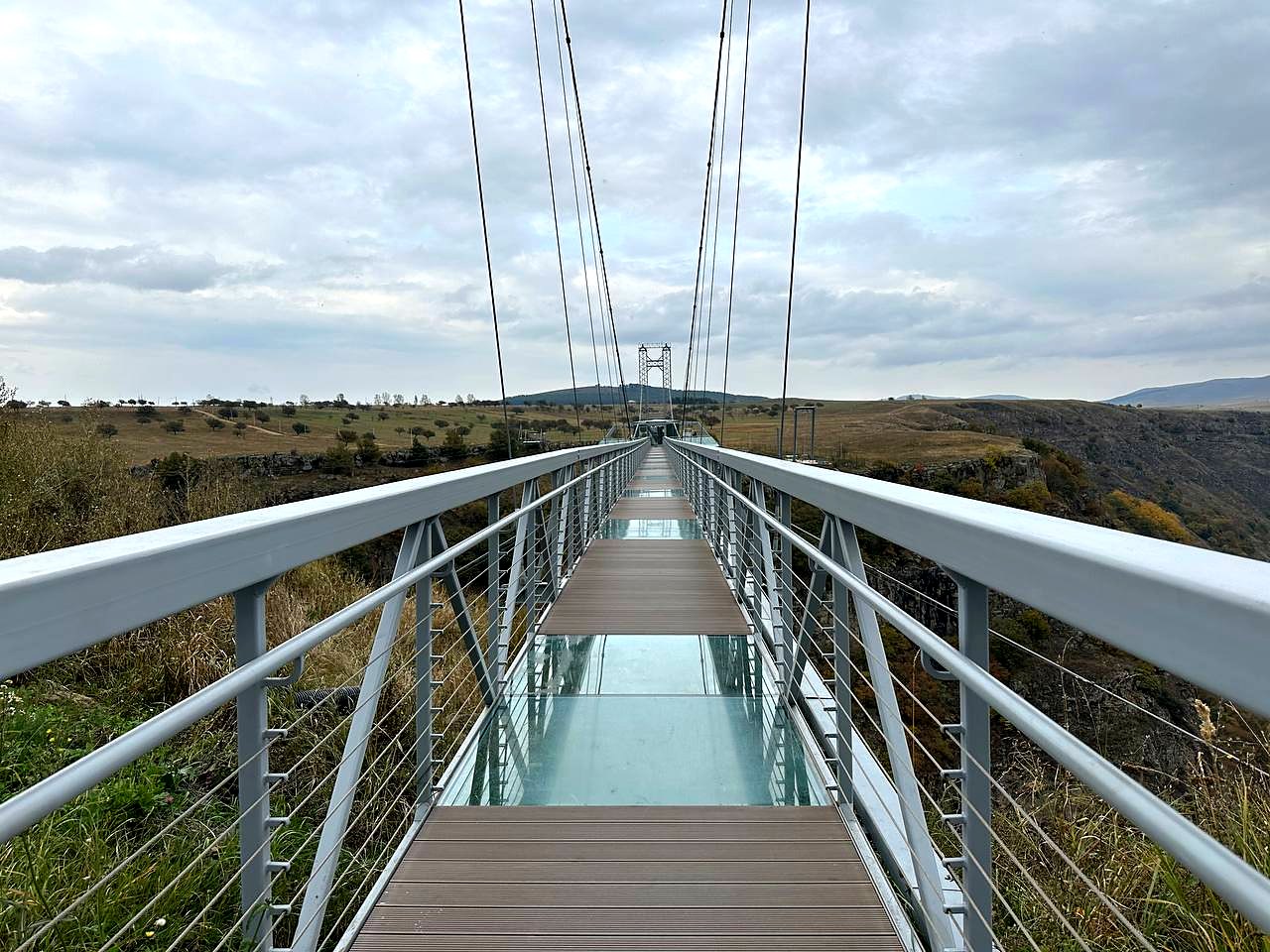
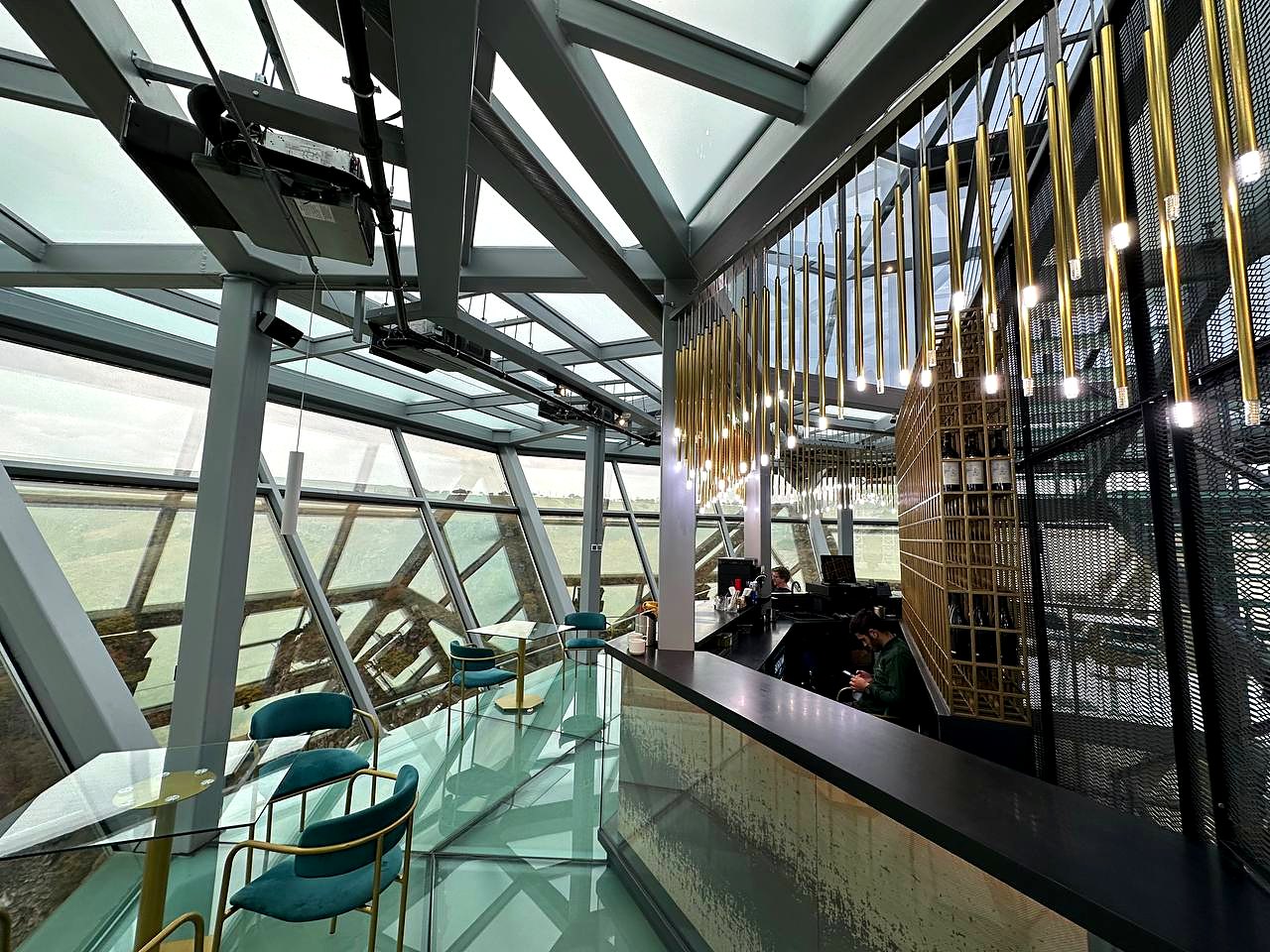
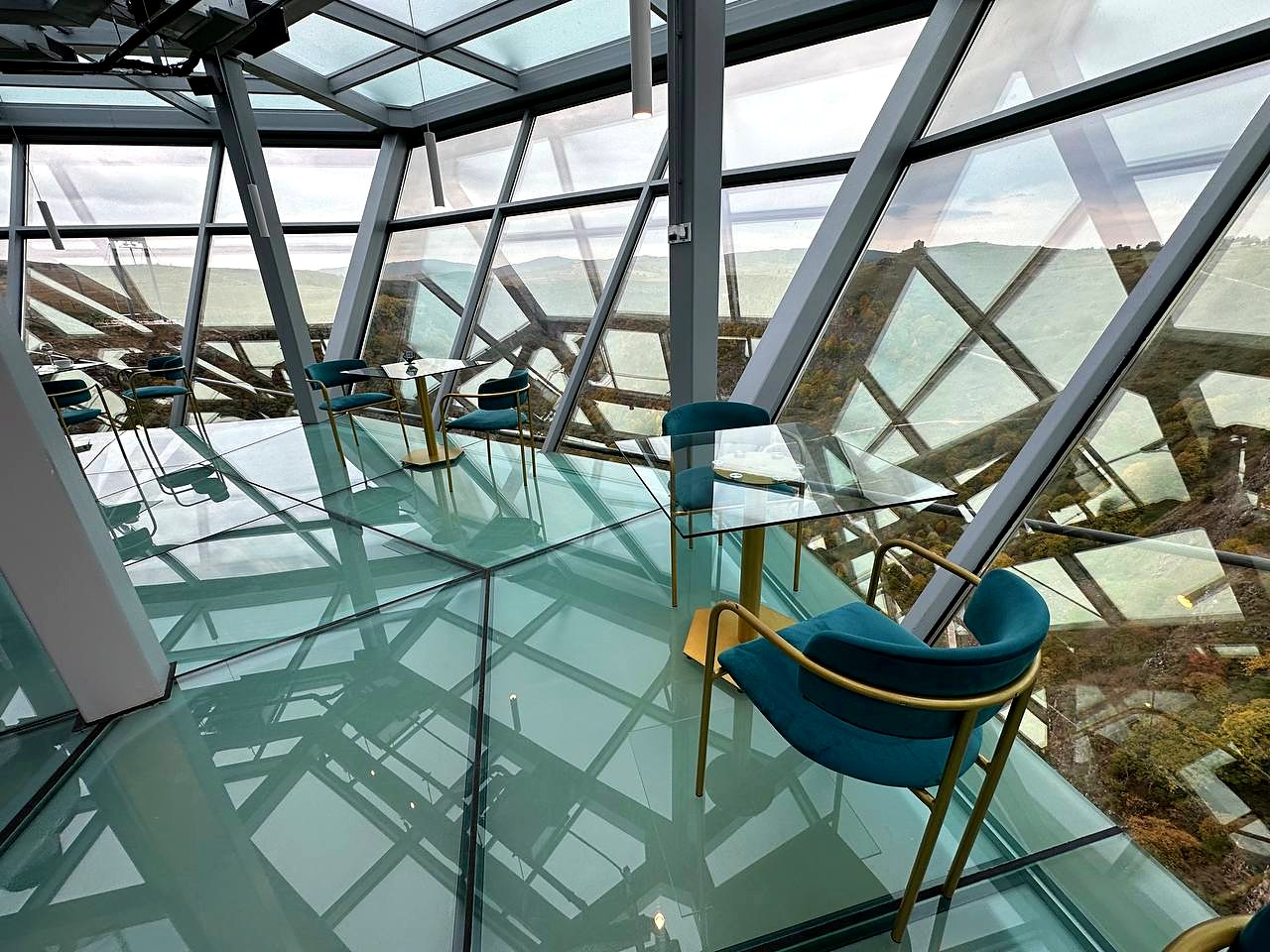
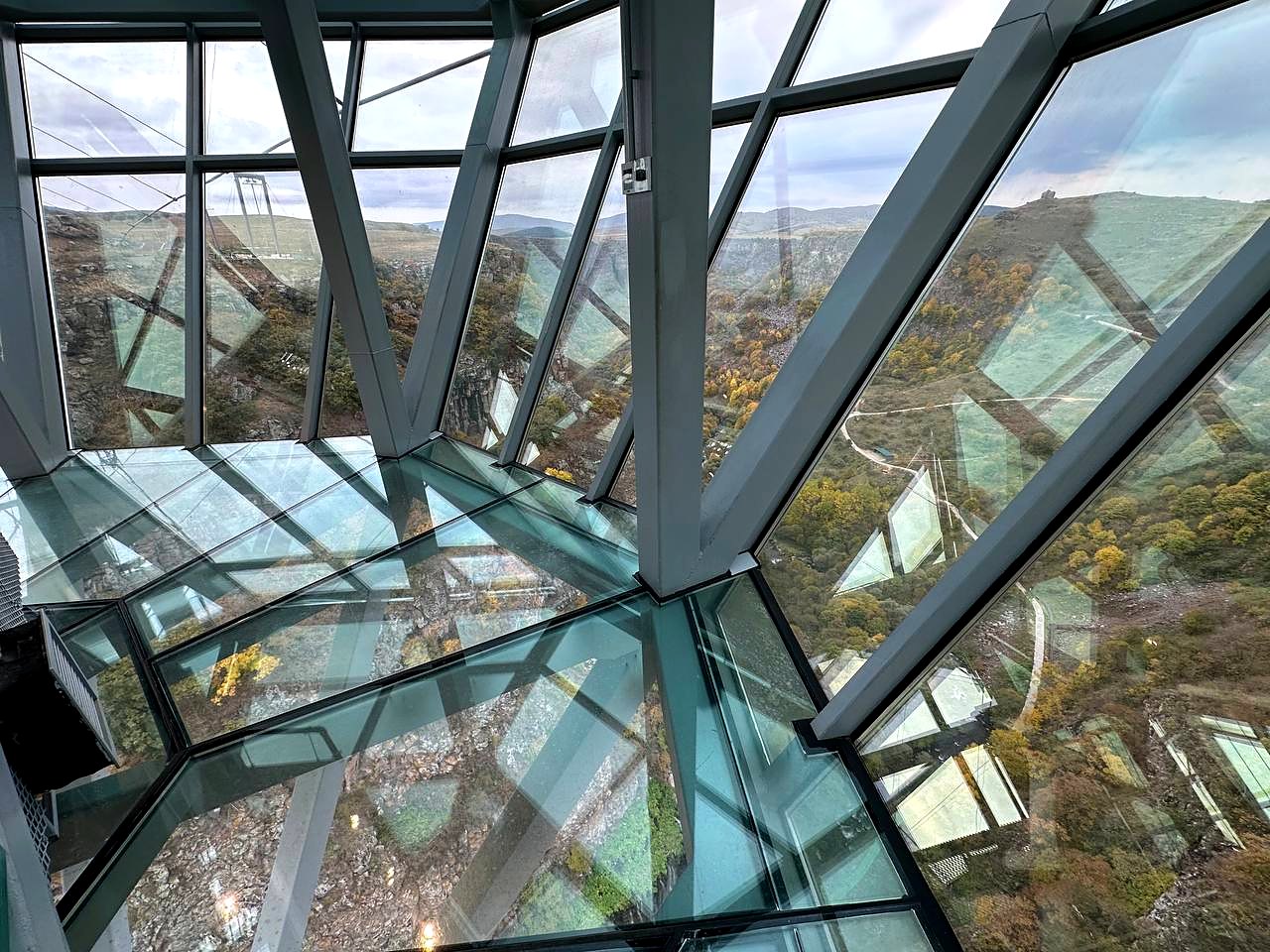
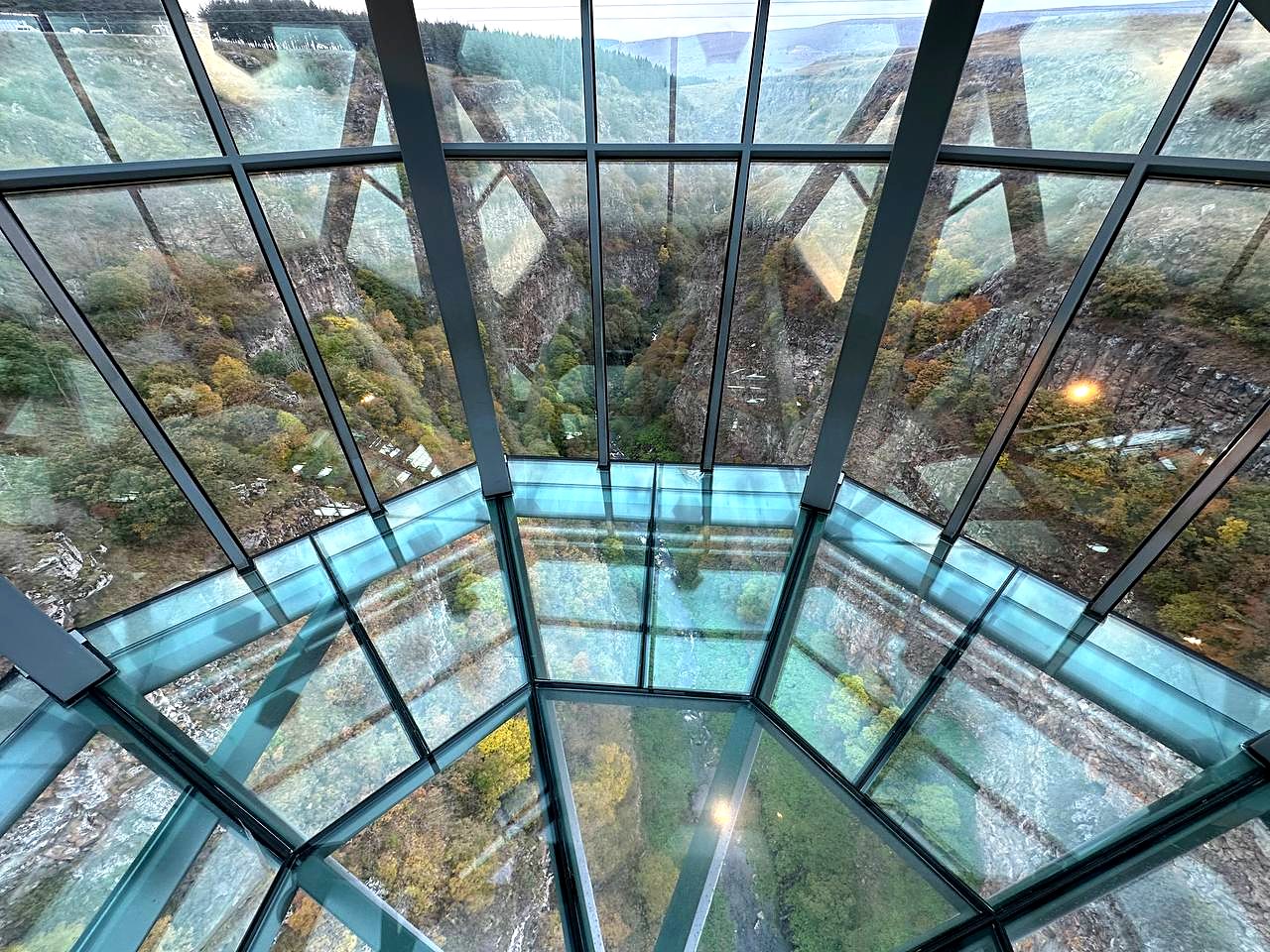
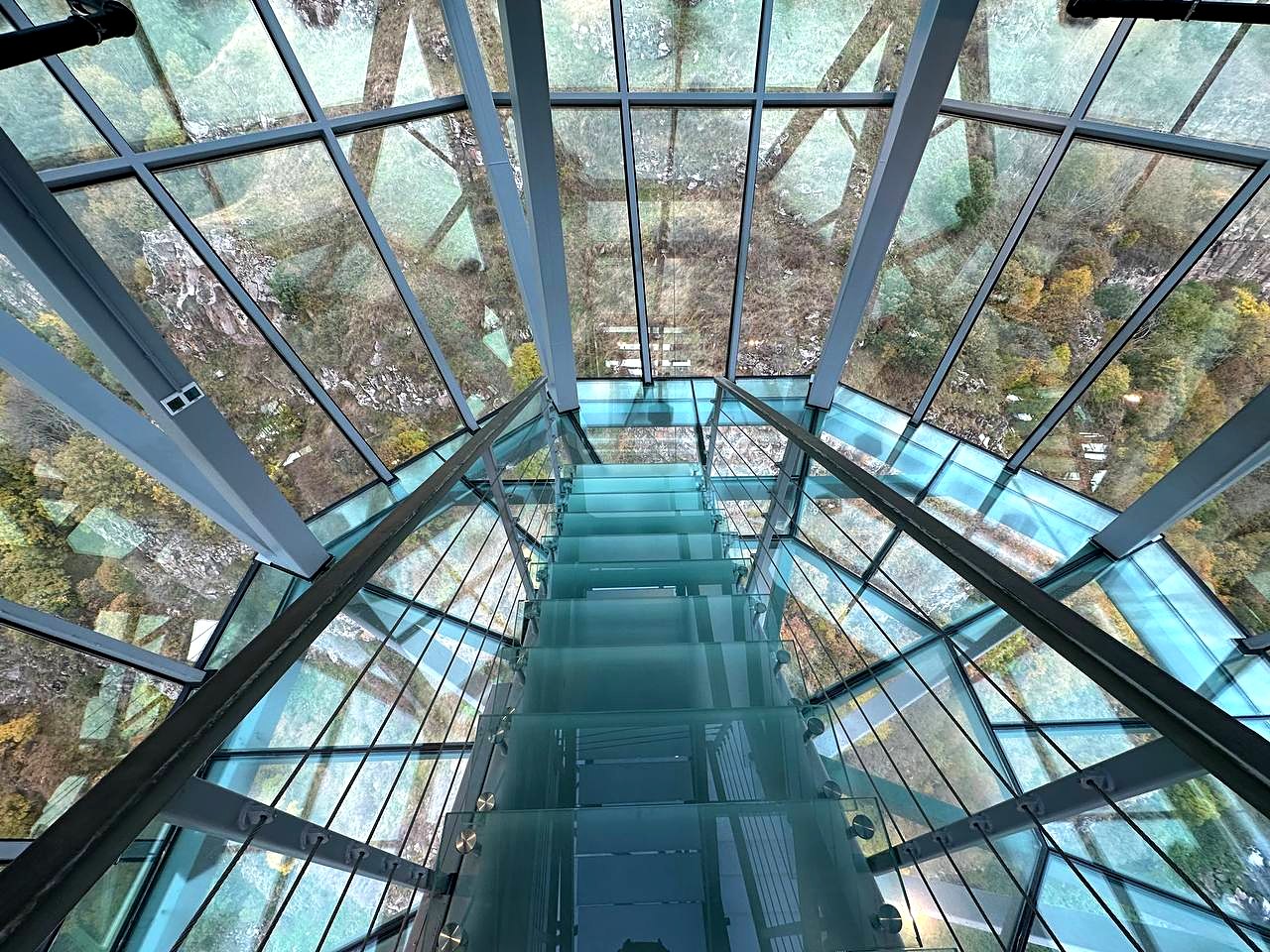
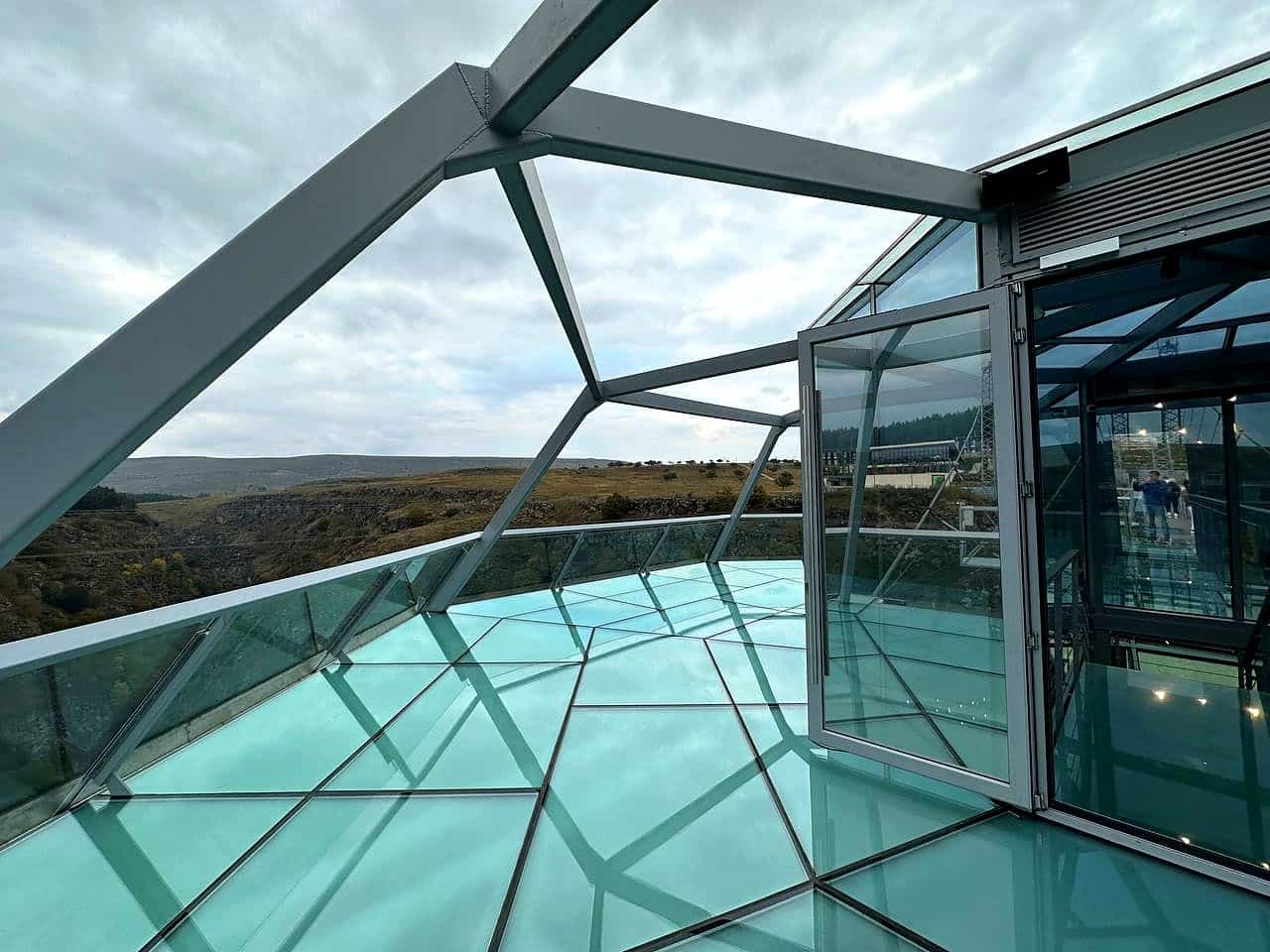
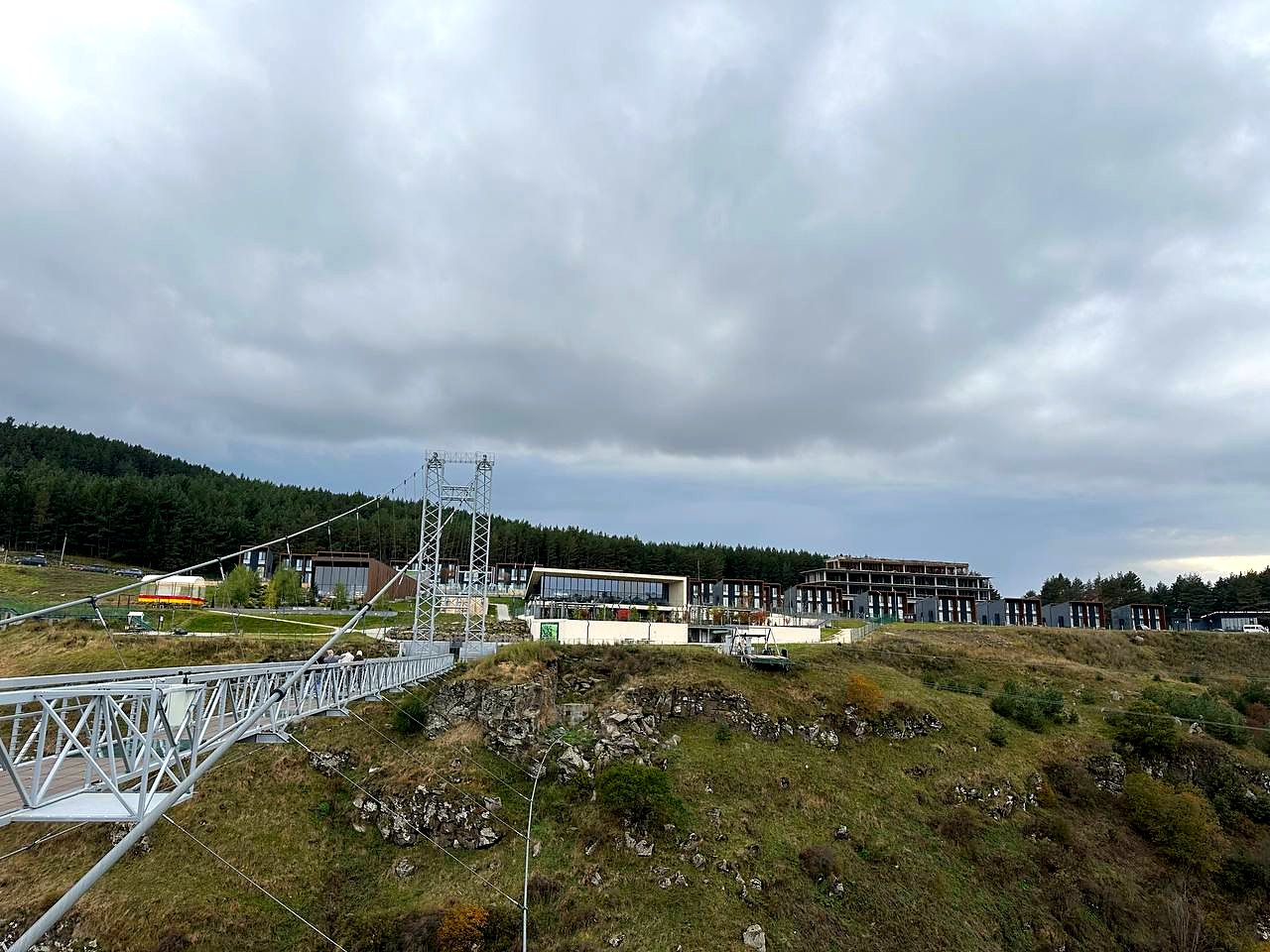
The glass bridge over Dashbashi Canyon opened in June 2022. It is 240 metres long, with a transparent floor under your feet and waterfalls roaring more than 200 metres below. In the middle hangs a huge “diamond” — a glass structure with a café-bar inside. The complex was built by the Israeli company Kass Group, which invested about 120 million GEL.
Walking on glass over the abyss is not for the faint-hearted, especially the first few steps. But the view of the canyon and the waterfalls from here is one you used to see only from a drone.
Diamond 360: the café inside the diamond
There are two places to eat and drink in the complex. Diamond 360 is the café-bar right inside the “diamond” in the middle of the bridge. It is basically a coffee shop: coffee, drinks, desserts and the view you came for. You won’t get a proper meal here — that’s what the restaurant is for. Diamond Restaurant has panoramic windows and an open terrace, and the menu is mostly Georgian.
Giant swing and sky bike over the canyon
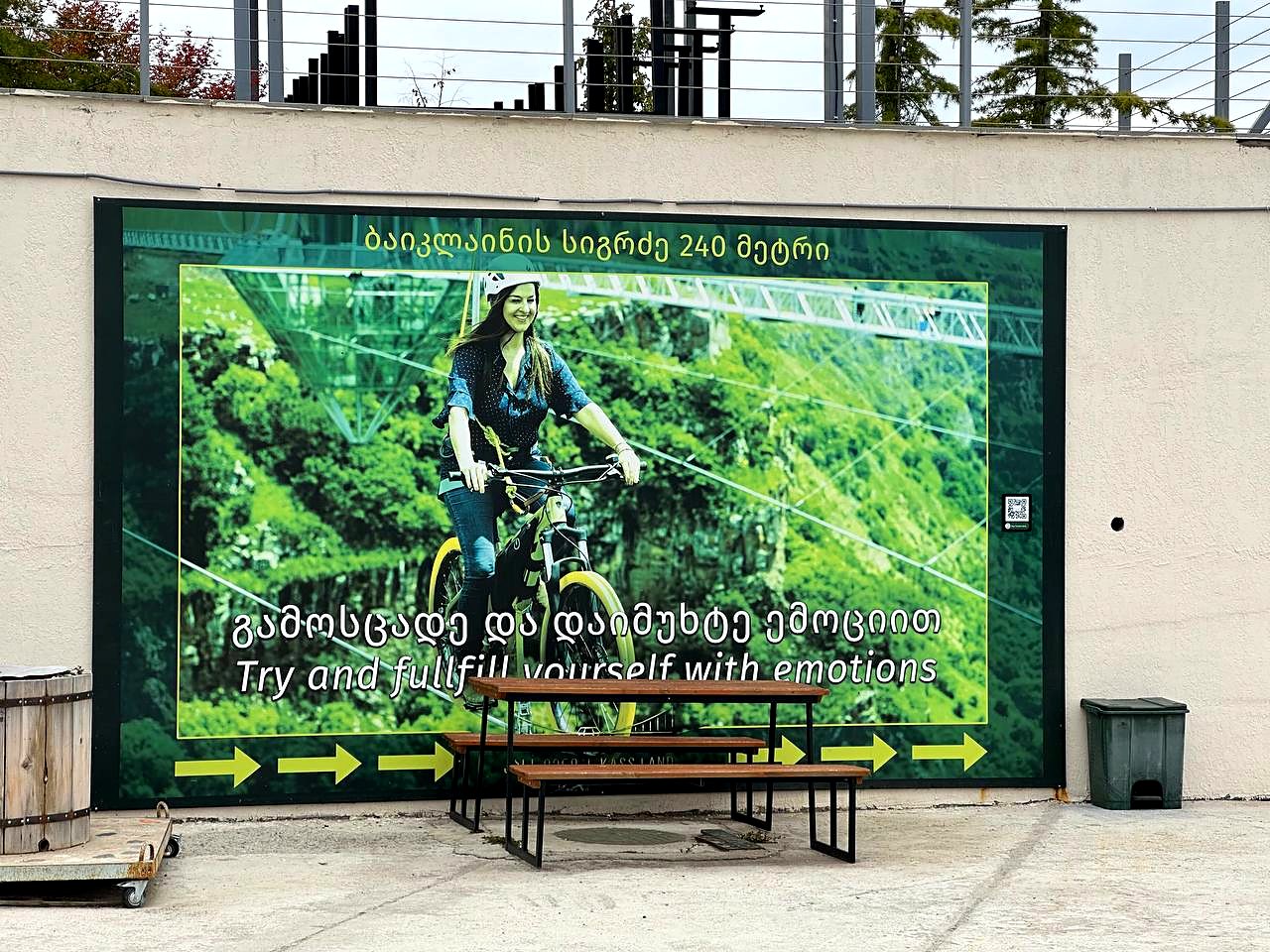
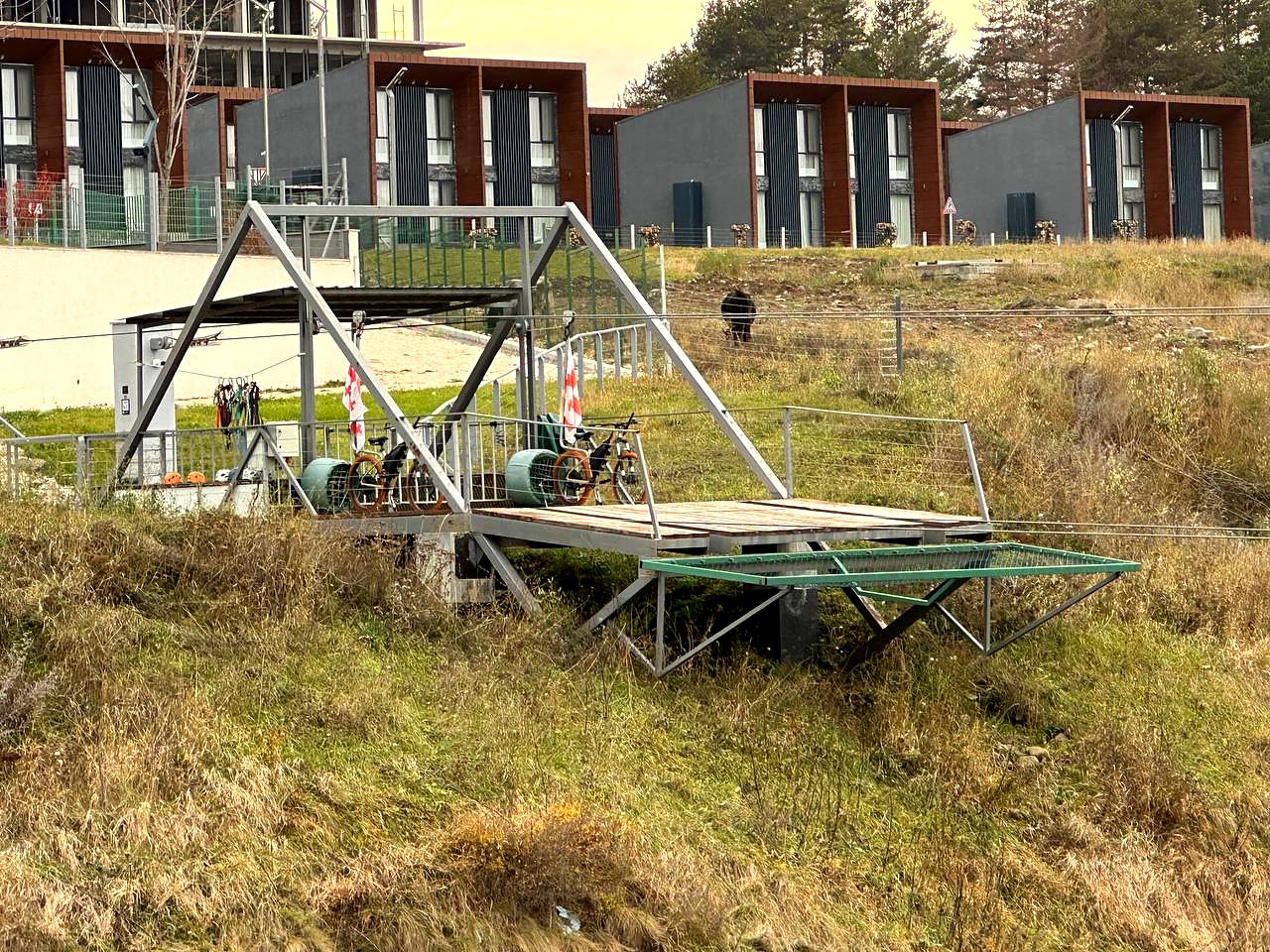
For adrenaline lovers there is a giant swing on the edge of the canyon (35 GEL) and a 240-metre cable across the gorge that you can ride on a bicycle (120 GEL). These are not included in the entrance ticket and are paid separately.
Kass Land amusement park
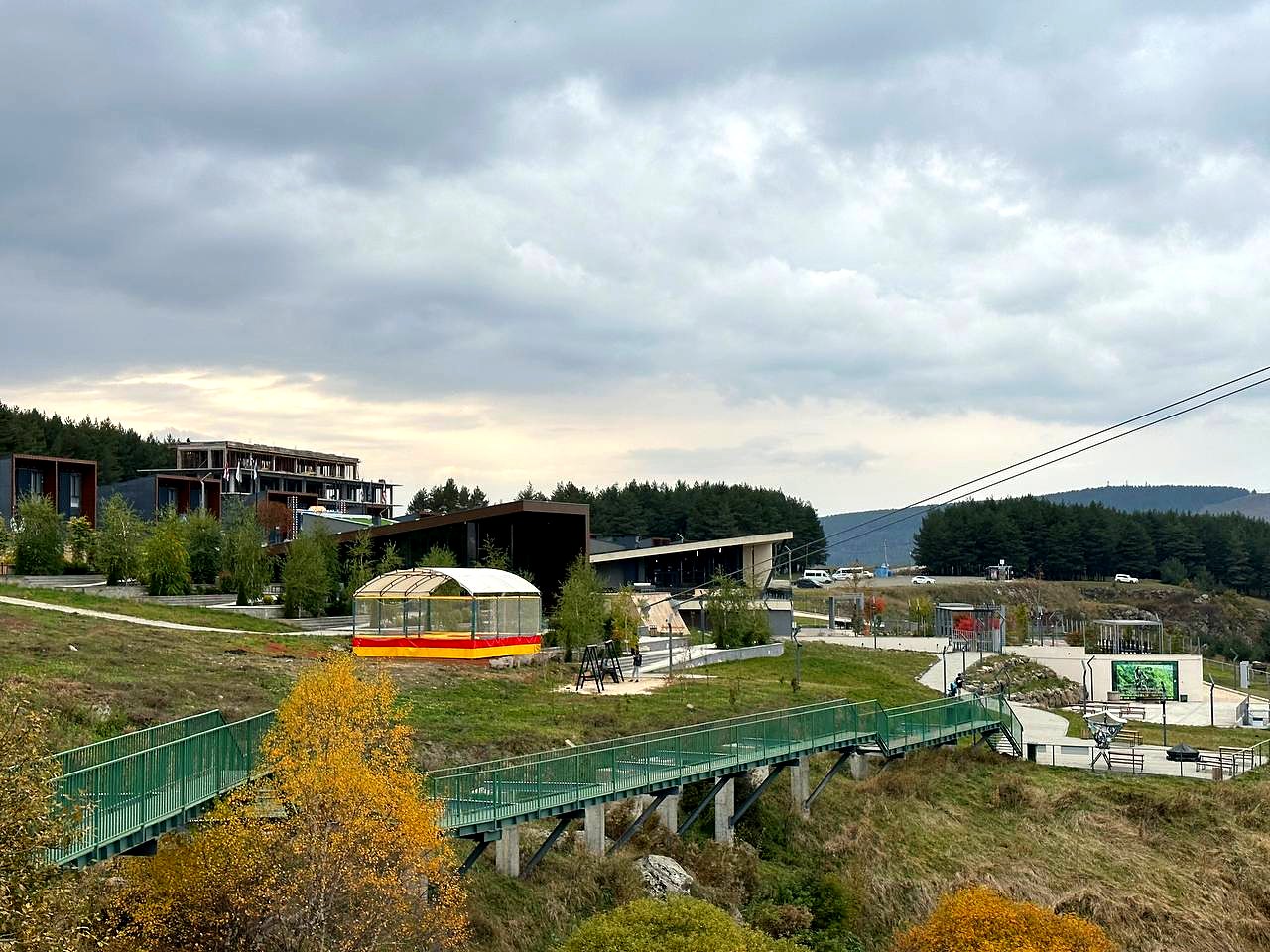
Across the road from the canyon, next to the hotel, is the Kass Land amusement park: go-karting (the owners call it the longest track in Europe), tubing slides, a rope park, an obstacle course and a glass water slide. The park has its own separate tickets.
Dashbashi waterfall: how to get down to the falls
A trail about 1.8 km long leads from the bridge down to the waterfalls. Going down and back up on foot takes about an hour, plus time by the water. The way down is easy, the climb back is harder. If you don’t feel like walking, special vehicles take visitors down and back — ask about the price on site.
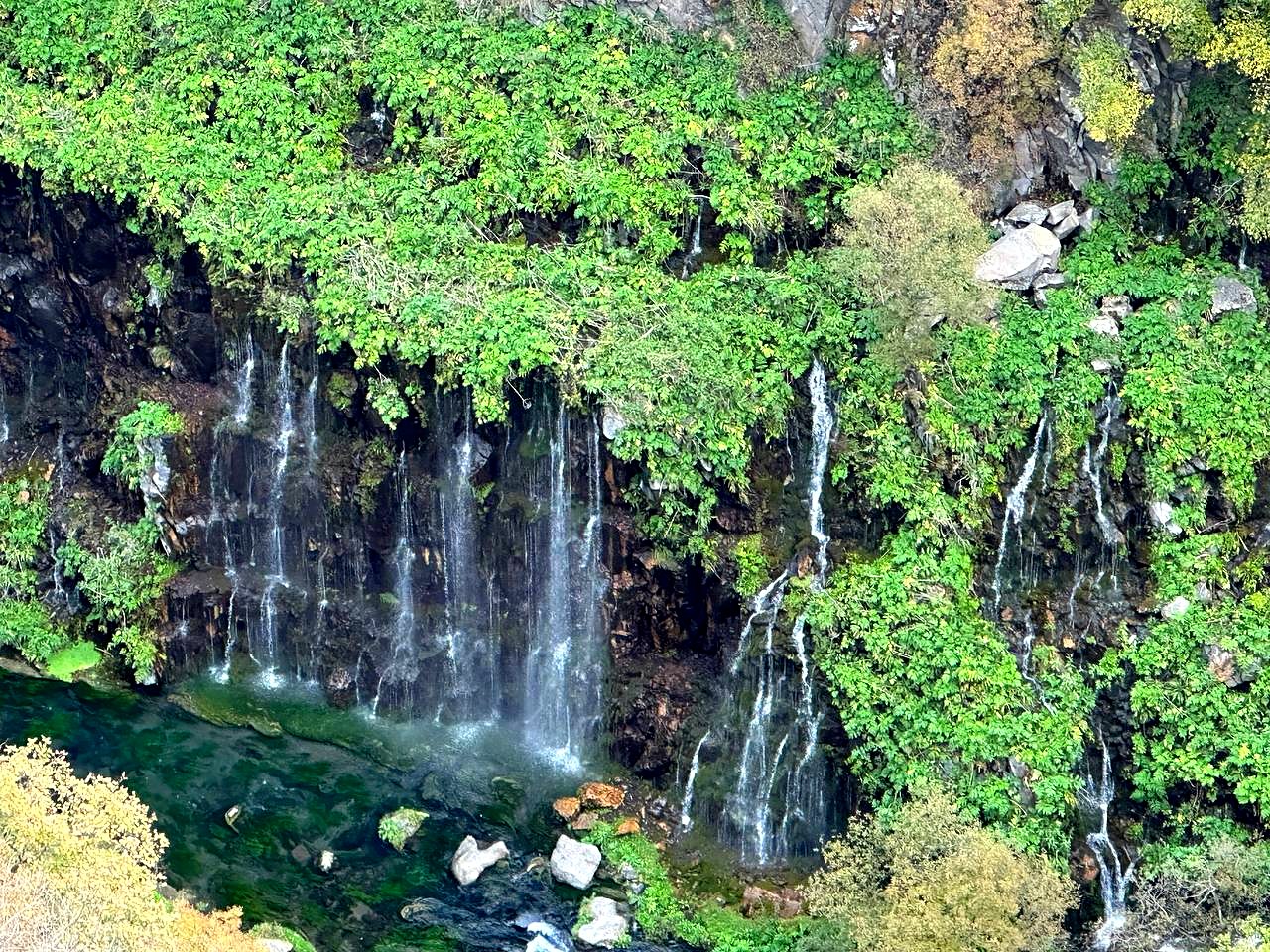
In rain, heavy fog and snow the trail is closed, and the ticket is not refunded.
Walkways with viewing platforms run along the edge of the canyon: from them you get a good look at the waterfalls and at the bridge from the side.
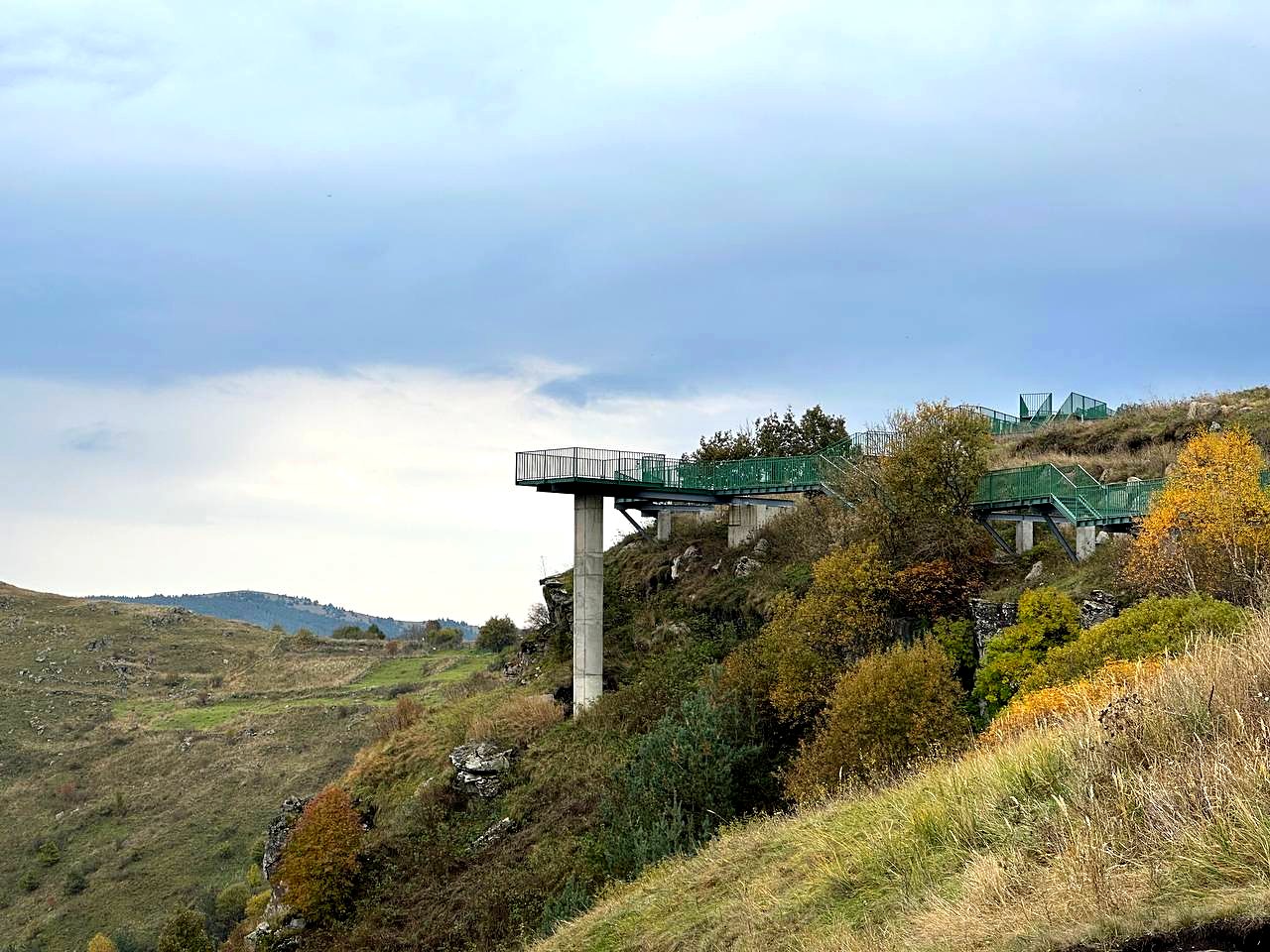
Dashbash Canyon then and now: my review
I came to Dashbashi before the bridge existed, when there was nothing here but a path down from the village church, and it was mostly locals coming for a barbecue. Back then entry to the canyon was free. Now it is a paid protected area, and you can only get to the bridge and the waterfalls through the Kass Land visitor center with a ticket.
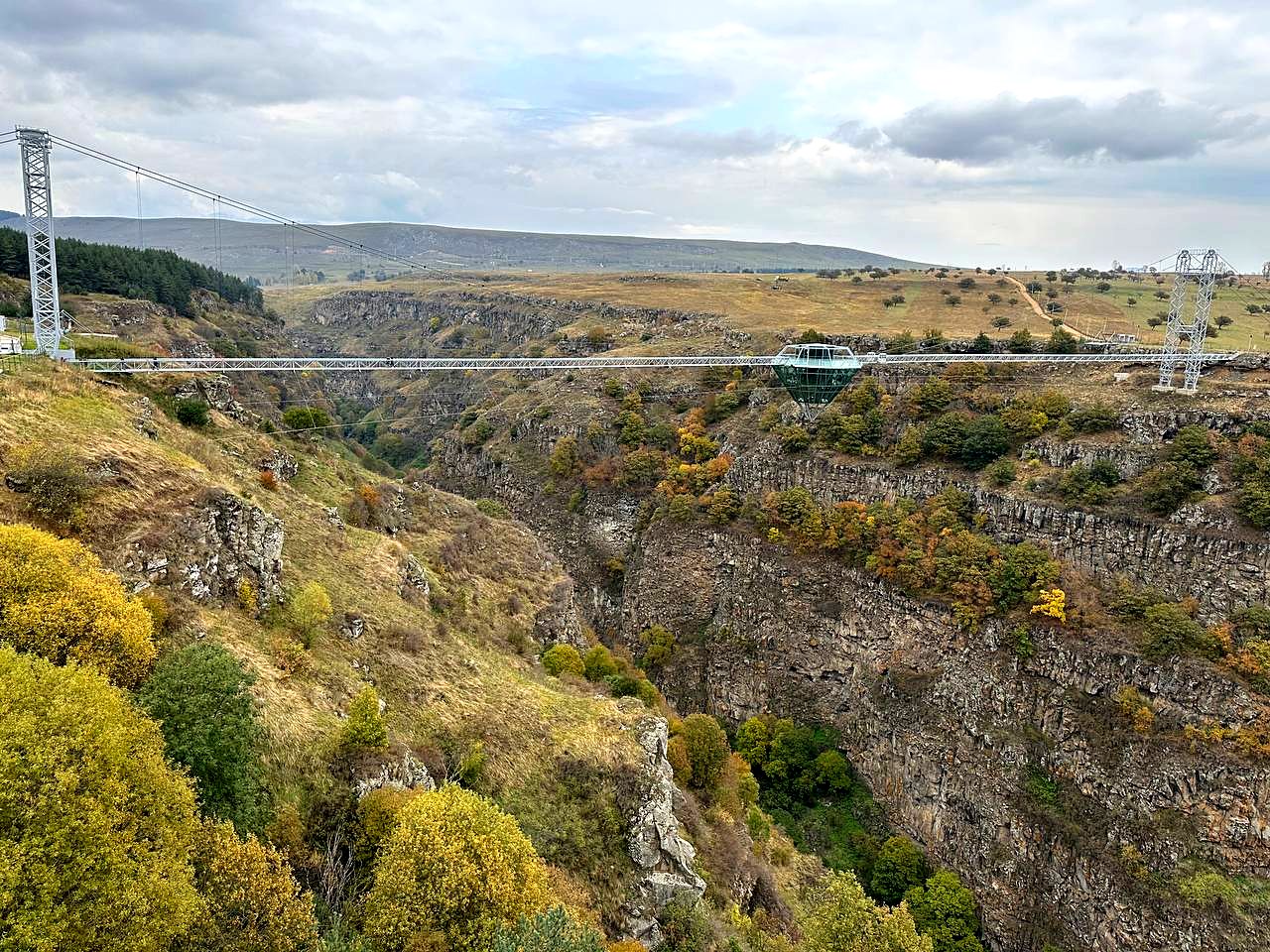
On the one hand, the canyon has become more interesting: the glass bridge really is a great thing, and walking over the abyss and then having a coffee in the “diamond” is worth doing at least once. On the other hand, with the ticket booths, platforms and attractions, the canyon has lost some of its wild natural beauty. When I used to come here and there was nothing yet, it impressed me far more than it does now. If you are after silence and untouched nature, keep that in mind. If you want emotions and great photos, the bridge will definitely deliver.
A glass bridge closer to Batumi
If you are staying in Batumi, you don’t have to cross the whole country for a glass bridge. In the mountains of Adjara, at Eco House Merisi, there is a bridge with a glass floor of its own — smaller, but you can have dinner on it with a view of the mountains and the gorge. More about it in our article on the best hotels in the mountains of Georgia, and you can book a cottage on ecohousemerisi.com or on Booking.
Hotel by the glass bridge: Kass Diamond Resort
Kass Diamond Resort stands across the road from the canyon, a few minutes from the visitor center. It is part of the same Kass Land complex: rooms and villas for up to 5 people, an indoor heated pool, a spa with saunas and jacuzzi, and a kosher restaurant. The amusement park with slides and go-karting is on the same side of the road. It’s handy if you don’t want to rush, want to walk around the canyon at your own pace and see the bridge in the evening after the tour groups have gone. Guest rating on Booking — 7.6.
Booking: Kass Diamond Resort.
If you’d rather have solitude in real mountains, have a look at our selection of the best hotels in the mountains of Georgia.
Weather in Dashbashi: when to go
The canyon lies at 1,100–1,500 metres, and on the plateau near Tsalka it is noticeably cooler and windier than in Tbilisi — a jacket comes in handy even in summer. The waterfalls are fullest in spring, from April to June. In rain, heavy fog and snow the trail to the waterfall is closed and the ticket is not refunded, so check the weather forecast for Tsalka before you go. The complex is open in winter, but you won’t always be able to get down to the water.
Where is Dashbashi Canyon and how to get there from Tbilisi

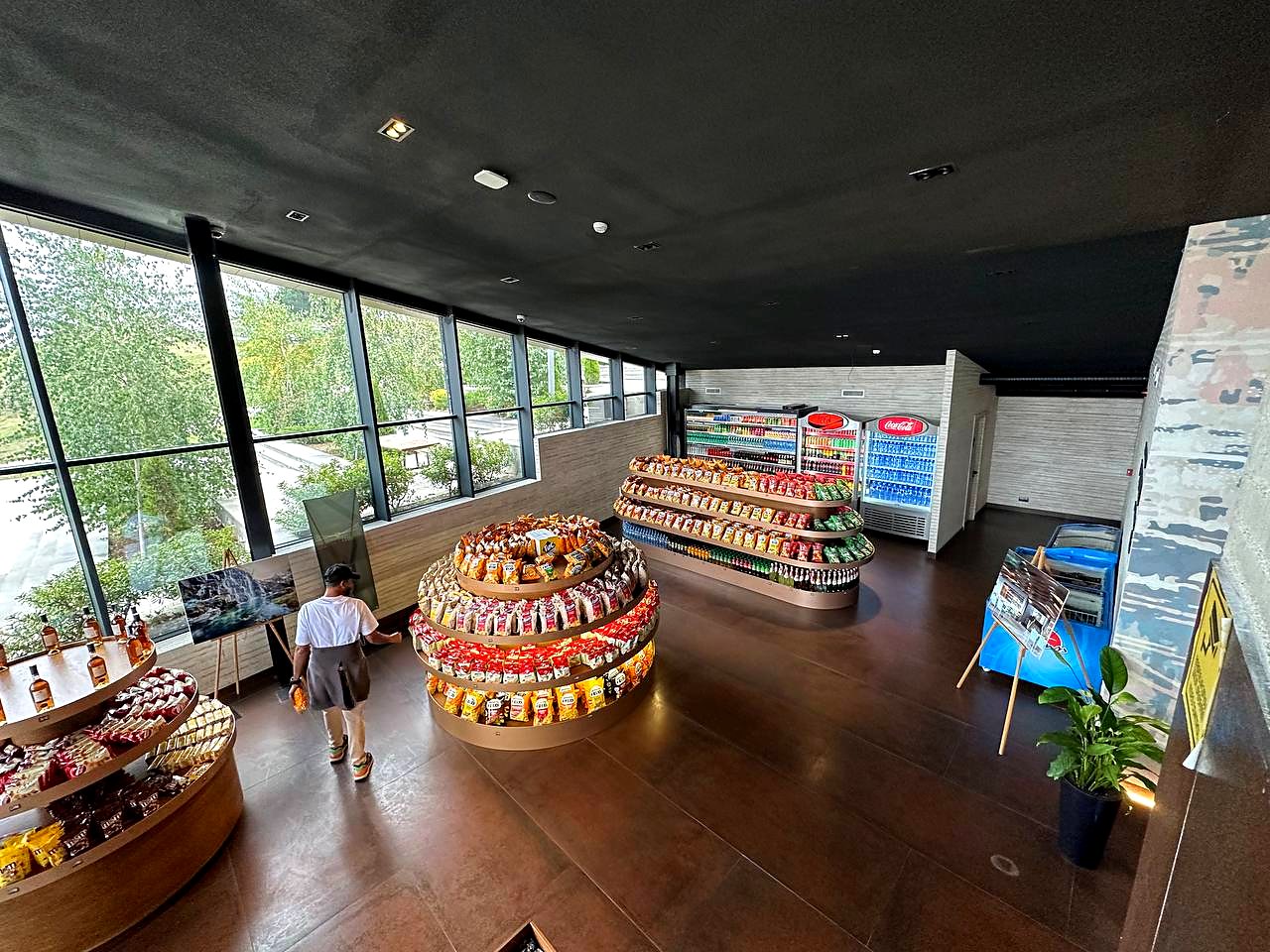
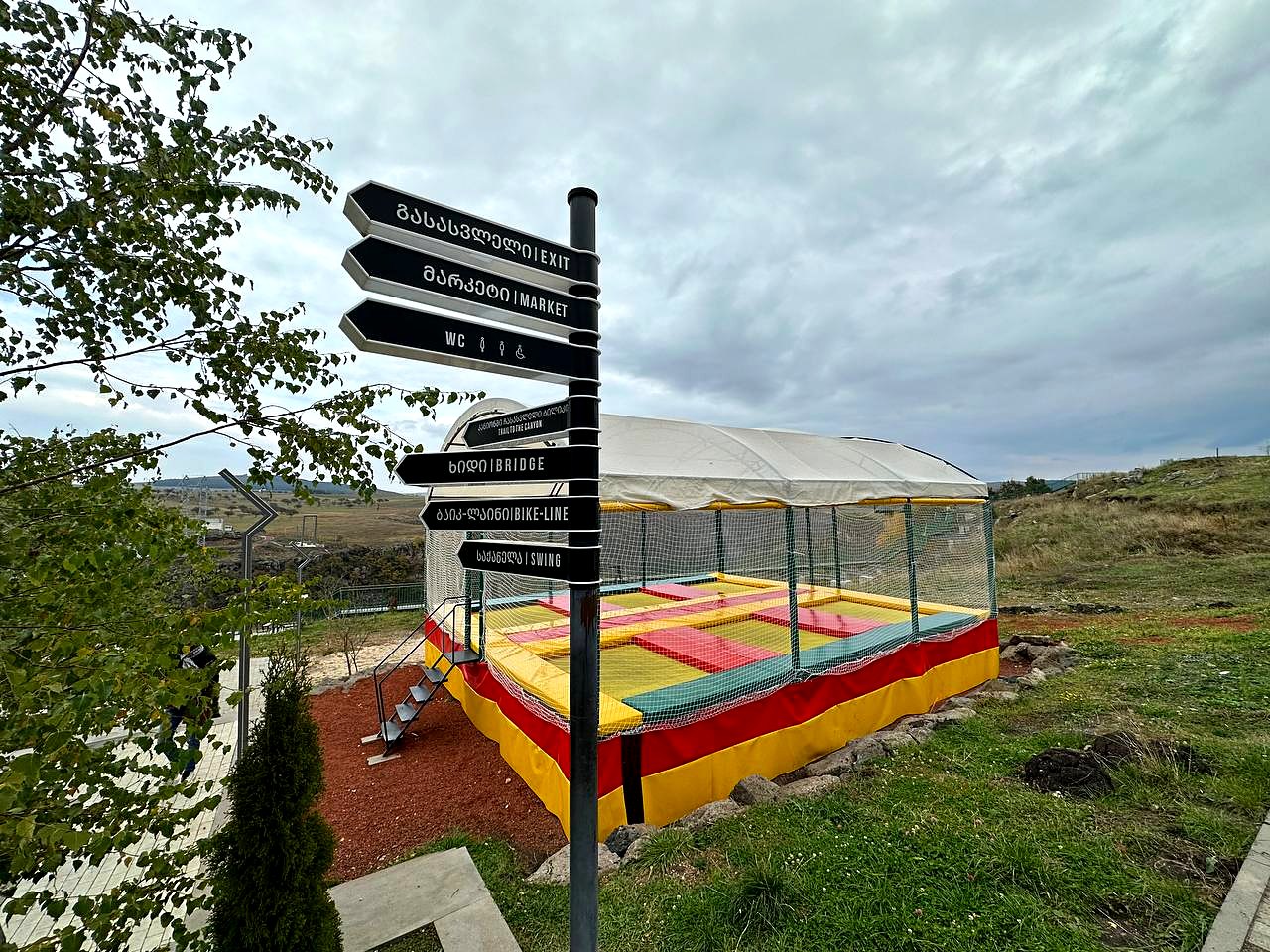
The canyon is by Dashbashi village, 3 km from Tsalka and about 100 km from Tbilisi. The road from Tbilisi runs through forested Kvemo Kartli, past the former German colony of Asureti and Algeti National Park, then climbs onto a wide plateau. Before Tsalka, turn off towards Dashbashi and the Kass Land visitor center; there is parking on site. The visitor center has the ticket office and a souvenir shop, and signposts lead on to the bridge and the attractions.
By car from Tbilisi
By car from Tbilisi it takes 1.5–2 hours. If you don’t have a car, it’s easy to rent one.
By tour or taxi
Without a car, the easiest option is a day tour from Tbilisi: there are many of them, usually combined with Algeti Reservoir and Asureti. The canyon ticket is usually not included in the tour price. You can also go by taxi — agree with the driver that he will wait for you and take you back.
What to see near Dashbashi Canyon
Tsalka Reservoir
Next to the canyon, by Tsalka, lies the big Tsalka Reservoir. Tsalka itself is a former Greek settlement, and it’s worth buying some local sulguni cheese here.

Lake Paravani and St Nino Convent in Poka
Paravani is the largest lake in Georgia. It lies at about 2,000 metres above sea level, and Poka village is a little higher still.


According to legend, Poka is the first place in Georgia that St Nino reached on her way from Armenia. Here an angel appeared to her in a dream and showed her the way to Mtskheta. A church of St Nino was built in honour of this, and in the 1990s a convent was founded next to it. The nuns revived the art of cloisonné enamel here and make mosaics, cheese, chocolate and herbal tea — all sold in the convent shop.


Monastery of the Three Holy Hierarchs in Berta
A little beyond Tsalka is the village of Berta (Olianggi), another former Greek settlement. There is a men’s monastery of the Three Holy Hierarchs here, and on its grounds a chapel stands right above a pond where trout live. People believe that touching them can heal illnesses, and come here from all over Georgia.
The road to Vardzia and the storks of Ninotsminda
An alternative road to Vardzia runs through Tsalka and the Paravani Pass. It is 40 km shorter than the route through Borjomi, but winding, so it’s no faster. There are plenty of beautiful places along the way, though. In Ninotsminda it’s worth stopping to see the storks that live right in the village.

Dashbashi Canyon FAQ
How much is the entrance to Dashbashi Canyon?
79 GEL for foreigners, 46 GEL for Georgian citizens, children under 3 free. With a tour guide, entry is usually 59 GEL.
Is the glass bridge in Georgia located in Tbilisi?
No. The Diamond Bridge hangs over Dashbashi Canyon near Tsalka, 1.5–2 hours’ drive from Tbilisi. Tbilisi has its own glass pedestrian bridge, though — the Bridge of Peace over the Kura.
Is the glass bridge included in the ticket?
Yes, one ticket covers the bridge, the viewpoints and the trail to the waterfall. The swing and the sky bike are paid separately.
Can you visit the canyon for free?
No. Entry used to be free, but now the canyon is a paid protected area and you can only get in through the visitor center with a ticket.
How do you get down to the waterfall?
Along a trail about 1.8 km long; going down and back takes about an hour. You can also take a special vehicle down and back.
How long is the drive from Tbilisi?
About 100 km, 1.5–2 hours by car.
Read more:
Abastumani: a mountain resort with an observatory and sulfur baths
Akhaltsikhe and Rabati Fortress
Borjomi: what to see and where to walk
Hello!
I am Victor, the founder of this site and its main, but not the only author.
Traveler and photographer. Visited more than 60 countries.
Born and raised in Batumi. I love to travel in Georgia.
More about me here.