


Georgia is a unique country that treasures its traditions and is proud of its history. Besides its architectural monuments, it has many remarkable holy places. For centuries they have given people grace and hope, and, as believers say, healed them of deadly illnesses. One of the most revered Christian shrines in Georgia, with a truly dramatic history, is the magnificent ancient monastery complex of St David of Gareja. The atmosphere here is simply captivating: it changes you, inspires you and makes you think about eternity and your own purpose. This holy land draws pilgrims from all over the world, and it welcomes you too. Can’t get to Jerusalem? No problem: come to Georgia and visit David Gareja (ideally three times), and it will count as if you had been to the Holy Land!
David Gareja: entrance, opening hours and how to get there (2026)
David Gareja (also spelled Davit Gareji) is a 6th-century cave monastery in the semi-desert on the border between Georgia and Azerbaijan. In short, here is what you need to know before you go:
- Where: south-east Kakheti, about 90–100 km from Tbilisi by road via Sagarejo and Udabno.
- Entrance: free; the monastery is open every day.
- Without a car: the Gareji Line shuttle leaves Pushkin Park by Freedom Square at 10:45, 40 GEL return, from spring until the end of October. You get about 3 hours at the site.
- Food and water: there is only a church shop on site; the nearest café is in Udabno, 15 km away. Bring water.
- Udabno Monastery up on the ridge sits right on the border with Azerbaijan. Visitors are not always allowed up; it is up to the border guards.
What to wear and what to bring
This is a working monastery for monks. Men need long trousers; women need a skirt below the knee, covered shoulders and a headscarf. Skirts and scarves can usually be borrowed on site. Wear comfortable shoes and, in summer, a hat. And bring your passport: the border is very close.
Is it worth going?
Yes, even if you are not allowed up to Udabno. The Lavra of St David is open: you can walk along its galleries, go down into the courtyard and visit the Church of the Transfiguration. And the drive through the colourful hills of the semi-desert is an experience in itself. It gets very hot in summer, so spring or autumn is the best time to go.
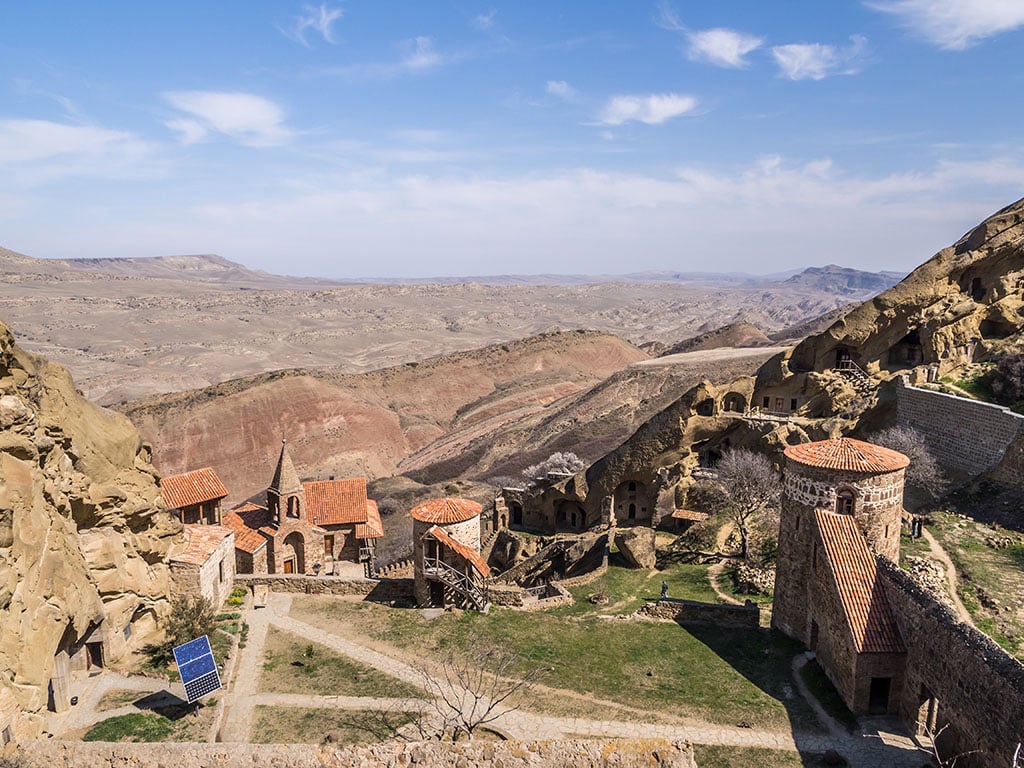
History of David Gareja Monastery
The vast monastery complex stretches for almost 25 km along the Gareja ridge, which the border between the two countries follows. This is the south-eastern part of Georgia, bordering Azerbaijan. Unfortunately, today part of the complex lies on the neighbours’ territory.
Even the place where the complex was founded is unusual: a desert with almost no water sources, very little rain and dry air. It was on this once deserted land that the shrine, now known all over the world, was born. Many monasteries, caves, cells, small bell towers and churches: Gareja brings together religious buildings that were actively built from the 6th to the 13th century.
The complex was founded by St David, who came to Georgia in the 6th century as one of the Thirteen Assyrian Fathers. He first settled on Mtatsminda, a mountain above Tbilisi, where his cell and a small church are still carefully preserved. After disagreements with the pagan leaders, David withdrew to the wilderness together with his devoted follower Lukiane. That is when the first cell was carved into the mountainside. Today it bears his name and is called David’s cell.
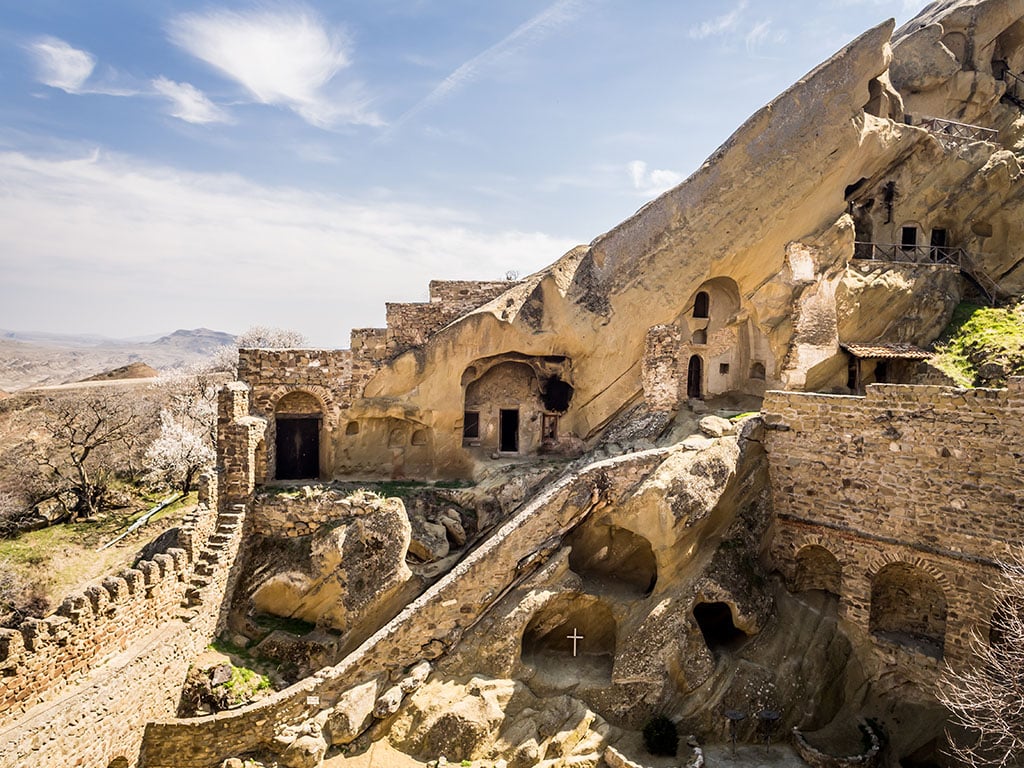
Living in the dry desert, the saint ate only herb roots and the milk of wild deer.
According to legend, before starting to build the churches, David drove a mighty dragon out of a cave. If you climb to the top of the ridge, you can see a strange trail that looks as if someone had cut it. It is said that the dragon retreated along this path, scorching the earth around it and turning the area into a lifeless desert.

As soon as people in Georgia learned about David’s righteous life, monks started coming here to continue his work, carving many cells into the rock. One of the founder’s disciples, Dodo, established the Dodo’s Rka complex. A little further away, 10 km from St David’s cave, another monastery appeared: Natlismtsemeli, dedicated to John the Baptist and founded by the disciple Lukiane.
The fate of Gareja is tragic: it was invaded and destroyed many times. In the early 17th century it was almost completely deserted after Shah Abbas slaughtered the monks and plundered the shrine. The complex began to revive in the 1970s, and today it is a true treasury of Christianity in Georgia, carefully looked after.
David Gareja Monastery: a piece of Jerusalem
Late in life, St David made a pilgrimage to Jerusalem. But he did not dare to enter the Holy City; instead he picked up three stones by its walls and decided to take them to Gareja to bless the land there. When the temple guardians found out, they decided to take the stones back. Messengers caught up with David and took two of them, but he managed to hide the third, and it was brought to Gareja.
The saint believed that this piece of the Holy Land completely transformed the local land, giving it God’s grace.
Today pilgrims believe that a visit to David Gareja equals a pilgrimage to Jerusalem. The legendary stone, however, is no longer kept in Gareja: it was moved to Tbilisi. There is a custom: when you come here, find a small pebble and take it with you as a keepsake, and misfortune will pass you by and even serious illnesses will retreat.
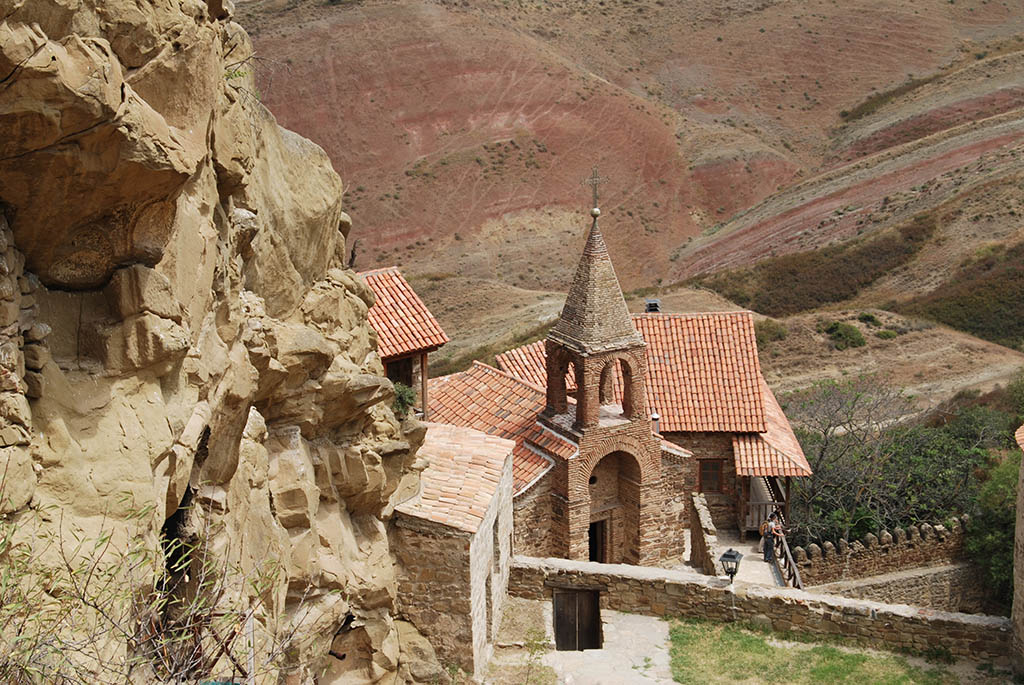
Today the complex includes about 12 monastery ensembles. Some are well preserved, others have been almost destroyed by time.
The Lavra of St David
Gareja can amaze any traveller: across the vast complex, monks carved almost 5,000 cells of different sizes into the rock!
The most revered and, without doubt, the most beautiful place is the Lavra of St David. This ancient monastery is a cluster of cells hollowed out right in the mountainside. Amazingly, the monks somehow arranged the buildings to form a huge cross, which can only be seen from high above.
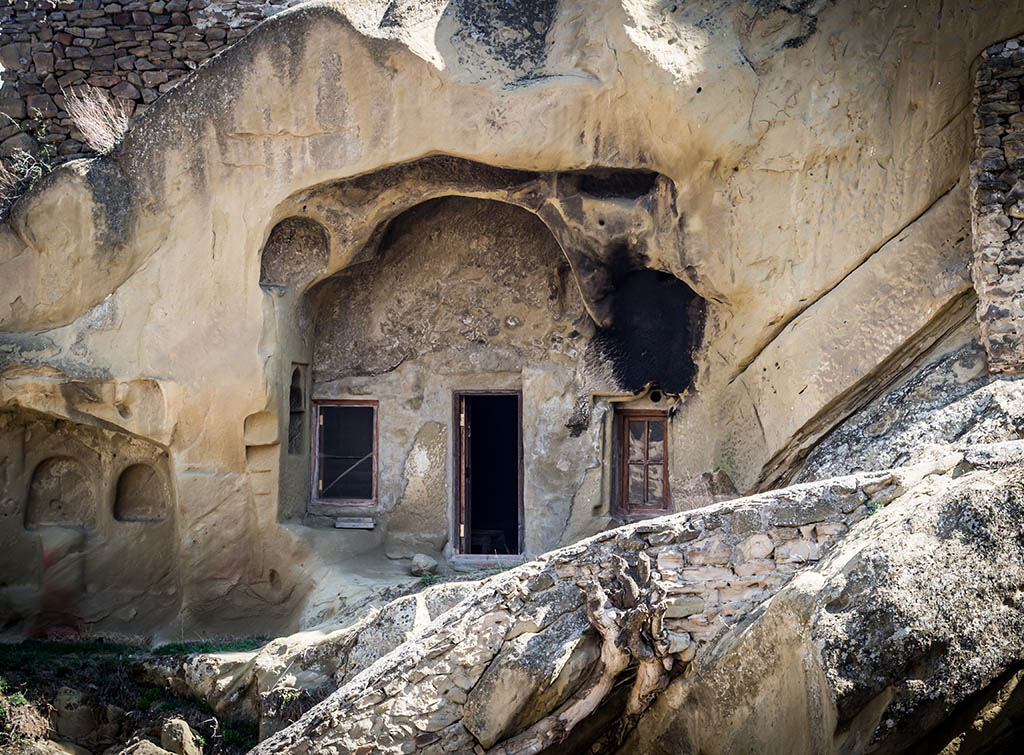
The Lavra is a stunning place. Its unusual architecture and the atmosphere that fills every stone are simply mesmerising.
Here you will see the monks’ ascetic living quarters, intricate towers reaching upwards and small caves. Later, many terraces and little bridges were added to connect the different buildings.
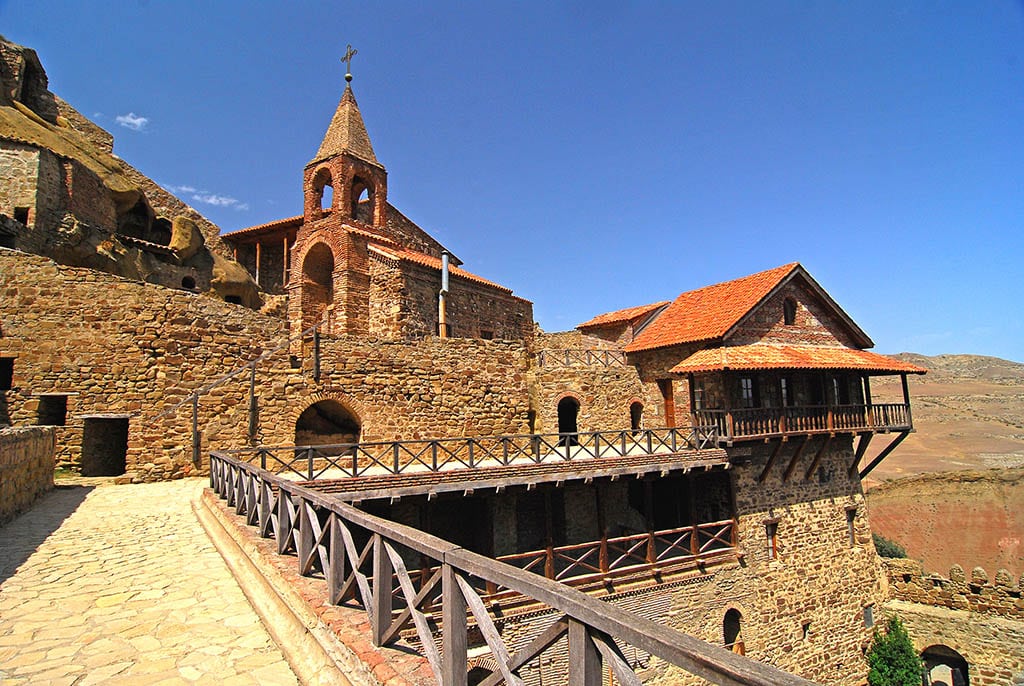
Remember that part of the complex is a working monastery for monks, so entry there is forbidden. But you can go down into the lower courtyard. This is where another shrine is located: the Church of the Transfiguration. Visitors are allowed in; it is very beautiful, with painted vaults and many icons.
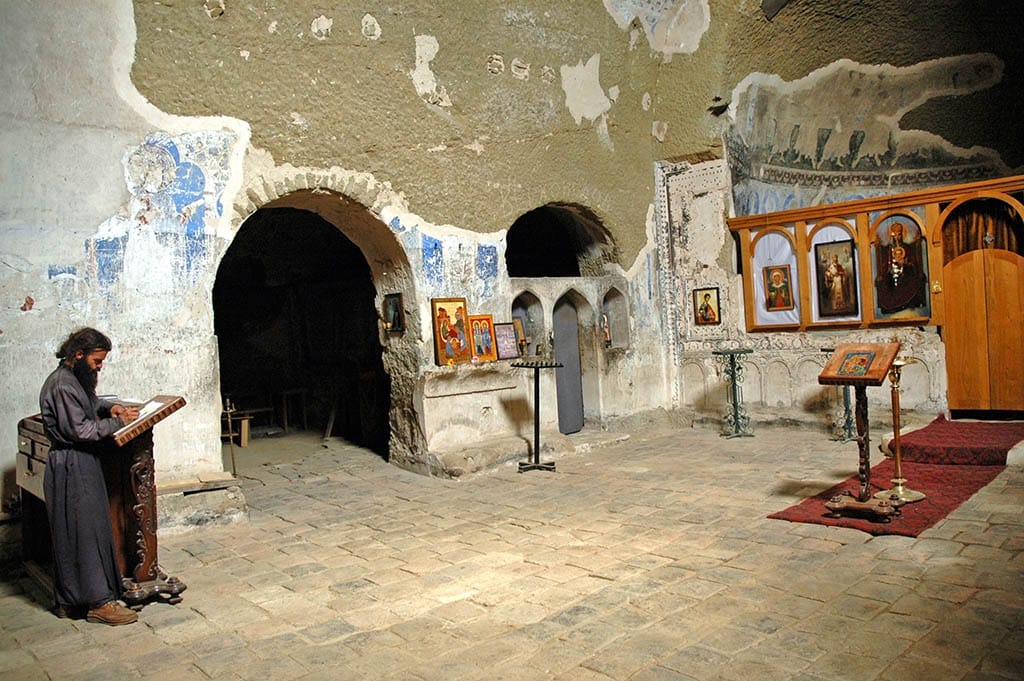
Near the altar, on the right, is the tomb of the founder, St David. The burial place is hidden under a small arch on a modest pedestal. There are almost always many pilgrims here, asking the saint for healing and well-being. This is also where the stone from Jerusalem used to be kept. Scholars suggest that David’s disciple Dodo may be buried next to him, but this has not been confirmed.
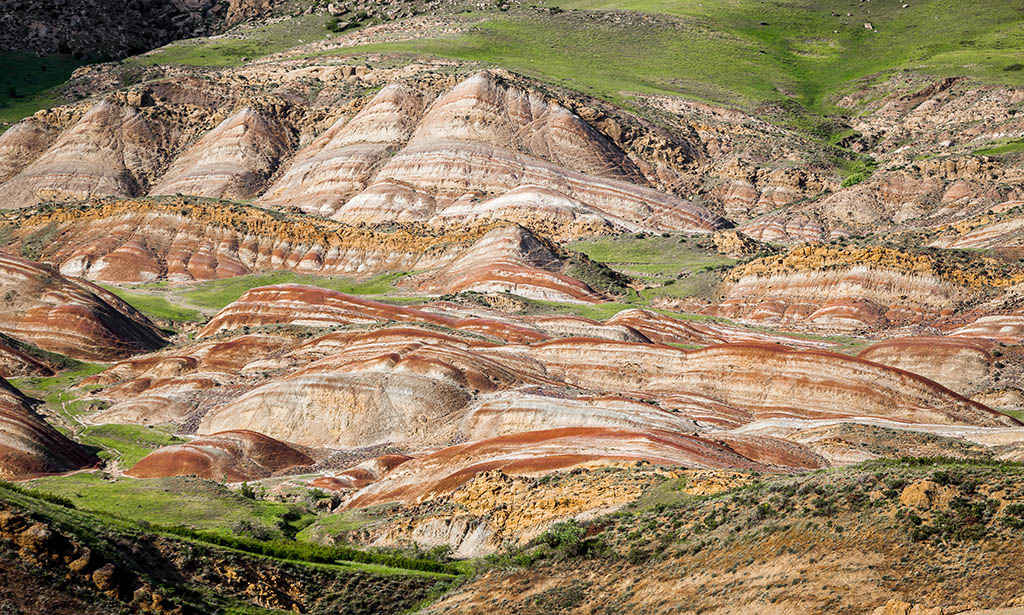
When you leave the Lavra, you will see two small chapels on a high hill. The climb is hard, but worth it: from there you get a great view of the desert and neighbouring Azerbaijan. Countless yellow hills that look like a boundless sea with waves, plains between them, the blue sky and an endless horizon: you could admire it for hours.
The Lavra took on its present appearance only in the 9th century, when it was completed by Hilarion the Georgian, who also built new churches in the complex.
Not far from the church is the only water source in the area. It is called the Tears of David: this is where the first hermits could quench their thirst.
If you look closely, you will see little channels carved into the stone on the caves and slopes: this is how the monks collected moisture and stored water.
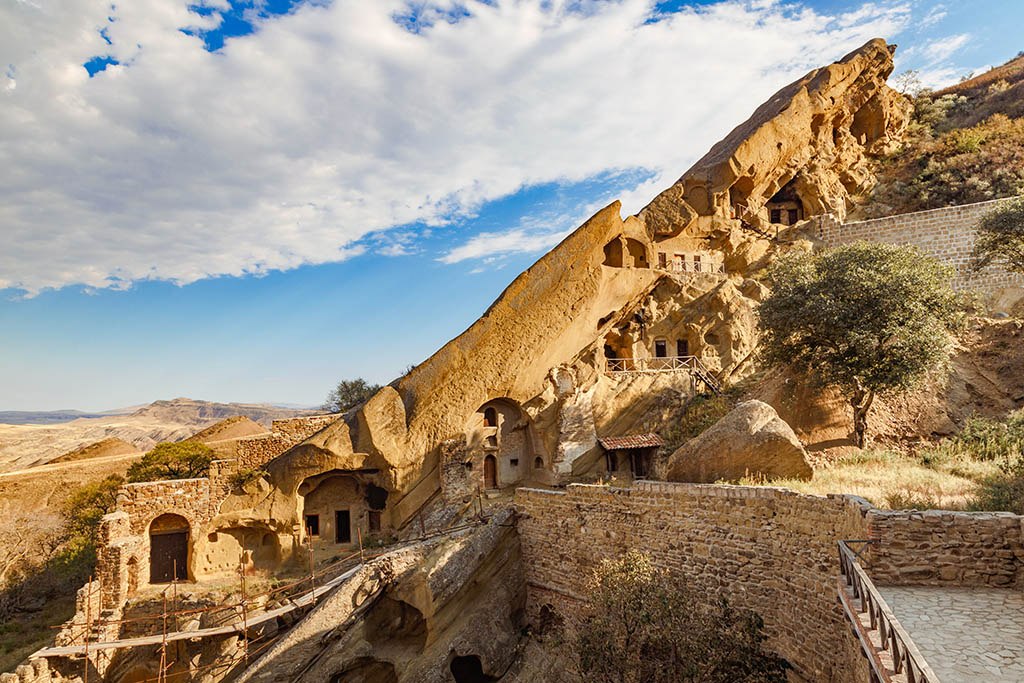
Udabno Monastery
A word of warning first: the path to Udabno runs along the ridge that the border with Azerbaijan follows. Since 2019 visitors have not always been allowed up: sometimes the border guards let people climb, sometimes they turn them back.
If you walk around the Lavra, you will see a small shop, and right behind it starts the trail to numerous caves. This whole complex of cells and living quarters is the former Udabno Monastery. The caves stretch in a long line, as if hanging on three wide mountain terraces that almost roll down the slope.
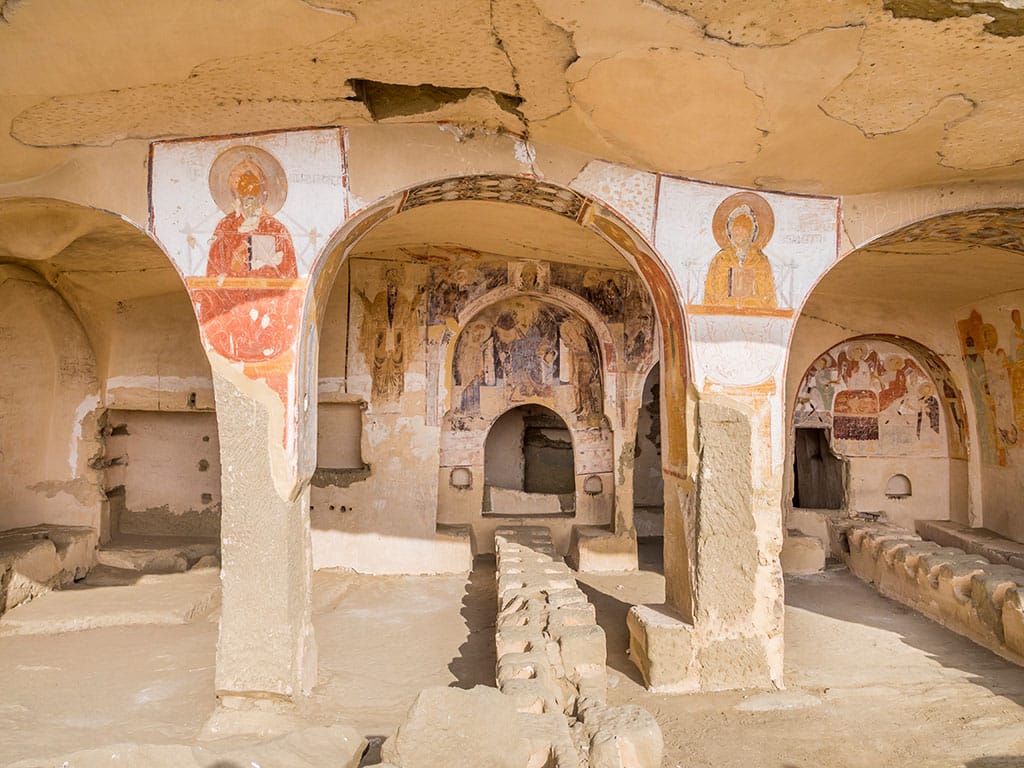
The monastery was built during the heyday of Gareja, in the 11th–12th centuries. Its most interesting feature is its unique frescoes, which you can see in every cave. Sadly, many of them have been damaged by people, and the icons are missing their faces. Amazingly, the colours are still fresh and rich. Few people know that Gareja had its own school of painting: many monks honed their skills painting Udabno, and their first works are here. The frescoes show many biblical scenes, faces of saints and scenes from the lives of the hermit monks.
If you plan to spend only 2–3 hours at David Gareja, be sure to walk at least the small loop, if the border guards let you up. In that time you can see the Lavra and Udabno and take a calm look at all the monuments. To see all the beauty of the complex, you need several days.
Natlismtsemeli Monastery
This monastery is not at all like the Lavra of St David. It is 10 km away and there is no public transport; you can drive about 7–8 km and then continue on foot. Peace, calm and an amazing silence untouched by the sounds of civilisation: Natlismtsemeli is a working monastery, and its first cave was founded by David’s disciple Lukiane.
When you get here, be sure to ask which caves you may enter. The main building, where you can admire frescoes and old icons, is the cave church of John the Baptist. The atmosphere here is simply stunning: it is hard to believe that all these vaults were carved out of solid rock. Inside there is a small altar with finely carved stone ornaments at the bottom and a large cross with images of saints in the middle. The walls are covered with frescoes and images of monks.
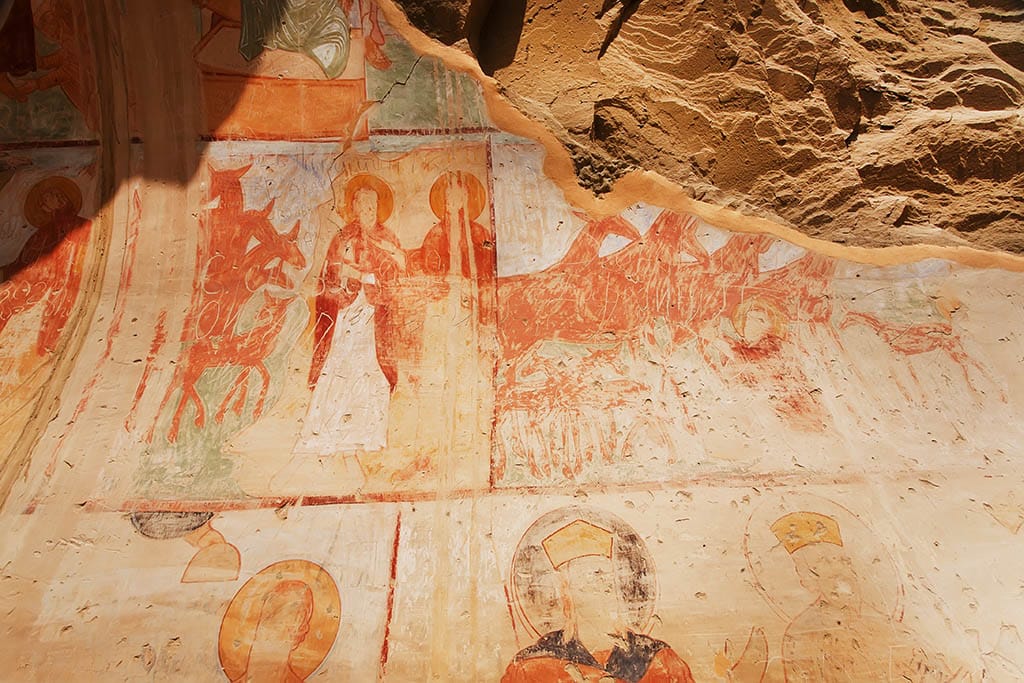
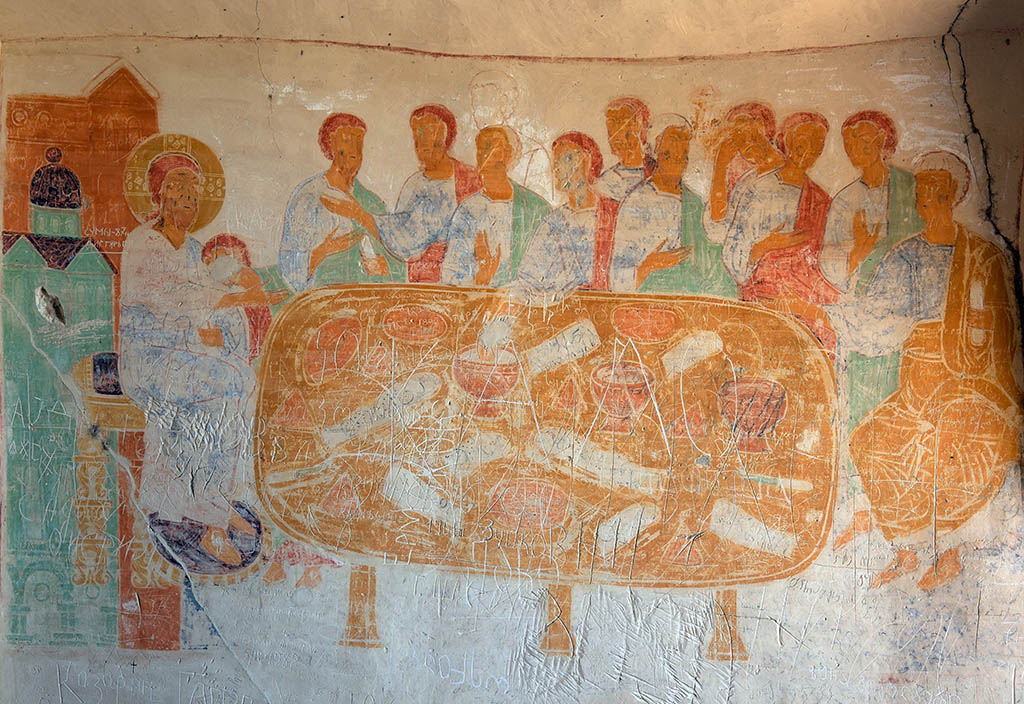
After leaving the church, you can walk to a stone tower at the foot of a large rock along a narrow path to the right. You enter the tower through a small niche in the rock; there is no light inside, and bats live there.
Natlismtsemeli is a string of caves, some lived in, some abandoned. Not everyone is allowed in; you need to ask the abbot for permission. Walking around, you will see the monks who live and work here.
If you turn left after leaving the church, you will see a path to the man-made water cisterns (small pools) and the cave of the monk Serapion. This hermitage is highly revered, and people ask the saint for health.
How to get there: about 5 km before the Lavra there is a sign on the road. Turn right there and drive about 3–4 km. You will have to leave the car by the gate and continue on foot.
Dodo’s Rka caves
These remarkable caves started to appear in the 6th century, during the life of St David’s disciple, St Dodo. Later a monastery was founded here, and many monks carved modest cells next to it, forming a separate monastery complex. It is about 3 km from the Lavra, so you can walk. The visit is very interesting: colourful frescoes, curious rock niches and many arches at the entrances to the cells. The rock rooms also preserve ancient inscriptions on the walls and ceilings, as in other monasteries, in Georgian, Greek, Armenian and Arabic. Some of the inscriptions are remarkably skilful, and nobody knows how such elegant letters were achieved. There is evidence that the monks of Dodo’s Rka set up a forge where they made tools for inscriptions and complex buildings.
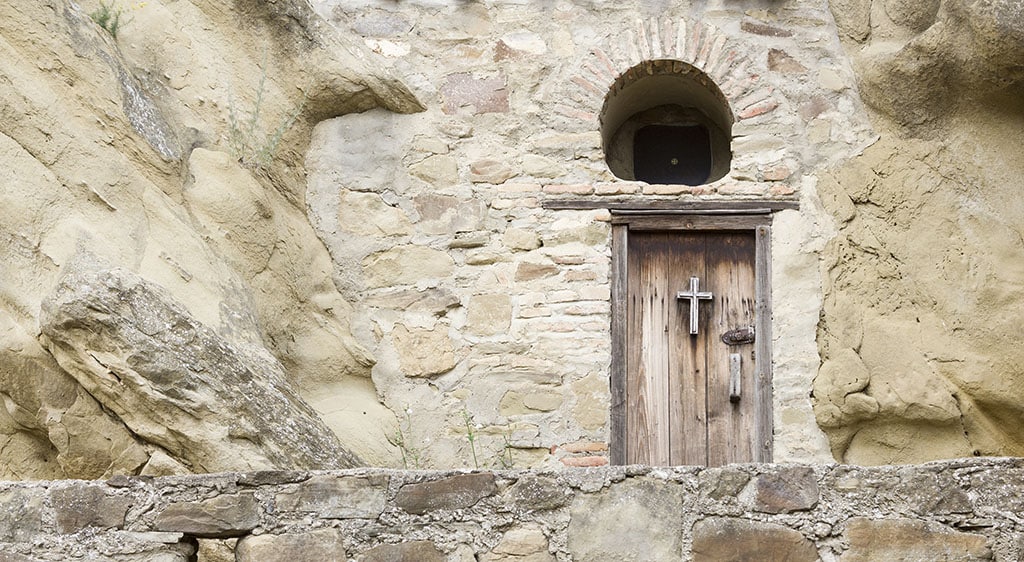
Besides the monasteries above, Gareja has many other monasteries and cave cells. If you have time, try to visit Tetri Senakebi, Pirukughmari, Bertubani and Verangareja. They stretch for many kilometres along the border with Azerbaijan.
More to see in Kakheti: Sighnaghi, the city of love, Alaverdi Monastery and Lagodekhi National Park.
David Gareja on site: parking, shop and the ridge trail
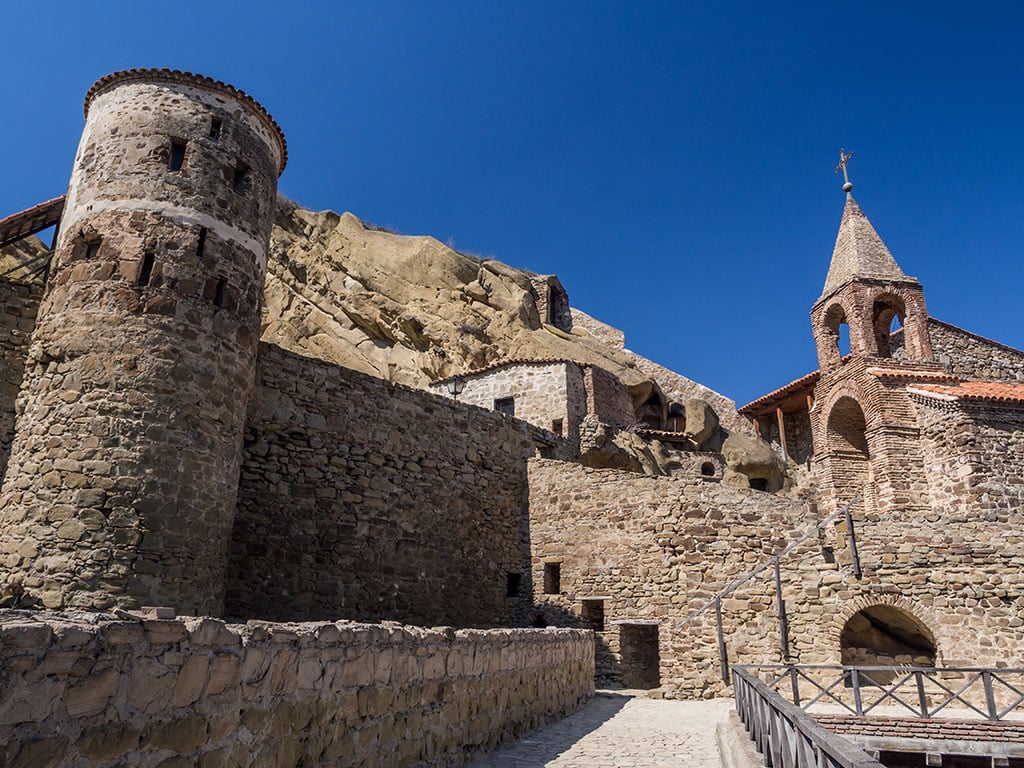
When you arrive at the Lavra, you will see a large car park. A little lower down are some modern buildings. Right behind the car park is a small shop selling church goods: icons, postcards and calendars with views of the monastery, fragrant incense and small crosses blessed in the Gareja churches.
One thing sold here is really worth buying: the monastery’s Saperavi wine. This dry red is made to old recipes and has a rich, full taste.
Right behind the shop, the Lavra of St David appears in all its glory. Behind the monastery starts a very long trail that climbs up and makes a big loop around David’s mountain. Following it, you reach a slope with a great view of the Lavra and the whole valley. To get to the very top of the ridge, to the Chichkhituri chapel, you walk about 700 metres straight up from the slope. From there you can clearly see the Azerbaijani lowlands, and the hills near the horizon are already Armenia.
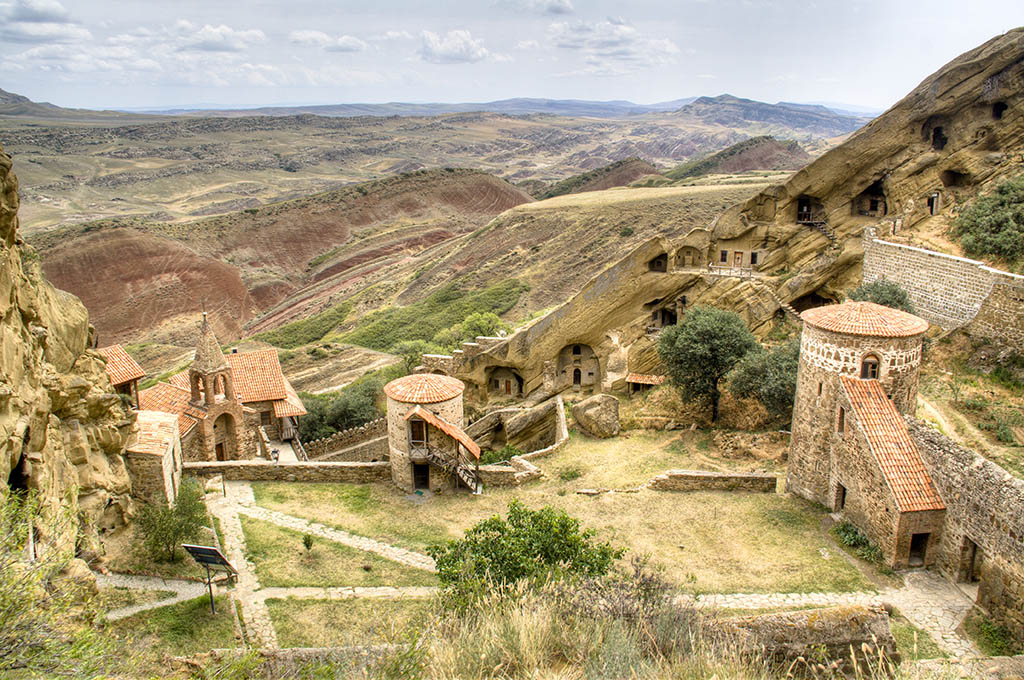
Visiting the whole David Gareja complex is free, and the monastery is open every day. There is no accommodation here, but many travellers stay overnight in a tent near the Lavra for the amazing sunsets and sunrises. The evenings are very beautiful: when the sun bathes the valley and mountains in red light, the caves turn into fairy-tale little houses!
Nature and wildlife of the Gareja semi-desert
The Gareja desert is said to be home to many kinds of snakes. There is a story that there was once a snake farm here, and when it closed, the snakes simply crawled away and settled in the area. Whether that is true is hard to say; it sounds more like a scary tale for tourists. But there really are lots of lizards here, all different and colourful. Hoopoes live here too, and there are many tortoises: they mostly hide under stones, but early in the morning you can spot them.
The nature is unusual and very picturesque. In spring, poppy fields come into bloom, and the desert landscape surprises with its strange shapes: hills, mountains, rocks and huge boulders.
David Gareja Monastery FAQ
How much does it cost to visit David Gareja?
Entrance is free. You only pay for getting there.
How do I get to David Gareja without a car?
The easiest way is the Gareji Line shuttle from Freedom Square: 40 GEL return and about 3 hours at the site. A cheaper option is a minibus to Sagarejo and then a taxi.
Can I go up to Udabno Monastery?
Not always. The trail runs along the ridge that the border with Azerbaijan follows, and it is up to the border guards: sometimes they let people through, sometimes they turn them back.
When is the best time to go?
In spring, in April and May, or in autumn. In summer the semi-desert can reach +40°C.
David Gareja Monastery on the map
How to get to David Gareja Monastery from Tbilisi
The complex is about 90–100 km from Tbilisi by road. The best route is via Sagarejo and Udabno; there is also a road via Rustavi, but it is usually not recommended. From spring until the end of October, the Gareji Line shuttle runs from the capital: it takes you to the monastery and waits about 3 hours. The return trip costs 40 GEL, departing daily at 10:45 from Pushkin Park by Freedom Square. A taxi from Tbilisi is the most convenient option. Check the fare in Bolt or Yandex Go beforehand and agree with the driver to wait and bring you back.
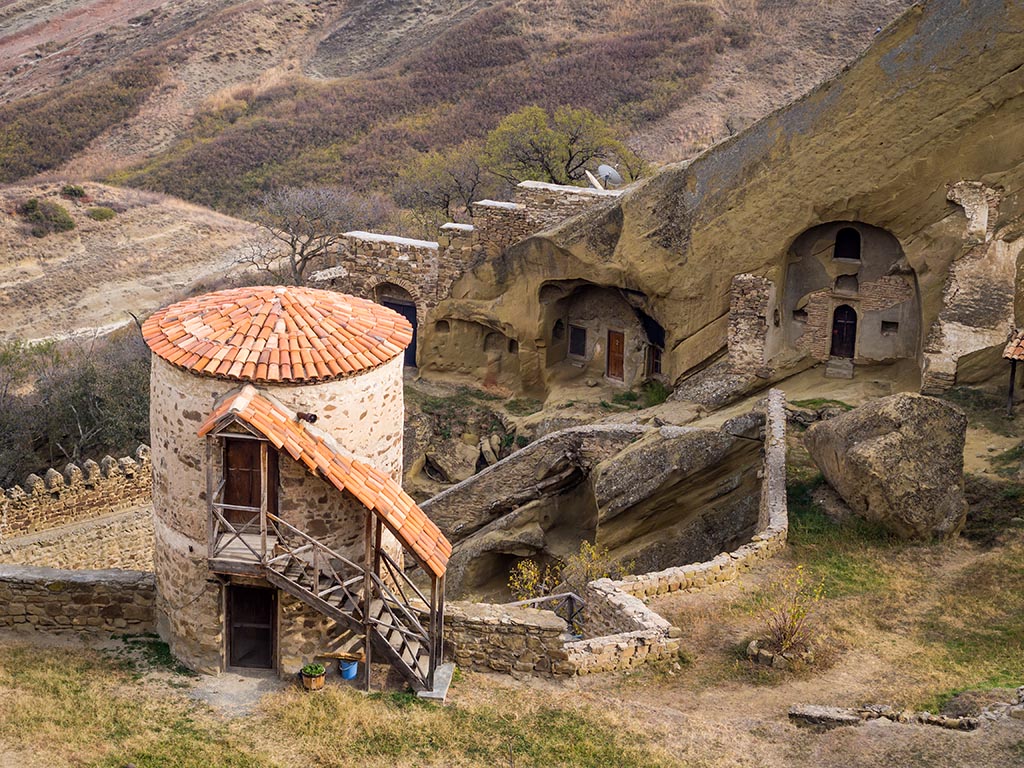
There is also a cheaper option: go to Sagarejo and take a taxi from there. Minibuses to Sagarejo leave Samgori metro station in Tbilisi and take about 40–50 minutes. Taxi drivers usually wait by the Sagarejo bus station: you can agree with them to take you to the Lavra, wait and bring you back. Public transport to Udabno, the last village before the monastery, is rare, so it is easier to take a taxi straight away. In Udabno you can have a tasty meal outdoors at the Oasis Club restaurant, with amazing views over the steppe. Stay for a couple of hours and go horse riding across the steppe: it is great fun. From Udabno it is about 15 km to the monastery.
Day tour to David Gareja from Tbilisi
This is probably the best way to see the Lavra and Kakheti in one day. A guide will tell you the full history of these places and plenty of interesting details. For a trip like this, a guide with a background in history is ideal.
How to get there from Batumi
From Batumi, it is easiest to get to Tbilisi first and then go to David Gareja as described above.
When is the best time to visit David Gareja?
Remember that you are visiting a desert, so the weather here is capricious and changeable. In summer, from late June to late August, it is very hot, sometimes up to +40°C, although it is much cooler inside the caves. April and May are paradise for visitors: the hills turn green, the air is fresh, and gorgeous poppies add bright colours to the landscape. Gareja is interesting in autumn too, when the steppe changes colour and yellow, purple and brownish grasses turn the fields into a kaleidoscope of shades.
The David Gareja monastery complex is more than caves and churches. It is a truly mystical place where a person can be completely transformed spiritually. Visit even once, and you will feel drawn back here as if by a magnet. And of course, do not miss the unique chance to make a pilgrimage to land that is considered equal to Jerusalem. Georgia still keeps many secrets here!
Read also: Top 15 attractions in Georgia, Sighnaghi.

Hello!
I am Victor, the founder of this site and its main, but not the only author.
Traveler and photographer. Visited more than 60 countries.
Born and raised in Batumi. I love to travel in Georgia.
More about me here.